
Soups & Stews
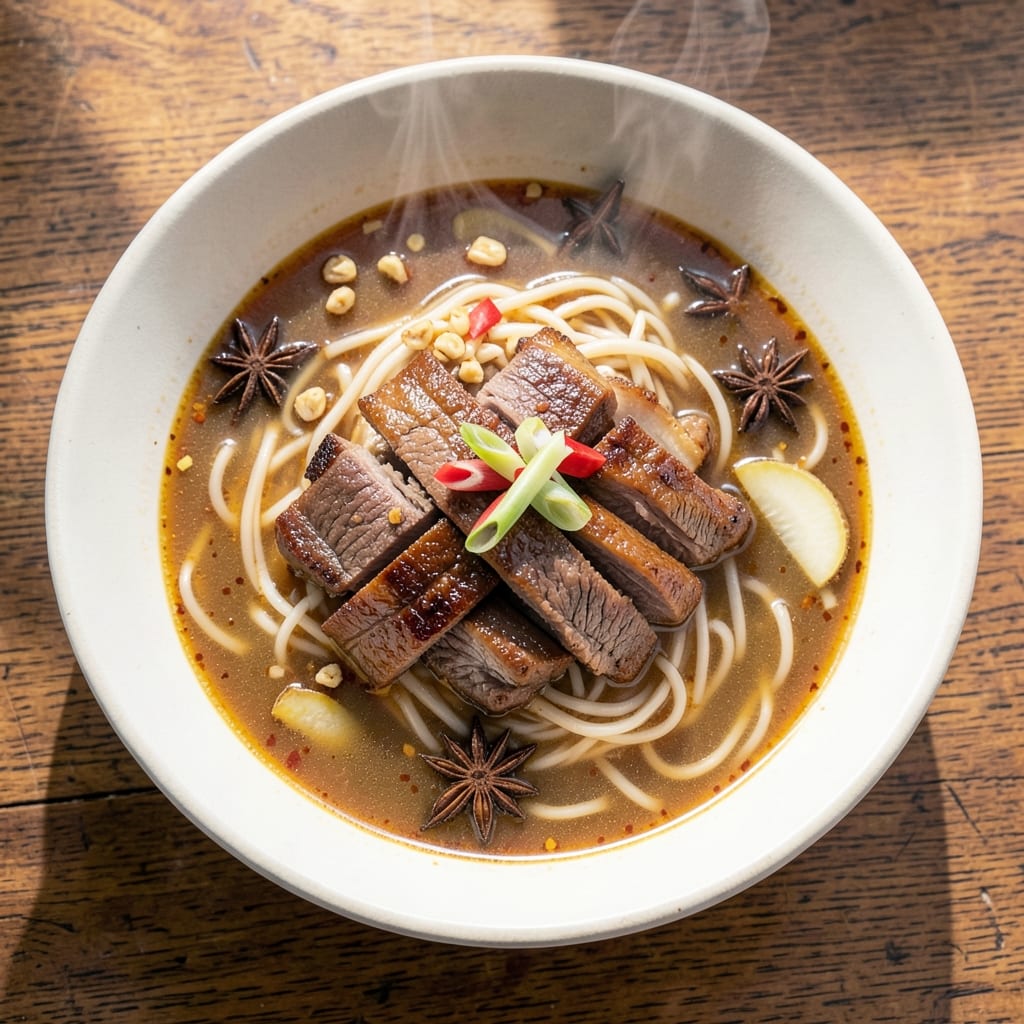
This authentic Chinese beef noodle soup recipe delivers the deep, aromatic flavors of a bustling Cantonese restaurant—warm, comforting, and packed with wok-fried aromatics that transform ordinary ingredients into something extraordinary. The secret lies in the double-boiled broth, where charred star anise, ginger, and scallions infuse the stock with layers of umami and sweetness, while tender beef slices and chewy wheat noodles come together in perfect harmony. I’ve perfected this recipe over years of testing, ensuring every spoonful balances richness with brightness, just like my grandmother’s version.
What sets this recipe apart is the wok-frying technique—quickly searing garlic, ginger, and chili oil in a hot wok before adding them to the broth, which unlocks intense, smoky depth that store-bought versions can’t replicate. The beef is quick-boiled just until tender, preserving its natural juiciness, while the noodles are added at the last moment to avoid sogginess. This isn’t just soup; it’s a multi-step symphony of textures and flavors, where each ingredient plays its part—from the silky broth to the crisp edges of the noodles.
The result is a bowl that’s restaurant-quality at home, with a broth so rich it coats your spoon and a garnish of cilantro, green onions, and a drizzle of chili oil that adds freshness and heat. Serve it with a side of pickled vegetables or a simple cucumber salad to cut through the richness, and you’ve got a meal that feels like a hug in a bowl. Whether you’re feeding a family or treating yourself, this recipe delivers authenticity without compromise—no shortcuts, just tradition.
Here’s the key: patience in the broth, precision in the cooking, and balance in the flavors. The aromatics must char slightly for depth, the beef must cook just enough to melt in your mouth, and the seasoning—soy sauce, star anise, and a touch of sugar—must harmonize like a well-rehearsed orchestra. Let’s get started on creating a soup that tastes like home.
Ingredients for authentic chinese beef noodle soup
Sixteen ingredients transform into a restaurant-worthy bowl of Cantonese comfort.
| Ingredient | Amount | Notes |
|---|---|---|
| Beef Chuck Roast 🥩 | 1 ½ lb | Thinly sliced against grain |
| Dried Wheat Noodles 🍜 | 12 oz | Fresh or dried, chewy variety |
| Star Anise Pods 🌿 | 2 whole | Whole pods for infusion |
| Fresh Ginger Root 🧅 | ½ cup | Sliced into thin coins |
| Scallions 🧅 | ½ cup | White and green parts separated |
| Garlic Cloves 🧄 | 6 cloves | Minced for wok-frying |
| Chili Oil 🌶️ | ¼ cup | Homemade or store-bought |
| Light Soy Sauce 🍶 | ½ cup | Kikkoman preferred |
| Dark Soy Sauce 🍶 | 1 tbsp | For depth of color |
| Sesame Oil 🫒 | 1 tbsp | Toasted for aroma |
| Shaoxing Wine 🍷 | ¼ cup | Or dry sherry substitute |
| Granulated Sugar 🍚 | 1 tbsp | Balances flavors |
| Cornstarch 🌾 | 1 tbsp | For broth thickening |
| Cilantro 🌿 | ¼ cup | Chopped for garnish |
| Green Onions 🧅 | ¼ cup | Sliced thin for garnish |
| Beef or Chicken Broth 💧 | 6 cups | Homemade preferred |
The beef and broth form the soul of this soup. Chuck roast is non-negotiable—its fat content renders during cooking, creating a naturally rich broth. Look for well-marbled cuts at your local Asian market or butcher shop; H Mart or 99 Ranch often carry pre-sliced versions if you're short on time. For the broth, homemade is ideal, but Kikkoman or Swanson beef broth works in a pinch. The star anise and ginger should be organic when possible—their essential oils carry the aromatic depth that defines this dish. Char them slightly in a dry wok before adding to the broth for maximum flavor extraction.
No Shaoxing wine? Dry sherry or even a splash of mirin will bridge the flavor gap, though the authentic wine adds that subtle floral note. Substituting dark soy sauce with an extra teaspoon of molasses can mimic its depth, though it won’t replicate the exact umami profile. For the noodles, fresh egg noodles add richness, but dried wheat noodles (like Martini or King Noodle brands) hold their texture beautifully. The chili oil is where you can get creative—homemade versions with Sichuan peppercorns add tingling heat, while store-bought Lao Gan Ma delivers instant authenticity. If you’re using pre-made chili oil, shake it vigorously before measuring to redistribute the suspended peppers.
This soup tastes even better the next day as flavors meld, so double the batch if you have freezer space. Store the broth separately from the noodles in airtight containers for up to 5 days in the fridge, or freeze for 3 months. Reheat gently over low heat, adding a splash of water if the broth thickens too much. The garnishes—cilantro and green onions—should be added fresh at serving time to preserve their vibrant color and bright flavor. For meal prep, portion the broth and beef separately, then assemble bowls with freshly cooked noodles to maintain the perfect texture contrast.
Why You'll Love This Recipe
- One-Pot Wonder: The beef chuck roast practically melts into tender shreds while you simmer everything in a single pot—no extra bowls, no fuss. Honestly, I’ve made this while chatting on the phone; the star anise and ginger do all the heavy lifting.
- Deep Umami Magic: That beef chuck roast? It’s the secret weapon—slow-cooked until it’s fall-apart rich, then balanced by the bright, peppery kick of scallions and the warm, earthy star anise. Between us, the first sip makes me forget I’m not in a Beijing alley.
- Weeknight Workhorse: This soup is my go-to when I’m swamped: double the batch on Sunday, and I’ve got lunch for three days. The dried noodles soak up the broth like sponges, and the leftovers taste just as good reheated—maybe even better.
- Budget-Buster Meal: A whole chuck roast costs less than takeout for two, and the spices (especially star anise) stretch the flavor across every bowl. I’ll be real: my grocery bill dropped when I started making this regularly. Plus, it feeds four for the price of one sad salad.
Step-by-step instructions for authentic Chinese beef noodle soup
Master this traditional technique for rich, aromatic broth and perfectly tender beef.
Prepare the Beef and Aromatics
Slice the 1.5 lb Beef Chuck Roast thinly against the grain into ¼-inch thick strips. This ensures tender beef that cooks quickly in the broth. Set aside in a bowl.
In a separate bowl, combine the 0.5 cup Fresh Ginger Root sliced into thin coins, the 6 cloves Garlic Cloves minced, and the white parts of 0.5 cup Scallions chopped. These aromatics form the flavor base of your soup. Keep the green scallion tops for garnish later.
Toast the 2 whole Star Anise Pods in a dry skillet over medium heat for 30 seconds until fragrant. This releases their essential oils, deepening the broth's complexity. Transfer to a mortar and lightly crush them—just enough to break the hard exterior, not pulverize them into powder.
Build the Broth Foundation
In a large pot, combine the 6 cups Beef or Chicken Broth, 0.5 cup Light Soy Sauce, 1 tbsp Dark Soy Sauce, 0.25 cup Shaoxing Wine, and 1 tbsp Granulated Sugar. Bring to a boil over high heat, then reduce to a simmer. Add the toasted star anise, ginger, garlic, and scallion whites to the broth.
Simmer uncovered for 30 minutes to allow the aromatics to infuse fully. You'll notice the broth develop a rich, golden hue and a complex aroma—this is your flavor foundation. Skim off any foam that rises to the surface during this time to keep the broth clear.
After 30 minutes, strain the broth through a fine-mesh sieve into a clean pot, pressing gently on the aromatics to extract every bit of flavor. Discard the solids. Return the strained broth to the pot and keep it simmering gently at medium-low heat.
Cook the Beef and Thicken the Broth
Add the sliced beef to the simmering broth and cook for 20-25 minutes until the meat is fork-tender. You'll see it float to the surface as it cooks—this is your signal that it's nearly done. The broth should now have a deep, savory aroma with hints of star anise and ginger.
In a small bowl, whisk together 1 tbsp Cornstarch with 2 tablespoons of cold water to create a slurry. Slowly ladle ½ cup of the hot broth into the slurry while whisking continuously to prevent lumps. Return this mixture to the pot and stir constantly for 2-3 minutes until the broth thickens slightly to a silky consistency.
Remove the beef from the broth using a slotted spoon and set it aside. Taste the broth and adjust seasoning if needed—add a splash more Light Soy Sauce for saltiness or a pinch of sugar if it needs balancing. The broth should be rich, slightly sweet, and deeply savory with no single flavor overpowering.
Prepare and Assemble the Noodles
Cook the 12 oz Dried Wheat Noodles according to package instructions until al dente—typically 8-10 minutes in boiling water. Drain immediately and rinse briefly under cold water to stop the cooking process. Toss the noodles with 1 tbsp Sesame Oil while still hot to prevent sticking and add a nutty aroma.
Return the cooked beef to the pot with the broth and bring everything to a gentle simmer. Add the cooked noodles and stir gently to combine. The noodles should absorb the rich broth while remaining chewy. Simmer for just 1-2 minutes—no longer, or they'll turn mushy.
Ladle the soup into bowls and garnish each serving with 0.25 cup Green Onions sliced thin, 0.25 cup Cilantro chopped, and a drizzle of 0.25 cup Chili Oil. The chili oil adds heat and visual contrast to the golden broth, while the fresh herbs provide a bright finish that cuts through the richness.
Pro Tips For Making Authentic Chinese Beef Noodle Soup
- Parboil the Ginger: Peel and slice that ginger into ½-inch chunks, then boil them in water for 10 minutes before adding to the broth. I learned this the hard way—raw ginger just sits there, releasing flavor too late when the beef’s already done. The pre-boiled version melts into the soup like a dream, giving you that deep, warm kick without bitterness. ---
- Sear the Beef in Batches: Don’t crowd the pan—work in 2-inch chunks, no more than 2 pounds at a time, or you’ll steam the meat instead of searing. A hot, dry cast-iron pan with 1 tablespoon oil per batch gives you those caramelized edges that turn the broth rich. (Yes, even if you’re impatient like me.) ---
- Toast Star Anise Whole: Drop those star anise pods straight into a dry, smoking-hot wok for 30 seconds before adding liquid. The aroma hits the room like a punch, and the toasted pods infuse the broth with layers of warmth instead of just floating there like decorative placeholders. Skip this, and you’re missing half the soul of the dish. ---
- Reserve the Last Noodle Water: Boil your dried wheat noodles in a separate pot, then drain just before serving—hold back ½ cup of that starchy water. Toss the noodles with a splash of this liquid after assembly; it glues them together and keeps them from turning mushy when the hot broth hits them. (Your future self will thank you.)
Pro cooking tips for this recipe
Wok-Fry Aromatics
This is where the magic happens—quickly searing your aromatics in a hot wok unlocks intense, smoky depth that separates homemade soup from store-bought. Heat 1 tbsp neutral oil (like vegetable or peanut) in your wok over high heat until shimmering. Add the 6 minced garlic cloves, 0.5 cup ginger coins, and white parts of 0.5 cup scallions all at once. Stir-fry for 30-45 seconds until fragrant and just starting to char at the edges—this is crucial for that restaurant-quality aroma. Immediately add them to your simmering broth to infuse maximum flavor. 🔥
Double-Boil Broth
The secret to that velvety, restaurant-worthy texture is the double-boiling technique. After simmering your broth with aromatics for 30 minutes, strain it into a clean pot and return to medium-low heat. The key is to maintain a gentle simmer—never a rolling boil—which prevents the broth from breaking or becoming cloudy. If you notice any foam forming, skim it off immediately. This method creates a silky, umami-rich base that coats your spoon perfectly. Trust me, this step makes all the difference.
Beef Cooking Precision
Your beef should cook just until it's fork-tender—about 20-25 minutes in the simmering broth. Overcooking will turn it tough, while undercooking leaves it chewy. The moment the beef floats to the surface and becomes translucent at the edges, it's done. I like to use a slotted spoon to remove it temporarily while I thicken the broth, then return it to the pot for that final flavor infusion. This two-step process ensures tender meat without sacrificing broth flavor. 🥩
Noodle Timing
Here's a pro tip: Cook your noodles al dente (1-2 minutes less than package instructions), then rinse briefly in cold water to stop the cooking process. Toss them with 1 tbsp sesame oil right before assembling the soup—this prevents sticking and adds that nutty aroma. Add the noodles to the broth just 1-2 minutes before serving so they absorb the rich flavors without turning mushy. The last thing you want is soggy noodles ruining your hard work.
Chili Oil Garnish
Don't skip this final step—the chili oil isn't just for heat; it adds visual contrast and a smoky finish that ties everything together. Drizzle 0.25 cup chili oil over each bowl just before serving, then sprinkle with cilantro and green onions. The fresh herbs cut through the richness while the chili oil adds a subtle kick. Pro move: Use a squeeze bottle for an even drizzle. This garnish transforms your soup from good to restaurant-quality in seconds. 🌶️
Nutrition facts
Frequently asked questions
Can I substitute beef with another protein?
While beef chuck roast is traditional for its rich flavor and fat content, you can use pork shoulder or chicken thighs in a pinch. For pork, increase cooking time to 30-35 minutes until tender. Chicken works best with bone-in thighs for flavor, but reduce cooking time to 15-20 minutes. Avoid lean cuts like breast—they dry out quickly in broth. The broth's depth will still shine, but the texture will differ slightly.
Why does my broth look cloudy after simmering?
Cloudiness usually means either overcooking the aromatics (burning them) or not straining properly. For crystal-clear broth, toast your star anise and ginger lightly, then simmer gently for 30 minutes max. After simmering, strain through a fine-mesh sieve or cheesecloth, pressing firmly to extract all flavor. If it's still cloudy, skim off foam during simmering and avoid boiling vigorously. The double-boiling technique also helps maintain clarity.
How do I make this soup spicier?
For extra heat, add 1 tbsp chili flakes or ½ tsp Sichuan peppercorns to the wok-fried aromatics. Increase chili oil to ⅓ cup per serving, or stir in 1 tsp gochujang (Korean chili paste) when thickening the broth. For a smoky kick, toast 1 tsp coriander seeds with the star anise. Balance with a pinch more sugar to prevent overpowering. The chili oil should be your main heat source—use it generously at the end!
Can I make this soup in an Instant Pot?
Yes! Sauté the aromatics in the Instant Pot on Sauté mode for 2 minutes until fragrant. Add all broth ingredients (except cornstarch) and pressure cook for 20 minutes. Quick-release the pressure, then strain. For the beef, add it after releasing pressure and cook on High heat for 5 minutes. Thicken with cornstarch as directed. The noodles should be cooked separately and added last. The Instant Pot speeds up cooking but may slightly dilute the depth of flavor compared to stovetop simmering.
What's the best way to store leftovers?
Store the broth and beef separately in airtight containers for up to 5 days in the fridge. Reheat gently on low heat, adding a splash of water if needed. For longer storage, freeze the broth (without noodles) for 3 months. Thaw overnight in the fridge, then reheat before adding fresh noodles. Never refreeze thawed broth. The noodles are best eaten fresh but can be cooked and stored separately for 2 days. Reheat noodles in broth for 1-2 minutes to revive texture.