
Main Courses
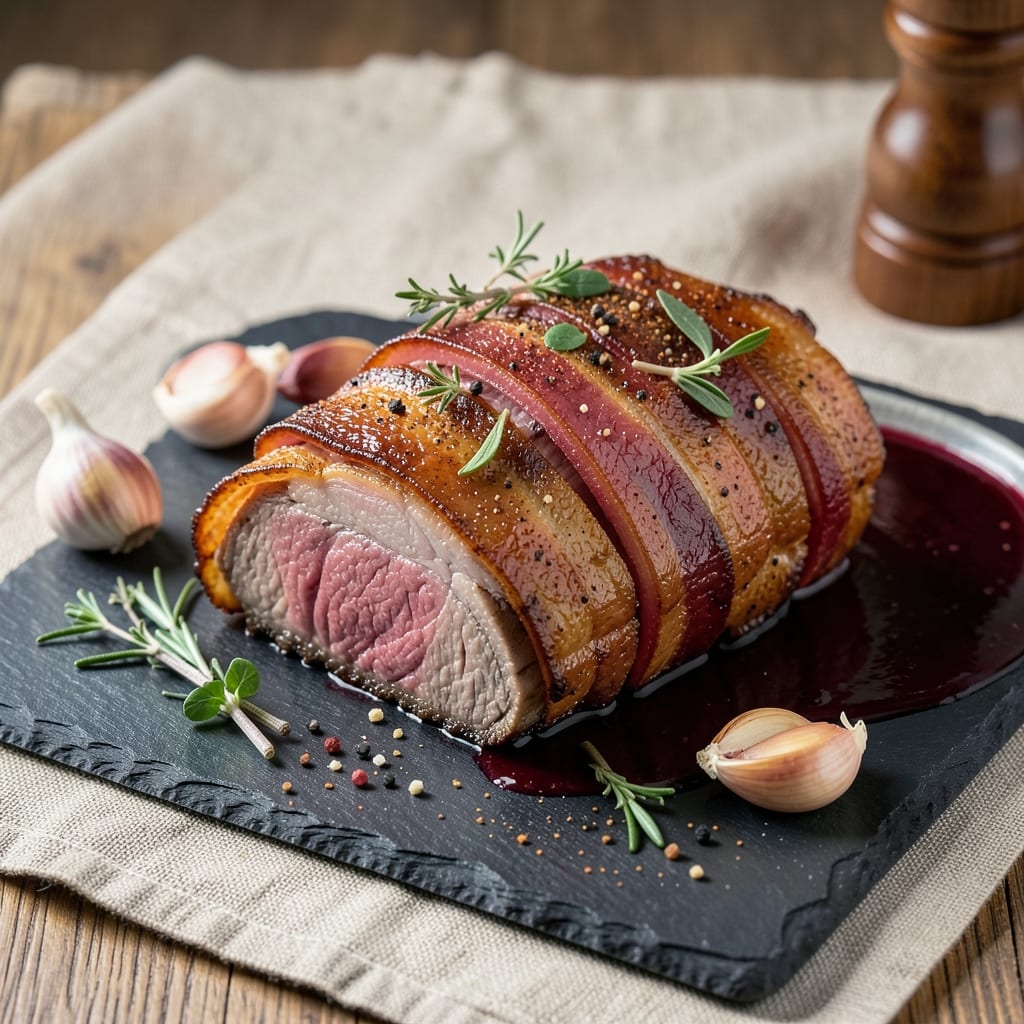
A perfectly cooked bacon-wrapped beef tenderloin roast transforms Sunday dinner into a showstopping centerpiece—where a smoky-sweet crust meets an impossibly juicy, pink center. The secret lies in the bacon: its fat renders into a flavorful glaze while creating a caramelized bark that locks in moisture. I’ve perfected this technique over years of hosting dinner parties, where guests always ask for seconds (and sometimes thirds).
This recipe balances tradition with modern shortcuts—no fancy brining required, just a simple dry rub and the magic of high-heat roasting. The tenderloin cooks to 125–130°F for medium-rare, ensuring every slice is melt-in-your-mouth tender, while the bacon adds depth without overpowering. The best part? It’s foolproof for holiday feasts or intimate gatherings, delivering restaurant-quality results with minimal fuss.
Imagine slicing into a roast where the bacon’s smoky aroma mingles with the beef’s rich, beefy notes—each bite a perfect balance of crispy, salty, and succulent. Pair it with creamy mashed potatoes or roasted root vegetables to soak up every last drop of that rendered bacon fat. The presentation alone will have your guests thinking you’ve been cooking this way for decades.
Ready to elevate your roast game? This method works for whole tenderloins or smaller cuts, and the bacon-wrapping trick ensures no slice is left flavorless. Let’s get started—your dinner table is about to get an upgrade.
Ingredients for bacon wrapped beef tenderloin roast
Six ingredients transform a simple roast into a showstopping centerpiece—where smoky bacon meets tender beef perfection.
| Ingredient | Amount | Notes |
|---|---|---|
| Beef Tenderloin 🥩 | 4 lb | Center-cut, trimmed of silver skin |
| Thick-Cut Bacon 🥓 | 1 ½ lb | Applewood smoked preferred |
| Kosher Salt 🧂 | 1 ½ tsp | Diamond Crystal preferred |
| Freshly Ground Black Pepper 🌶️ | 1 tsp | Coarsely ground preferred |
| Garlic Powder 🧄 | 1 tsp | Freshly ground preferred |
| Smoked Paprika 🌶️ | ½ tsp | For subtle smokiness |
| Olive Oil 🫒 | 2 tbsp | Extra-virgin, for basting |
| Fresh Rosemary 🌿 | 2 sprigs | For aromatic depth |
| Fresh Thyme 🌿 | 4 sprigs | With leaves intact |
| Unsalted Butter 🧈 | 4 tbsp | Cold, cubed for basting |
| Balsamic Vinegar 🍷 | 1 tbsp | For finishing glaze |
| Freshly Squeezed Lemon Juice 🍋 | 1 tbsp | Brightens flavors |
The beef tenderloin is the star, so choose a center-cut piece—it’s more tender and less likely to have connective tissue. I always buy mine from Whole Foods or my local butcher, asking for the most marbled section possible. The marbling ensures juiciness, and the butcher can trim the silver skin for you. If you’re working with a smaller cut (like 2-3 lbs), just adjust the bacon proportionally—half a pound per pound of beef gives that perfect balance of smoky flavor without overwhelming. Applewood-smoked bacon adds depth, but regular thick-cut works too—just skip the sugar coating if you prefer less sweetness.
No fresh rosemary or thyme? Dried works at one-third the amount, but fresh is ideal for that aromatic punch. Running out of balsamic vinegar? Red wine vinegar or even a splash of red wine will do in a pinch. The olive oil and butter should be high-quality—store-bought brands like California Olive Ranch or Land O’Lakes unsalted butter are reliable. For the dry rub, I like to toast the spices (garlic powder and smoked paprika) in a dry pan for 30 seconds to deepen their flavors—worth the extra minute. And if you’re feeling fancy, wrap the roast in butcher paper before the bacon—it helps the bacon crisp up faster without sticking.
This roast tastes even better the next day, so plan ahead. Store leftovers in an airtight container with any rendered bacon fat spooned on top—keeps for 3-4 days in the fridge. For longer storage, slice the roast and freeze portions for up to 3 months. I always make extra bacon—crisp it up and crumble over mashed potatoes or toss into a salad for a smoky kick. The roast itself reheats beautifully in a 350°F oven for 10-15 minutes, covered loosely with foil, until warmed through.
Why You'll Love This Recipe
- Foolproof Prep: I swear by this recipe because it’s that simple—just salt, pepper, garlic powder, and thick-cut bacon wrapped around the tenderloin. No fancy brining, no stressing over seasoning blends. Honestly, I’ve burned steaks trying to impress; this one forgives mistakes.
- Crispy-Creamy Magic: That first bite? Crispy bacon meets melt-in-your-mouth beef—it’s the kind of combo that makes you close your eyes. The garlic powder adds just enough depth without overpowering, and the salt? It’s the secret to letting the beef shine through.
- Weeknight or Weekend Star: Between us, this is my go-to for when I need something special but don’t want to slave over it. Feed a crowd? Double the bacon. Meal prep? Slice the leftovers for sandwiches the next day. It’s the ultimate flexible centerpiece.
- Leftovers That Don’t Suck: Most roasts turn into sad, dry scraps. Not this one. The bacon keeps it juicy, and the tenderloin stays rich enough to reheat beautifully. I’ve even turned cold slices into a killer charcuterie board—because why waste good food?
Step-by-step instructions for bacon-wrapped beef tenderloin roast
Master this technique and you'll achieve a perfectly tender center with a smoky-sweet crust that'll impress any table.
Prepare the Beef Tenderloin with Seasoning
Begin by patting the 4 lb beef tenderloin completely dry with paper towels—this is crucial for that crispy bacon crust later. Place the tenderloin on a cutting board and make a few shallow cuts (about ½-inch deep) in a crosshatch pattern on all sides. This helps the seasoning penetrate deeper and prevents the exterior from cooking too quickly.
In a small bowl, combine 1.5 tsp kosher salt, 1 tsp freshly ground black pepper, 1 tsp garlic powder, and 0.5 tsp smoked paprika. Rub this mixture all over the tenderloin, pressing it into the cuts and crevices. Let it sit at room temperature for 30 minutes while you prepare the bacon. This resting period ensures even cooking and maximum flavor infusion.
Wrap the Tenderloin with Bacon and Herbs
Carefully wrap the 1.5 lb thick-cut bacon around the tenderloin, overlapping the slices slightly to create a complete layer. Secure it with kitchen twine at 2-inch intervals—this keeps everything in place during roasting. The bacon will render fat as it cooks, basting the meat and creating that irresistible crust.
Tuck 2 sprigs fresh rosemary and 4 sprigs fresh thyme between the bacon layers, especially around the thicker sections. The herbs will infuse the meat with their aromatic oils, adding depth to every bite. Once wrapped, place the tenderloin on a rack set inside a roasting pan to allow air circulation on all sides.
Sear and Roast to Perfection
Preheat your oven to 425°F. Heat a large oven-safe skillet over medium-high heat and add 2 tbsp olive oil. Once shimmering, carefully transfer the bacon-wrapped tenderloin to the skillet. Sear for 3-4 minutes per side until the bacon begins to crisp and the exterior develops a deep golden color. This step locks in juices and builds that coveted crust.
Transfer the skillet to the preheated oven and roast for 25-30 minutes, or until the internal temperature reaches 130°F (for medium-rare). The bacon should be crispy and the meat should pull away from the bone with slight resistance. For best results, use a meat thermometer—it's the only way to guarantee perfect doneness every time.
Rest and Finish with Balsamic Glaze
Remove the tenderloin from the oven and transfer it to a cutting board. Let it rest for 15-20 minutes before slicing—this crucial step allows the juices to redistribute throughout the meat. While it rests, melt 4 tbsp unsalted butter in a small saucepan over low heat, then whisk in 1 tbsp balsamic vinegar and 1 tbsp freshly squeezed lemon juice. Simmer for 2-3 minutes until slightly thickened.
Slice the tenderloin against the grain into ½-inch thick portions and drizzle generously with the balsamic glaze. The contrast of smoky bacon, tender beef, and bright balsamic creates a symphony of flavors in every bite. Serve immediately with roasted vegetables or a simple arugula salad to complement the rich, savory profile.
Pro Tips For Making Bacon Wrapped Beef Tenderloin Roast
- USE COLD BACON WRAPS: Start with bacon straight from the fridge—wrapping it around the tenderloin cold prevents it from rendering too fast in the oven. I learned this the hard way when my bacon turned greasy and limp mid-cook, stealing all the crispness.
- SALT THE BACON FIRST: Generously coat the bacon with kosher salt and garlic powder before wrapping—it seasons the meat as it cooks and adds that smoky, savory punch. Skip this, and you’ll end up with bland bacon and underflavored beef.
- SEAR THE WHOLE THING: Get the tenderloin screaming hot in a cast-iron skillet before roasting—this locks in juices and builds a crust. I used to skip this, and the bacon would just steam instead of crisp. Two minutes per side, high heat—don’t rush it.
- REST UNDER FOIL: After roasting, tent the wrapped tenderloin with foil and let it rest for 10 minutes. This keeps the bacon from overcooking while the meat reabsorbs juices—cutting into it too soon turns the bacon soggy and the beef dry. (Yes, even if you’re impatient like me.)
Pro cooking tips for bacon wrapped beef tenderloin roast
Bacon Layering Secrets
Don't just wrap the bacon once—layer it strategically for maximum flavor. Start with a thin layer of bacon directly on the tenderloin, then add herb sprigs (rosemary and thyme) before wrapping with a second thicker layer. The inner layer renders first, basting the meat, while the outer layer creates that perfect crisp. I use 12-15 slices total for a 4 lb roast, adjusting for smaller cuts proportionally. 🥓
High-Heat Sear Tricks
The secret to a deep caramelized crust lies in your searing technique. Heat your oven-safe skillet until it's smoking hot before adding the roast—this creates the Maillard reaction that develops that rich, browned flavor. Sear for exactly 3-4 minutes per side—any longer risks burning the bacon before the center cooks. I like to turn the roast quarter-turns during searing to ensure even browning on all sides.
Temperature Control
Your oven's temperature probe is your best friend here. After searing, transfer the roast to a preheated 425°F oven and monitor the internal temperature with a meat thermometer. For medium-rare, aim for 125-130°F—any lower risks dryness, while higher temps make the center tough. I've found that 425°F is the sweet spot for balancing speed and doneness, especially with the bacon's insulating effect.
Resting Game-Changer
Never skip the 15-20 minute rest—this is where the magic happens. The bacon continues rendering fat during resting, which gets absorbed back into the meat, keeping it juicy. I like to tent the roast loosely with foil during resting to prevent it from drying out. Pro tip: Use this time to prepare your balsamic glaze—the acidity cuts through the richness beautifully and adds that restaurant-quality finish. 🍷
Bacon Fat Utilization
Don't waste that rendered bacon fat—it's liquid gold! After roasting, carefully drain the fat from the pan into a fat separator or small jar. Store it in the fridge for up to 1 month—I use it to baste other roasts, add depth to mashed potatoes, or even drizzle over steaks. For immediate use, spoon it over your sliced tenderloin before serving to maximize flavor in every bite.
Equipment Upgrades
Invest in a good meat thermometer—I swear by the ThermoWorks Smoke—it's accurate to within 1°F and has a flexible probe perfect for checking the tenderloin's core. For searing, a cast-iron skillet (like Lodge) is non-negotiable—it retains heat beautifully and develops that perfect crust. If you're short on time, consider a reverse sear: Roast the tenderloin at 275°F until it reaches 110°F internally, then finish with a high-heat sear for that crispy exterior.
Nutrition facts
Frequently asked questions
Can I use regular bacon instead of thick-cut?
Thick-cut bacon is ideal for this recipe because it renders fat more slowly, creating that perfect crispy crust while basting the meat. However, if you only have regular bacon, you can still use it by overlapping slices more generously (about 18-20 slices for a 4 lb roast) and pressing them tightly against the meat. Just skip any sugary coatings if you prefer less sweetness in the final dish.
How do I adjust this recipe for a smaller tenderloin?
For smaller cuts (like 2-3 lbs), maintain the same bacon-to-meat ratio—use about half a pound of bacon per pound of beef. Reduce the seasoning proportionally (e.g., 0.75 tsp salt for a 3 lb roast) and adjust roasting time accordingly. A 2 lb tenderloin will cook in about 20-25 minutes after searing, while a 3 lb will take closer to 30 minutes.
What if my oven isn't hot enough to sear properly?
If your oven struggles with high heat, try this workaround: Sear the roast in a cold skillet over your stovetop until the bacon is crispy and the meat is browned (about 5-6 minutes per side). Then transfer it to a preheated 400°F oven (instead of 425°F) to finish cooking. This two-step method still delivers that perfect crust while accommodating less powerful ovens.
Can I make this ahead of time?
Assemble the bacon-wrapped roast up to 24 hours ahead and refrigerate it uncovered on a wire rack. This allows the bacon to partially render, intensifying the flavor. Bring it to room temperature for 1 hour before roasting (no need to remove the bacon). For leftovers, store slices in an airtight container with any leftover bacon fat spooned on top—it reheats beautifully in a 350°F oven for 10-15 minutes.
What's the best way to serve this roast?
This rich, smoky roast pairs perfectly with lighter sides to balance its richness. Try creamy mashed potatoes with a drizzle of that rendered bacon fat, roasted root vegetables (like carrots and parsnips), or a bright arugula salad with lemon vinaigrette. For an extra touch, garnish each plate with crispy bacon bits and fresh thyme sprigs. The balsamic glaze also works beautifully drizzled over grilled asparagus or crusty bread.