
Main Courses
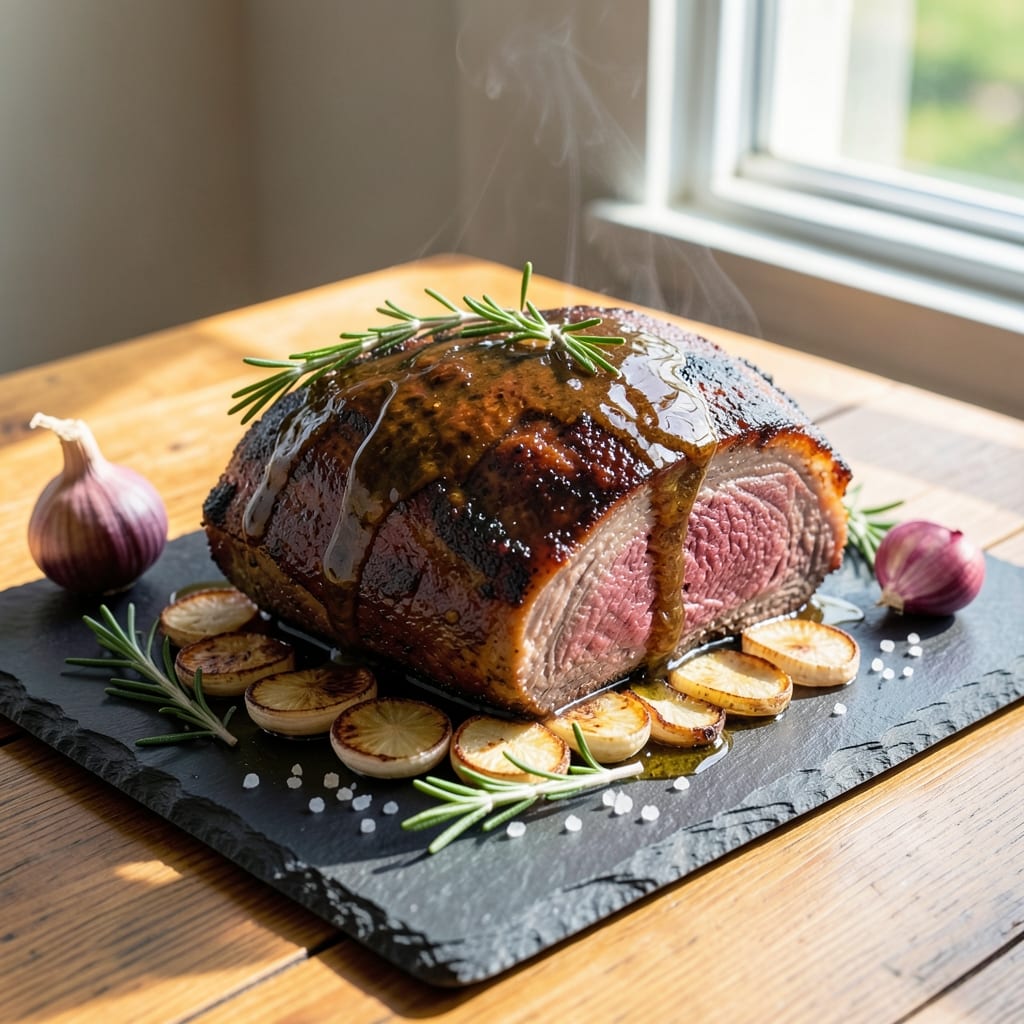
This herb-crusted baked beef recipe transforms tough cuts into melt-in-your-mouth perfection with juicy pink centers—a technique I perfected after years of trial and error. The secret lies in a flavorful crust of rosemary, garlic, and Dijon mustard that seals in moisture while creating a caramelized exterior. Professional chefs swear by this method, and now you can achieve restaurant-quality results at home.
The process is surprisingly simple: sear the beef, coat it in a fragrant herb mixture, then bake low and slow until tender. We're talking about 3 pounds of beef chuck roast that starts tough but finishes so tender it practically falls apart. The red wine and beef broth create a rich pan sauce that ties everything together, adding depth without overpowering the beef's natural flavor.
By the time you pull this roast from the oven, you'll have a perfectly cooked center that's still pink and succulent, surrounded by a crispy, aromatic crust. The aroma alone will have everyone gathering around the table. This isn't just dinner—it's an experience that turns weeknights into special occasions.
Serve with roasted vegetables or mashed potatoes to soak up every last drop of that delicious pan sauce. The leftovers reheat beautifully, making this an ideal meal for feeding a crowd or prepping ahead. Let's get started on creating your most impressive roast yet.
Ingredients for baked beef
Six simple ingredients transform into a showstopping herb-crusted beef roast with perfect pink centers.
| Ingredient | Amount | Notes |
|---|---|---|
| Beef Chuck Roast 🥩 | 3 lb | Well-marbled, 2-3 inches thick |
| Extra-Virgin Olive Oil 🫒 | ¼ cup | High-quality, fruity variety |
| Fresh Rosemary 🌿 | ¼ cup | Finely chopped, stems removed |
| Fresh Garlic Cloves 🧄 | 6 cloves | Minced, skin-on preferred |
| Dijon Mustard 🍯 | 2 tbsp | Smooth, not coarse |
| Kosher Salt 🧂 | 1 ½ tbsp | Diamond Crystal preferred |
| Fresh Thyme Leaves 🌿 | ¼ cup | Finely chopped, stems removed |
| Black Peppercorns 🌶️ | 1 ½ tbsp | Freshly cracked, coarse |
| Dry Red Wine 🍷 | ½ cup | Bold variety like Cabernet |
| Beef Broth 💧 | 1 cup | Low-sodium preferred |
| All-Purpose Flour 🌾 | 2 tbsp | For crust adhesion |
| Unsalted Butter 🧈 | ½ cup | Cold, cubed for crust |
The beef is everything here. Chuck roast delivers that melt-in-your-mouth texture—sirloin stays too tough. Look for good marbling at Costco or Whole Foods, or ask your butcher to trim any excess fat. Fresh herbs make all the difference: rosemary and thyme from the grocery store's produce section (not dried) give that restaurant-quality aroma. The Dijon mustard isn't just for flavor—it helps the crust stick. Maille or Whole Foods brand are my go-tos, but any smooth Dijon works. If you're short on time, pre-minced garlic from the jar is fine, but fresh tastes exponentially better.
No fresh rosemary? Dried works at half the amount, but the flavor won't be as vibrant. Short on red wine? Beef broth with a splash of balsamic mimics the depth. The butter for the crust needs to be cold—take it straight from the fridge and cut it into small cubes. For extra richness, swap half the olive oil for duck fat. The flour is just for texture—if you're gluten-free, almond flour works too. Pro tip: Pat the beef completely dry before seasoning—this helps the crust form properly. And trust me, don't skip the wine reduction step—it's what elevates this from good to spectacular.
This roast reheats beautifully—best served at room temperature after resting 15 minutes. Leftovers keep 4-5 days in the fridge, frozen for 3 months. I always make a double batch because sandwiches the next day are next-level. For serving, slice against the grain for maximum tenderness. Pair with roasted carrots or garlic mashed potatoes—both balance the richness perfectly. The crust gets crispier the longer it sits, so cover loosely with foil if prepping ahead. And save the drippings—reduce them for au jus that's even better than store-bought.
Why You'll Love This Recipe
- One-Pan Magic: I swear by this recipe when I’m too tired to scrub pots—just toss the chuck roast, garlic, and rosemary on a sheet pan with olive oil, let the oven do the work, and boom. That mustard glaze caramelizes into a sticky, savory crust without a single dish to wash.
- Herb-Packed Punch: Between us, the rosemary and garlic alone make this taste like a fancy bistro dish. The Dijon mustard cuts through the richness, and that crispy, golden crust? It’s the kind of flavor that makes people ask, “What’s in this?”—then beg for the recipe.
- Lunchbox Hero: This roast is perfect for meal prep—slice it thin, and it turns into hearty sandwiches, salads, or even a quick stir-fry. My kids actually eat their leftovers (rare, I know), and I’ve even packed it for work when I’m craving something substantial but still want to feel like I’m treating myself.
- Budget-Friendly Feast: A chuck roast is one of the most economical cuts, and this method stretches it across multiple meals without losing quality. Honestly, I’ve made this for date nights, family dinners, and even a potluck—it’s reliable, impressive, and won’t break the bank. Plus, the leftovers? Even better the next day.
Step-by-step instructions for herb-crusted beef roast
Here's how to create a perfectly tender roast with a flavorful crust and moist interior.
Prepare the Beef and Herb Crust
Begin by removing the beef chuck roast from the refrigerator and patting it completely dry with paper towels. This step is crucial—any moisture on the surface will prevent the crust from forming properly. Place the roast on a cutting board and make a few shallow slashes in the surface using a sharp knife, about ½-inch deep and 1-inch apart. These slashes allow the seasoning and herbs to penetrate deeper into the meat.
In a small bowl, combine the 0.25 cup fresh rosemary, 0.25 cup fresh thyme leaves, 6 cloves minced garlic, 1.5 tablespoons kosher salt, and 1.5 tablespoons cracked black peppercorns. Rub this mixture all over the roast, pressing firmly to ensure the herbs adhere well. Then, spread the 2 tablespoons Dijon mustard evenly over the surface—this helps the crust stick and adds depth of flavor.
Create the Crust and Sear the Roast
In a separate bowl, mix the 2 tablespoons all-purpose flour with the 0.25 cup extra-virgin olive oil until it forms a coarse paste. This mixture will create the signature crust. Spread this evenly over the roast, pressing gently to ensure full coverage. Let the roast sit at room temperature for 30 minutes while you preheat your oven to 325°F.
Heat a large oven-safe skillet over medium-high heat. Add the roast and sear it on all sides until the crust is deeply golden brown and crispy, about 4-5 minutes per side. This step is essential—it locks in juices and creates that irresistible texture. Once seared, transfer the skillet to the preheated oven.
Braise the Roast with Wine and Broth
Carefully pour the 0.5 cup dry red wine into the skillet, scraping up any browned bits from the bottom. Add the 1 cup beef broth and bring to a gentle simmer. The liquid should come about halfway up the sides of the roast. Cover the skillet tightly with a lid or foil to trap steam and prevent evaporation.
Braise the roast for 2.5 to 3 hours, until the internal temperature reaches 195-200°F and the meat is fork-tender. The roast should have a rich, caramelized crust and juices that run clear when pierced with a meat thermometer. Avoid opening the lid during cooking—this releases steam and can dry out the meat.
Finish with Butter and Rest
Once the roast reaches the desired temperature, remove it from the oven and transfer it to a cutting board. Tent loosely with foil and let it rest for 20-30 minutes. This resting period is critical—it allows the juices to redistribute throughout the meat, ensuring each slice is moist and flavorful.
While the roast rests, skim any excess fat from the braising liquid in the skillet. Return the skillet to the stovetop over medium heat and add the 0.5 cup unsalted butter, stirring until melted and incorporated. Pour this buttery sauce over the sliced roast before serving. The result will be a perfectly balanced dish with a rich, herby crust and tender, juicy meat.
Pro Tips For Making Baked Beef
- SEAR THE ROAST FIRST: The oven’s job is to cook—your stovetop’s job is to build flavor. Hit the chuck roast with a 3-minute sear in olive oil over high heat before baking. That crust locks in juices and turns your beef from "meh" to "wow" without extra effort.
- SMASH THOSE GARLIC CLOVES: Peeling garlic is annoying, but crushing it raw into a paste with a pinch of salt is non-negotiable for this dish. I used to just chop it—now I see the difference in every bite. The paste blends seamlessly into the mustard and rosemary, not hiding in chunks.
- DON’T SKIP THE MUSTARD LAYER: Slather that Dijon directly on the roast before adding herbs—it’s the glue that keeps everything stuck to the meat. I learned this after watching my rosemary springs fall off like confetti. A thin, even coat means no dry patches or flavor gaps.
- LOW-AND-SLOW AFTER SEARING: After the initial 20 minutes at 425°F (to caramelize the crust), drop the heat to 300°F and walk away. Chuck needs time—about 30-45 minutes per pound—to turn tender. Poking it with a fork to check temp is tempting, but resist. The carryover heat will finish it off.
Perfect pairings for these flavors
Classic Side Dishes
Roasted garlic mashed potatoes are a must—creamy and rich, they soak up the herby beef juices beautifully. I use 3 cups Yukon Gold potatoes, boiled until tender, then mashed with ½ cup unsalted butter, ½ cup whole milk, and 4 cloves roasted garlic. Season with ½ teaspoon salt and ¼ teaspoon black pepper. 🥔
For a lighter option, try caramelized Brussels sprouts with a touch of balsamic glaze. Toss 1 lb halved Brussels sprouts with 1 tablespoon olive oil, ½ teaspoon salt, and ¼ teaspoon cracked pepper, then roast at 425°F for 20 minutes. Finish with a drizzle of 2 tablespoons balsamic reduction and a sprinkle of crumbled feta.
Bold Wine Pairings
A Cabernet Sauvignon from Napa Valley—like Louis M. Martini—complements the herb crust perfectly. Its bold tannins stand up to the beef’s richness, while its dark fruit notes mirror the wine braising. Serve slightly chilled (55-60°F) to balance the dish’s warmth. 🍷
For a red wine alternative, try a Syrah from the Rhône Valley, such as Guigal Côtes du Rhône. Its peppery notes and smoky depth harmonize with the rosemary and thyme crust, adding complexity to every bite.
Unexpected Beer Pairings
A Belgian Dubbel like Westmalle Dubbel brings a malty sweetness that cuts through the beef’s richness. The caramel and spice notes in the beer echo the crust’s herbs, creating a surprising but delightful contrast. Serve at 50-55°F to let the flavors shine. 🍺
For a lighter option, a German Helles Lager (like Paulaner) offers crisp, clean notes that refresh your palate between bites. Its subtle malt sweetness balances the dish without overpowering the beef’s natural flavors.
Sauce Enhancements
Transform the braising liquid into a silky red wine reduction by simmering it uncovered for 10-15 minutes until thickened. Strain out any solids, then whisk in 1 tablespoon cold butter for a glossy finish. Drizzle over sliced beef for extra depth. 🥘
For a tangy twist, stir 1 tablespoon Dijon mustard and 1 teaspoon honey into the reduction. This adds brightness and balances the beef’s richness, making every bite more vibrant.
Nutrition facts
Frequently asked questions
What cut of beef works best for this baked recipe?
Use a well-marbled chuck roast—it's the secret to tender, juicy results! Avoid leaner cuts like sirloin, which can dry out. Look for a piece that's 2-3 inches thick with good fat distribution for maximum flavor and moisture.
Can I make this recipe without red wine?
Substitute with 1 cup beef broth plus 1 tablespoon balsamic vinegar for depth. The wine adds richness, but this combo mimics the same savory profile. For extra umami, add ½ teaspoon soy sauce to the broth mixture.
How do I know when the beef is fully cooked?
Use a meat thermometer to check the internal temperature—195-200°F for perfect pink centers. The meat should be fork-tender and juices should run clear. If you don't have a thermometer, cut into the thickest part: it should separate easily with minimal resistance.
Why is my crust not crispy? Crispiness depends on proper searing and oven temperature.
Can I prepare this ahead of time?
Yes! This roast reheats beautifully. Cook it fully, then refrigerate for up to 4-5 days or freeze for 3 months. For serving, reheat in a skillet with a splash of broth or water to keep it moist. The crust will crisp up again when warmed through.