
Main Courses
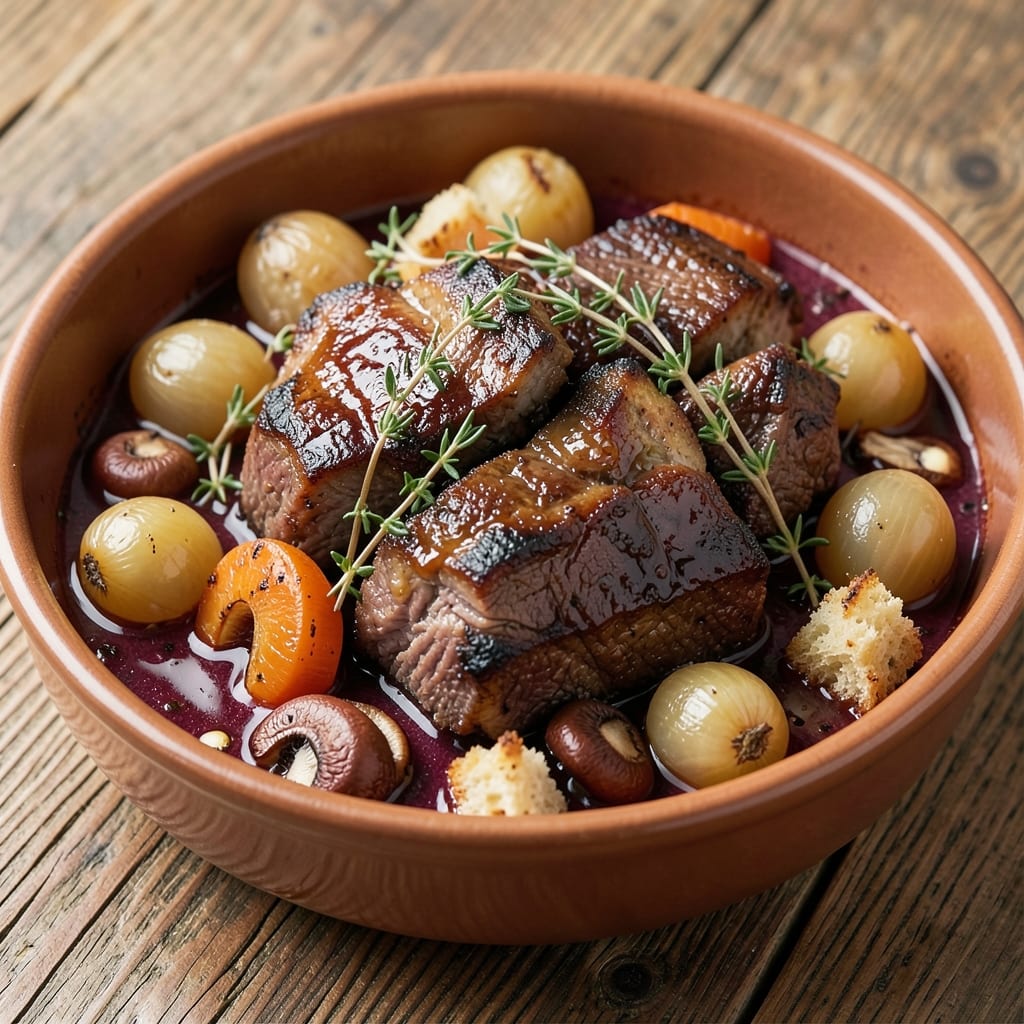
This basic beef bourguignon recipe transforms tough cuts into melt-in-your-mouth tenderness through slow wine braising—a technique that builds deep, complex flavors over time. The key lies in proper searing and deglazing, where caramelized beef bits dissolve into the wine, creating a rich, velvety sauce. I've perfected this method to deliver restaurant-quality results with minimal effort, using simple pantry staples and just one pot.
The process begins with browning beef chuck in batches to ensure maximum flavor extraction, followed by deglazing with red wine to dissolve those precious browned bits. Aromatics like garlic, thyme, and bay leaf infuse the wine as it reduces, while mushrooms and pearl onions add earthy depth. The secret to success? Patience—simmering for 2.5 to 3 hours transforms tough meat into tender, fork-friendly pieces.
What you'll end up with is a dish that's rich, aromatic, and deeply satisfying—each bite offering layers of wine-infused beef, tender vegetables, and a sauce so velvety it coats every forkful. The aroma alone will have your kitchen smelling like a Parisian bistro, while the texture delivers that perfect balance of tender meat and silky sauce. This is comfort food at its finest, made even better by the fact that it gets more flavorful as it sits.
Serve with crusty bread to soak up every last drop of that luxurious sauce, or pair it with mashed potatoes for a hearty meal. The beauty of this recipe is its versatility—it's elegant enough for dinner parties but simple enough for a weeknight dinner. Let's get started on creating this classic French dish that's sure to become a family favorite.
Ingredients for basic beef bourguignon
Simple pantry staples and one tough cut create this deeply flavorful French classic.
| Ingredient | Amount | Notes |
|---|---|---|
| Beef Chuck Roast 🥩 | 2 lb | Cut into 1.5-inch cubes |
| Red Wine 🍷 | 2 cups | Bold, dry variety (Cabernet Sauvignon) |
| Beef Broth 💧 | 1 ½ cups | Low-sodium preferred |
| Yellow Onion 🧅 | 1 whole | Sliced into 1/4-inch rounds |
| Garlic Cloves 🧄 | 4 cloves | Minced finely |
| Fresh Thyme 🌿 | 2 tbsp | Leaves only, stems removed |
| Bay Leaves 🍃 | 2 whole | Dried, standard size |
| Pearl Onions 🧅 | 12 whole | Peeled, halved lengthwise |
| White Mushrooms 🍄 | 8 oz | Sliced into 1/4-inch pieces |
| Tomato Paste 🍅 | 1 tbsp | Smooth, no sugar added |
| All-Purpose Flour 🌾 | 2 tbsp | For dusting beef |
| Olive Oil 🫒 | 2 tbsp | Extra-virgin for searing |
| Salt 🧂 | 1 ½ tsp | Kosher or sea salt |
| Ground Black Pepper 🌶️ | 1 tsp | Freshly ground preferred |
The beef chuck is non-negotiable—it's what gives this dish its signature melt-in-your-mouth texture. Butcher shops often have it pre-cubed, which saves time, but if you're buying a whole roast, ask for a 2-pound piece and cube it yourself. Look for good marbling—the white fat streaks are what keep the meat tender during the long braising. Trader Joe's and Costco both carry excellent chuck roasts at reasonable prices. For the red wine, any bold, dry variety works—Cabernet Sauvignon, Merlot, or even a good Pinot Noir. Avoid sweet wines or anything with residual sugar, as they'll make the sauce taste cloying.
No red wine? Beef broth with 1 tablespoon of balsamic vinegar works in a pinch, though the flavor will be subtly different. Fresh thyme is ideal, but dried thyme at one-third the amount gets you close. The tomato paste is crucial for balancing acidity—skip it only if you've got a high-acid wine like Pinot Noir. For the pearl onions, baby carrots peeled and halved work perfectly if you can't find them. The mushrooms should be firm and dry; cremini mushrooms add extra depth if you prefer. The flour is just for dusting the beef to help it brown better—no need to measure precisely here.
This dish tastes even better the next day, so make a double batch if you're feeding a crowd. The braised beef keeps for 4-5 days in the fridge, and the sauce freezes beautifully for up to 3 months. Store it in airtight containers with a thin layer of olive oil on top to preserve freshness. For serving, I like to reheat it gently on the stove with a splash of water or broth to loosen the sauce. The crusty bread should be served immediately—it soaks up the sauce like a dream, but gets soggy if left sitting.
Why You'll Love This Recipe
- Here’s what sold me: the red wine doesn’t just flavor the dish—it transforms it. That deep, caramelized edge from the seared beef? The way the garlic softens into the sauce? It’s like a hug in a bowl, but make it fancy. (Yes, even on a Tuesday night.)
- One-Pot Magic: I swear by this recipe because it’s one pot—no chopping boards full of scraps, no last-minute pan cleanup. Just brown the chuck roast, toss in the onions and garlic, deglaze with wine, and let it simmer. That’s it. The broth thickens right there while you’re doing dishes.
- Wine-Infused Richness: Here’s what sold me: the red wine doesn’t just flavor the dish—it transforms it. That deep, caramelized edge from the seared beef? The way the garlic softens into the sauce? It’s like a hug in a bowl, but make it fancy. (Yes, even on a Tuesday night.)
- Leftovers That Shine: Between us, the second day of this dish is better than the first. The flavors meld into something even more tender and complex. I freeze portions for lazy nights, and no one ever complains—because reheated bourguignon is still a showstopper. (My roommate’s favorite, actually.)
Step-by-step instructions for beef bourguignon
A rich, wine-braised beef dish that develops deep flavor through slow cooking.
Sear the Beef Chuck Roast
Pat the 2 lb beef chuck roast dry with paper towels—this ensures a proper sear. Cut it into 1.5-inch cubes and season generously with 1.5 tsp salt and 1 tsp ground black pepper. In a large Dutch oven, heat 2 tbsp olive oil over medium-high heat until shimmering.
Working in batches, add the beef cubes and sear for 3-4 minutes per side until deeply browned. Don't overcrowd the pan—this prevents proper browning. Transfer the seared beef to a plate and set aside. You'll know it's ready when the edges are golden brown and the meat releases easily from the pan.
Build the Flavor Base
In the same Dutch oven, add the sliced 1 whole yellow onion and cook for 5 minutes until softened. Stir in the 4 cloves minced garlic and cook for 30 seconds until fragrant. Add the 1 tbsp tomato paste and cook for 1 minute, stirring constantly to prevent burning.
Sprinkle the 2 tbsp all-purpose flour over the mixture and stir vigorously for 1 minute. This creates a roux that will thicken your sauce later. Pour in the 2 cups red wine and scrape up any browned bits from the bottom of the pot—these contain concentrated beef flavor.
Simmer the Braise
Return the seared beef to the Dutch oven along with the 12 halved pearl onions, 8 oz sliced white mushrooms, 2 tbsp fresh thyme leaves, and 2 whole bay leaves. Pour in the 1.5 cups beef broth and bring to a gentle simmer over medium-low heat. The liquid should just barely bubble at the edges.
Cover the pot and simmer for 2 hours, stirring occasionally. Here's the key: maintain a gentle simmer—not a rolling boil. This allows the beef to tenderize slowly while the flavors meld together. If the liquid reduces too much, add a splash of water or broth to keep the beef submerged.
Finish and Rest
After 2 hours, remove the lid and increase heat to medium. Simmer uncovered for another 30-45 minutes until the sauce has thickened and the beef is fork-tender. You'll know it's ready when the beef easily pulls apart with a fork and the sauce coats the back of a spoon.
Remove the bay leaves and adjust seasoning if needed. Let the bourguignon rest for 10 minutes before serving—this allows the juices to redistribute throughout the beef. Serve over mashed potatoes, crusty bread, or egg noodles to soak up that rich sauce.
Pro Tips For Making Basic Beef Bourguignon
- SEAR THE ROAST LONG: Don’t rush the beef—this isn’t a quick sear. Get your pan smoking hot and let the chuck roast sit for 2-3 minutes per side until it releases a deep brown crust. I used to flip it too soon, and the flavor just wasn’t the same. That crust? It’s what carries the wine’s richness when you deglaze.
- SWEAT ONIONS LOW AND SLOW: Yellow onions turn bitter if you rush them. Cook them over medium-low heat with a pinch of salt for 10-12 minutes until translucent and caramelized at the edges. My grandmother swore by this, and she was right: skipping this step means your bourguignon will taste flat, not deep.
- DEGLAZE WITH WINE IMMEDIATELY: As soon as you remove the beef, pour in that red wine right away—don’t let the fond dry out. Scrape every last bit from the pan with a wooden spoon. I learned this the hard way after walking away for "just a minute," and the flavor lost half its punch.
- SIMMER COVERED FIRST HOUR: After adding the broth, cover the pot and let it bubble gently for 45-60 minutes before uncovering. This keeps the beef tender without drying it out. I skip this when I’m lazy, but the dish is noticeably better when I don’t—especially with tougher cuts like chuck.
Perfect pairings for basic beef bourguignon
Classic Wine Pairings
A bold, dry red wine is essential to complement the deep flavors of bourguignon. I always reach for a French Bordeaux or Cabernet Sauvignon—their tannins and acidity mirror the dish's richness. For a lighter option, a Pinot Noir from Burgundy adds bright fruit notes that cut through the sauce. Avoid heavy, oaky wines—they'll clash with the wine's natural acidity. 🍷
Bread Pairings
Crusty baguettes or sourdough are perfect for soaking up the luxurious sauce. I toast mine lightly to add crunch, then serve alongside the bourguignon. For extra indulgence, try garlic bread with a buttery, herbed compound butter. Avoid soft, fluffy breads—they'll turn mushy under the sauce's weight.
Vegetable Sides
Buttery mashed potatoes or creamy polenta balance the dish's richness. I also love roasted Brussels sprouts with a sprinkle of pecans for texture. For a lighter touch, green beans almondine add freshness. Avoid overly sweet vegetables—they'll compete with the wine's depth.
Cheese Pairings
A sharp aged Gruyère or Comté melts beautifully into the sauce, adding nutty complexity. For a simpler option, serve blue cheese on the side—its tang cuts through the richness. Avoid overly creamy cheeses like brie, which can make the dish too heavy.
Dessert Pairings
Finish with a chocolate mousse or crème brûlée to complement the wine's flavors. A fruit tart with berry compote adds brightness. Avoid overly sweet desserts—they'll overpower the dish's sophisticated flavors. A dark chocolate fondue with strawberries is my go-to for a decadent finish. 🍫
Nutrition facts
Frequently asked questions
Can I use a different cut of beef instead of chuck roast?
While chuck roast is ideal for its marbling and tenderness, you can use chuck steak or stew beef as substitutes. Avoid lean cuts like sirloin—they won't become tender enough during the 2.5-hour braise. For best results, cut your alternative into 1.5-inch cubes and sear them thoroughly before braising.
What if I don't have red wine?
Use 2 cups beef broth with 1 tbsp balsamic vinegar or 1 tbsp red wine vinegar for acidity. For deeper flavor, add 1 tsp soy sauce or 1/2 tsp smoked paprika. The texture will be slightly different, but the dish will still be delicious—just less wine-forward.
How do I know when the beef is tender enough?
The beef is ready when it easily pulls apart with a fork and has a fork-tender texture. Test a piece: if it separates cleanly with minimal resistance after 2.5 hours of simmering, it's perfect. Overcooking can make it mushy, so avoid boiling vigorously—keep it at a gentle simmer.
Can I make this recipe in a slow cooker?
Brown the beef first in a skillet, then transfer everything to a 6-quart slow cooker. Cook on low for 6-8 hours or high for 4-5 hours. The slow cooker method requires less attention but may need a splash of broth if the sauce gets too thick. The flavors will still develop beautifully!
Why is my sauce too thin?
If your sauce is watery, it likely didn't reduce enough during simmering. Remove the lid and simmer uncovered for 10-15 minutes to thicken it. For extra richness, stir in 1 tbsp cornstarch mixed with 2 tbsp cold water and simmer until it thickens. Avoid adding flour directly—it can make the sauce grainy.