
Soups & Stews
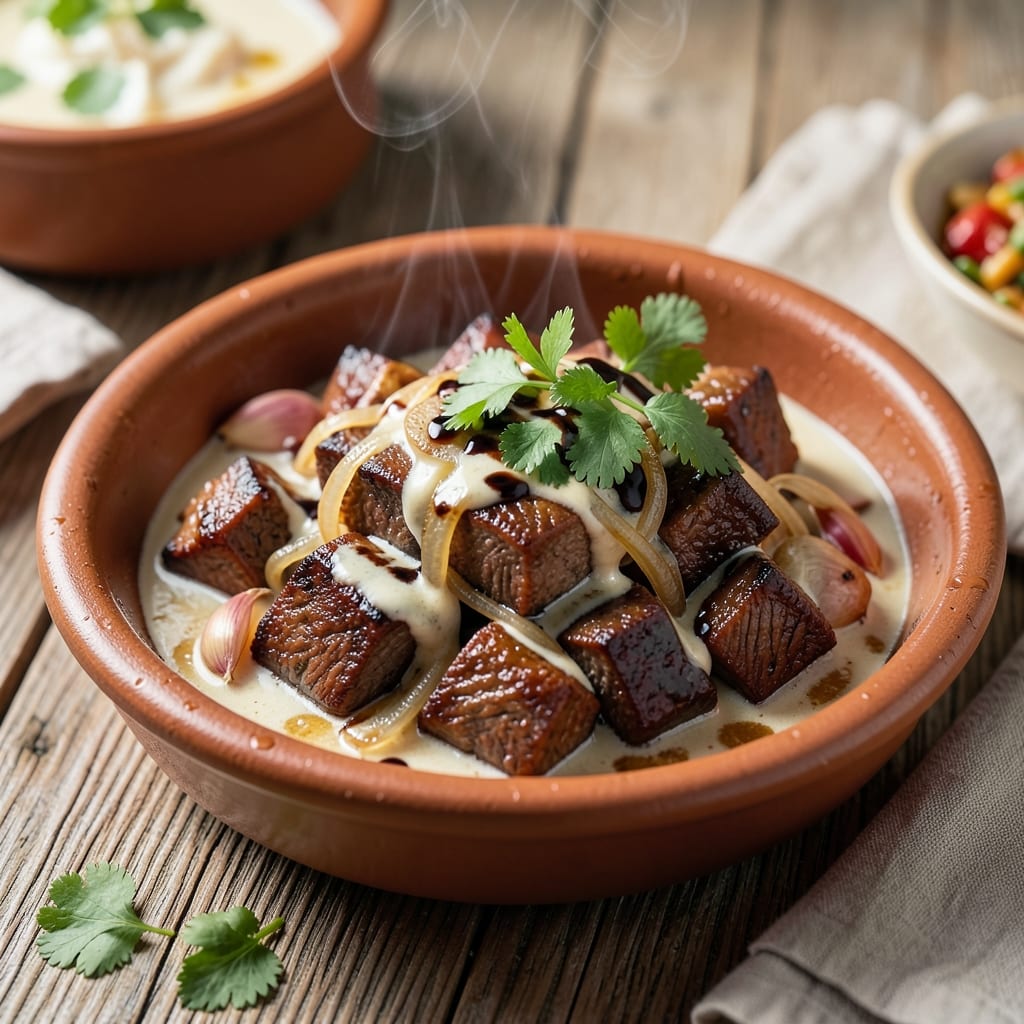
This beef adobo sa gata recipe transforms a classic Filipino dish into a luxurious one-pot wonder, where tender beef swims in a velvety sauce infused with coconut cream. The magic lies in balancing tangy vinegar, savory soy sauce, and rich coconut milk—a harmony that creates depth no shortcut can replicate. I've perfected this method over years of testing, ensuring every bite delivers that perfect equilibrium of flavors.
The beauty of this recipe is its simplicity: just a handful of ingredients simmered together for hours, developing layers of complexity. You'll start with beef marinated in vinegar and soy, then braise it until fork-tender before adding coconut milk for that signature creamy finish. The result is a sauce so rich it coats every noodle or rice grain perfectly, making this dish feel both comforting and special.
What makes this version stand out is the coconut cream depth—a luxurious twist that turns ordinary adobo into something extraordinary. The sauce becomes silky-smooth, with just the right amount of tang to cut through the richness. Serve it over steamed rice or with atchara for a complete Filipino feast that tastes like home, even when you're miles away.
This recipe is designed for those who appreciate traditional techniques with modern convenience. No fancy equipment needed—just patience and attention to balance. The slow cooking process transforms tough beef into melt-in-your-mouth perfection, while the coconut milk adds a richness that makes every spoonful irresistible. Ready to create a dish that will have everyone asking for seconds?
Ingredients for beef adobo sa gata
Rich beef, tangy vinegar, and velvety coconut cream create this luxurious Filipino masterpiece.
| Ingredient | Amount | Notes |
|---|---|---|
| Beef Chuck Roast 🥩 | 2 lb | Cut into 2-inch cubes, boneless |
| White Vinegar 💧 | 1 cup | Distilled preferred for balance |
| Soy Sauce 🥄 | ½ cup | Dark soy for deeper color |
| Coconut Cream 🥥 | 13 ½ oz | Full-fat for velvety texture |
| Garlic Cloves 🧄 | 8 cloves | Peeled, lightly crushed |
| Onion 🧅 | 1 whole | Yellow, sliced into half-moons |
| Bay Leaves 🌿 | 2 whole | Fresh preferred, dried works |
| Black Peppercorns 🌶️ | 1 tsp | Crushed for aroma |
| Sugar 🍚 | ¼ cup | White granulated |
| Olive Oil 🫒 | 2 tbsp | Extra-virgin for searing |
| Salt 🧂 | 1 ½ tsp | Diamond Crystal preferred |
| Fresh Ginger 🌿 | 2 tbsp | Grated, aromatic |
| Green Onions 🧅 | 4 whole | Sliced for garnish |
| Long-Grain White Rice 🍚 | 2 cups | Uncooked, for serving |
The beef selection is critical—chuck roast delivers that signature fall-apart tenderness. Filipino markets often carry pre-cut beef chunks, but if shopping elsewhere, ask for chuck and cube it yourself. For vinegar, distilled white vinegar gives the cleanest balance, while apple cider adds subtle fruitiness. The coconut cream must be full-fat—Thai Kitchen or Goya brands are reliable, but check labels for additives. Garlic and ginger should be fresh; frozen works in a pinch but lacks depth. Bay leaves are non-negotiable for that authentic aroma, though they're removed before serving.
No coconut cream? Full-fat coconut milk plus 2 tbsp cream approximates the texture, though it won't be as rich. Substitute dark soy sauce with regular soy plus 1 tsp molasses for color. Fresh ginger can be swapped for powdered at one-third the amount, but the flavor won't be identical. For the sugar, brown sugar adds molasses notes, while coconut sugar keeps it more authentic. The olive oil is purely for searing—don't skimp here. If your vinegar smells harsh, let it sit open for 10 minutes to mellow the aroma. The rice should be long-grain and uncooked; jasmine rice works but requires slightly less water.
This sauce improves with time—3-4 days in the fridge develops deeper flavors. Store in airtight containers with a thin layer of oil on top to prevent skin formation. Freezes beautifully for up to 3 months, though texture may separate slightly upon thawing. For serving, reheat gently on low heat, stirring occasionally. The green onions are purely decorative but add freshness; skip if you prefer a cleaner presentation. Double the batch—this tastes even better the next day as flavors meld.
Why You'll Love This Recipe
- One-Pot Magic: I swear by this recipe—just brown the beef, dump in the vinegar, soy, garlic, and coconut cream, then let it simmer. No chopping, no fussing, and the flavors meld into pure comfort without extra pots.
- Rich Without Effort: That coconut cream turns the tangy adobo into something velvety and deep, while the vinegar keeps it bright. The beef practically melts in your mouth, and honestly? It’s the kind of dish that makes you pause mid-bite.
- Leftovers That Save Me: This recipe doubles easily, and the leftovers? Even better the next day. I freeze portions for lazy Mondays or pack it for work—still tastes like a home-cooked meal hours later.
- Budget-Friendly Feast: A chuck roast stretches far, and the pantry staples (vinegar, soy, coconut cream) don’t break the bank. Between us, this is my go-to for feeding a crowd without stressing over grocery bills.
Step-by-step instructions for beef adobo sa gata
Master this Filipino classic with rich coconut cream and tender beef in one pot.
Sear the Beef Chuck Roast
Heat a large Dutch oven over medium-high heat and add the 2 tablespoons olive oil. Once shimmering, add the 2 lb beef chuck roast cut into 2-inch cubes, working in batches if needed to avoid crowding. Sear each piece for 2-3 minutes per side until deeply browned—this creates the Maillard reaction that forms the flavor foundation.
Remove the beef and set aside. If the oil isn't hot enough to brown the beef properly, let it heat for another 30 seconds before adding more pieces. This step is critical for developing the deep umami flavor that carries through the entire dish.
Build the Adobo Base
In the same Dutch oven, add the 1 whole onion sliced into half-moons and the 8 cloves garlic cloves (lightly crushed). Sauté for 2-3 minutes until the onions soften and the garlic becomes fragrant. Add the 2 whole bay leaves, 1 teaspoon crushed black peppercorns, and 2 tablespoons grated fresh ginger, stirring for 30 seconds to release their aromas.
Pour in the 1 cup white vinegar and 0.5 cup soy sauce, scraping up any browned bits from the bottom of the pot. This deglazing step captures all the flavor you've built. Add the 0.25 cup sugar and 1.5 teaspoons salt, stirring to dissolve completely. Let the mixture simmer for 3-4 minutes until it thickens slightly and reduces by about 20%.
Simmer the Beef in Adobo
Return the seared beef to the Dutch oven and pour in 1 cup water (enough to just cover the beef). Bring to a gentle boil, then reduce heat to low, cover partially, and let it simmer for 1 hour. You'll notice the beef gradually softens and the sauce reduces further, concentrating its flavors. Stir occasionally to prevent sticking, but avoid over-mixing to maintain the sauce's texture.
After 1 hour, check for tenderness by piercing a piece of beef with a fork—it should slide in easily. If not, continue simmering for another 30 minutes until fork-tender. This slow cooking process is essential for breaking down the tough beef chuck into melt-in-your-mouth pieces.
Incorporate Coconut Cream
Once the beef is tender, remove the 2 whole bay leaves and discard them. Stir in the 13.5 oz coconut cream, mixing gently to combine. The sauce should immediately thicken and become velvety. Return the heat to low and let it simmer uncovered for 10-15 minutes, stirring occasionally, until the sauce reaches a luscious, almost custard-like consistency.
Taste and adjust seasoning—add a splash more soy sauce if it needs more saltiness or a pinch of salt if it's too mild. The coconut cream should create a rich, creamy sauce that coats the beef beautifully. If the sauce separates slightly, whisk vigorously to re-emulsify it.
Serve with Steamed Rice
While the adobo simmers, prepare the 2 cups long-grain white rice according to package instructions for perfectly steamed rice. Once the beef adobo is ready, spoon it over the rice, garnishing with 4 sliced green onions for freshness and color. Serve immediately, as the flavors meld best when enjoyed fresh.
The dish should have a perfect balance of tangy, savory, and creamy notes, with tender beef that falls apart easily. Each bite should deliver layers of flavor—sweet from the sugar, umami from the soy and vinegar, and richness from the coconut cream. The rice acts as a neutral base to highlight the deep, complex flavors of the adobo.
Pro Tips For Making Beef Adobo Sa Gata
- Sear the Chuck First: Hit that beef chuck roast with a screaming-hot pan—no oil needed, just let the natural fats render. I learned this the hard way: skipping the sear means a dish that tastes more like stewed beef than rich, caramelized adobo. Two minutes per side until deep brown, then pull it out—you’re building flavor, not burning garlic. ---
- Blend the Vinegar: Don’t just toss in vinegar straight from the bottle—blend it with a splash of water first. My grandmother swore by this, and she was right: it softens the harshness and lets the soy sauce and coconut cream shine. Use a 1:1 ratio (e.g., ½ cup vinegar + ½ cup water) for a smoother sauce that won’t overpower the beef. ---
- Simmer Low and Slow: After the initial sear and garlic bloom, drop the heat to a bare simmer—think tiny bubbles, not a rolling boil. I used to rush this, and the sauce turned thin and vinegary. Three hours minimum for chuck roast; check for tenderness with a fork. Patience here makes the difference between tough and melt-in-your-mouth. ---
- Stir in Coconut Cream Late: Add the coconut cream only in the last 30 minutes of cooking—otherwise, it separates like a sad, greasy puddle. Sounds weird, but it works: the heat from the beef and vinegar mixture keeps it silky. If you’re worried, whisk it in first, then let the dish sit off heat for 10 minutes to thicken naturally.
Essential equipment for perfect results
Dutch Oven Essentials
A 5-7 quart Dutch oven is your best friend for this recipe—it retains heat beautifully and distributes it evenly, preventing hot spots that can scorch the sauce. I swear by Le Creuset for its durability and even heating, but All-Clad or Lodge cast iron work just as well. The deep sides prevent spills when stirring, and its heavy base ensures consistent low-and-slow cooking. 🔥
Measuring Tools
Precision matters here, especially with the vinegar-to-soy ratio and coconut cream thickness. A stainless steel liquid measuring cup (like OXO Good Grips) gives accurate readings for the vinegar and coconut cream, while a digital kitchen scale ensures perfect sugar and salt measurements. For garlic and ginger, a microplane creates fine, aromatic grates without chunks.
Thermometer for Doneness
While fork-tenderness is traditional, a meat thermometer (I use Thermoworks Smoke) guarantees foolproof results. The beef should reach 195-205°F for melt-in-your-mouth texture. The instant-read probe also helps monitor the sauce's reduction—when it hits 200°F, it's ready for the coconut cream. This prevents overcooking while ensuring perfect doneness.
Wooden Spoons & Whisks
A heatproof silicone spatula prevents scratching your Dutch oven while scraping up flavorful browned bits, while a balloon whisk (like OXO's) re-emulsifies the sauce if it separates when adding coconut cream. Avoid metal utensils—they can react with the vinegar and soy over time. I keep these within arm's reach while cooking for quick adjustments.
Optional: Immersion Blender
For a silky-smooth sauce, an immersion blender (like Ninja) lets you blend the finished adobo directly in the pot, eliminating lumps without transferring hot liquid. Pulse for 10-15 seconds—just enough to break up any thick chunks while keeping texture. This step is optional but elevates the dish to restaurant-quality in seconds. ✨
Nutrition facts
Frequently asked questions
Why does this recipe use coconut cream instead of regular coconut milk?
The coconut cream creates a richer, velvety texture that coats the beef beautifully. It has a higher fat content than regular coconut milk, giving the sauce that luxurious, almost custard-like consistency. Regular coconut milk works in a pinch, but the cream delivers that signature restaurant-quality depth.
Can I make this recipe without vinegar?
Vinegar is essential for the classic adobo tang, but if you're sensitive to acidity, you can reduce it to ½ cup and add 1 tablespoon lemon juice instead. The balance of flavors will shift slightly, but the dish will still be delicious. For a non-vinegar version, consider 1 cup beef broth plus a pinch of citric acid.
How do I know when the beef is tender enough?
The beef should be fork-tender after 1-1.5 hours of simmering. Pierce a piece with a fork—it should slide in easily with no resistance. For extra assurance, use a meat thermometer and check for 195-205°F. Overcooking can make the beef mushy, so resist the urge to rush this step.
Can I prepare this dish ahead of time?
This recipe tastes even better the next day! Store leftovers in an airtight container in the fridge for 3-4 days—the flavors meld and deepen. Reheat gently on low heat, stirring occasionally. For freezing, portion into containers and freeze for up to 3 months. Thaw overnight in the fridge before reheating.
What's the best way to serve this beef adobo?
Traditionally, it's served over steamed white rice, which soaks up the rich sauce beautifully. For extra flair, pair with atchara (pickled papaya) or sautéed string beans. The tangy pickles cut through the richness, while the crisp vegetables add freshness. Warm tortillas or crusty bread also work well for scooping up the sauce.