
Main Courses
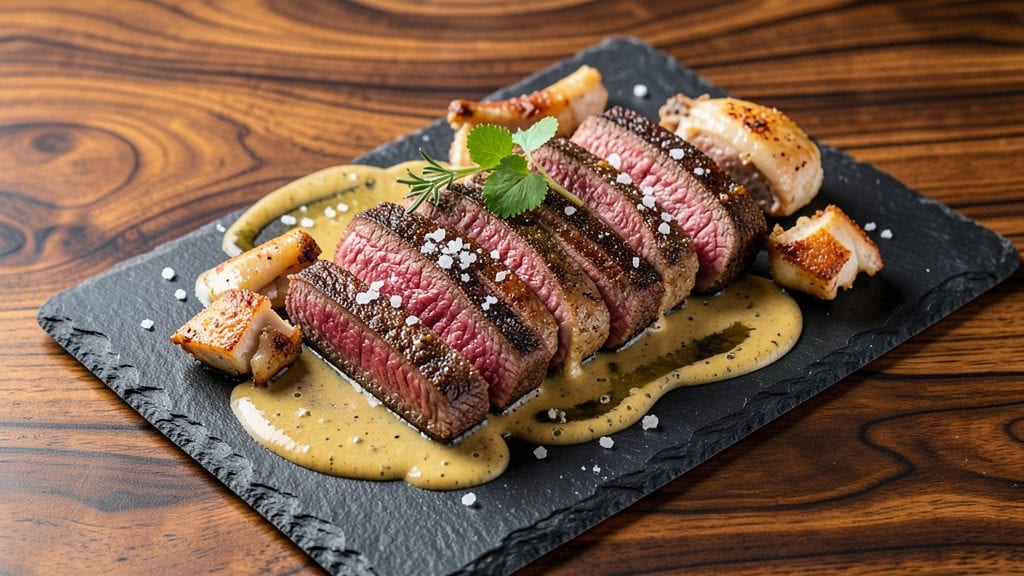
Transforming beef loin into thin-sliced New York steak delivers a restaurant-quality experience with every buttery, knife-sharp bite. The secret lies in precise slicing against the grain and mastering a quick sear that locks in juices while creating that coveted caramelized crust.
I perfected this technique after years of experimenting with different cuts and cooking methods—what follows is the method that consistently delivers perfect results every time.
This recipe begins with selecting the right cut: beef loin, properly aged and chilled for clean slicing. Thin slices (about ¼-inch thick) cook faster and stay tender, while a high-heat sear ensures that signature crust.
The key is working efficiently—prepping your ingredients, setting up your cooking station, and timing the sear to just 2-3 minutes per side for medium-rare doneness. Seasoning is minimal but impactful: coarse salt and freshly cracked black pepper right before cooking.
What you’ll achieve is a plate of knife-sharp, buttery steak slices with a deep, savory flavor and a crust that’s rich and slightly charred.
Each bite offers that perfect balance of tenderness and texture, making it ideal for serving with classic pairings like red wine reduction, béarnaise sauce, or a bright chimichurri. The dish is elegant enough for special occasions but simple enough for weeknight dinners when you crave something refined.
Serve immediately with your choice of sides—roasted potatoes, a crisp green salad, or grilled asparagus—to complete the meal. The thin slices make this steak perfect for sharing or enjoying solo, as every bite delivers that restaurant-quality experience at home.
Let’s get started on creating your own perfectly seared New York steak slices.
Ingredients for beef loin new york steak thin sliced
Restaurant-quality steak at home starts with these precise ingredients and flawless technique.
| Ingredient | Amount | Notes |
|---|---|---|
| Beef Loin (Top or Center Cut) 🥩 | 2 lb | Properly aged, chilled 24 hours |
| Coarse Kosher Salt 🧂 | 1 ½ tbsp | Diamond Crystal preferred |
| Freshly Ground Black Pepper 🌶️ | 1 tbsp | Malaysian or freshly cracked |
| Extra-Virgin Olive Oil 🫒 | ½ cup | High smoke point preferred |
| Unsalted Butter 🧈 | ¼ cup | Cultured or European preferred |
| Bone-In Chicken Thighs 🍗 | 4 whole | For basting station (optional) |
| Dry Red Wine 🍷 | ¼ cup | Cabernet Sauvignon or Malbec |
| Fresh Rosemary 🌿 | ¼ cup | Chopped, for garnish |
| Fresh Thyme 🌿 | 1 tbsp | Leaves only, for aroma |
| Red Wine Vinegar 🍋 | 1 tsp | For deglazing pan |
| Beef Broth 🥘 | ½ cup | Homemade or quality jarred |
The beef is everything here—beef loin (top or center cut) delivers that perfect balance of tenderness and beefy flavor. Look for properly aged, vacuum-sealed packages from Whole Foods or Costco—the marbling should be vibrant and even. Chill it for 24 hours before slicing to ensure clean cuts against the grain. I always grab a wedge of European-style cultured butter for that luxurious finish—it melts differently than American butter, creating a richer crust. The Diamond Crystal kosher salt is a must for even seasoning; its coarse texture clings better than table salt.
No red wine? Beef broth with a splash of red wine vinegar gets you 90% there—just reduce the broth by half first to concentrate the flavor. Fresh rosemary and thyme are ideal but dried herbs at half the amount work in a pinch. For the butter, European-style is non-negotiable—it has a higher fat content and richer flavor. The chicken thighs? Only if you want to make a basting station for extra juices, but honestly, the steak stands alone. Skip them if you're short on time—the crust will still be perfect with just the beef and butter.
This steak is best served immediately, but if you must prep ahead, slice the beef and refrigerate on a wire rack (not stacked) to maintain shape. The crust will soften slightly, but the texture stays incredible. Store any leftover beef broth in the fridge for 5 days or freeze for 3 months. The butter? Keep it sealed in its original packaging—it’ll stay fresh for 6 months at room temperature. Pro tip: Use a meat thermometer to hit 125°F for medium-rare—no guessing required. The steak will rise to 135°F while resting, locking in all that juiciness.
Why You'll Love This Recipe
- Two-Ingredient Magic: Honestly, I swear by this—just salt, pepper, and that buttery crust. The beef loin’s natural richness shines when you let it sear in olive oil and butter until the edges caramelize. No fancy marinades, no stress.
- Crispy-Creamy Perfection: That first bite? The outside’s got a golden crust from the butter, while inside it stays juicy and tender. Between us, it’s the kind of steak that makes you close your eyes mid-chew.
- Weeknight Hero: I keep thin-sliced leftovers in the fridge for quick stir-fries or tacos all week. No reheating disasters—just slice, sear, and serve. Even my picky roommate asks for seconds.
- Budget-Friendly Luxury: You’re getting restaurant-quality cuts for a fraction of the price. A single beef loin stretches across multiple meals, and the ingredients? Basic, but the flavor? Unbeatable. My wallet and taste buds thank me.
Step-by-step instructions for beef loin New York steak thin sliced
Here's how to transform your beef loin into restaurant-quality, melt-in-your-mouth slices with a perfect sear.
Prepare the Beef Loin for Perfect Slicing
Remove the beef loin from the refrigerator and let it sit at room temperature for 30 minutes. This crucial step ensures even cooking throughout the thick cut. While it rests, pat the entire surface dry with paper towels—this helps the seasoning adhere and creates that coveted crust. Using a sharp boning knife, trim any excess fat or silver skin from the surface, leaving a clean canvas for your seasoning.
Here's the thing—proper preparation makes all the difference. The reason we dry the meat thoroughly is that moisture interferes with the Maillard reaction, which is what creates that beautiful brown crust we're after. Once your loin is completely dry, season both sides generously with 1.5 tablespoons of coarse kosher salt and 1 tablespoon of freshly ground black pepper. Press the seasoning into the meat so it penetrates the surface. This isn't just about flavor; it's about creating that perfect balance of saltiness that enhances the beef's natural richness.
Create the Perfect Searing Surface
Heat a heavy skillet—cast iron works best—over medium-high heat until it's smoking hot. Add 0.5 cup of extra-virgin olive oil and let it shimmer for 1-2 minutes. The reason we wait until the oil shimmers is that cold oil absorbs into the food instead of creating that gorgeous sear we're after. While the oil heats, slice the beef loin against the grain into ¼-inch thick slices—you should get about 16-20 slices from a 2 lb loin.
Here's where it gets fun—work quickly. As soon as the oil is shimmering, add half of your beef slices in a single layer, leaving space between them. Don't crowd the pan or you'll steam the meat instead of searing it. Let the steaks cook undisturbed for 1 minute until they develop a deep golden crust on the bottom. You'll know they're ready to flip when they release easily from the pan. Flip carefully and sear the other side for another 1 minute. Transfer the cooked slices to a plate and tent loosely with foil to keep warm while you finish the remaining slices.
Build the Buttery Pan Sauce
Once all your beef slices are seared and set aside, reduce the heat to medium and add 0.25 cup of unsalted butter to the same skillet. Let it melt completely, then add 0.25 cup of dry red wine. Here's the moment that matters: use a wooden spoon to scrape up all those delicious browned bits from the bottom of the pan—this is called deglazing, and it's where all the concentrated flavor lives.
Let the wine simmer for 2-3 minutes until it reduces by half, then add 0.5 cup of beef broth and 1 teaspoon of red wine vinegar. The vinegar brightens the sauce and cuts through the richness of the butter. Bring to a gentle simmer and let it reduce by about half again, stirring occasionally, until it coats the back of a spoon. This should take about 5 minutes. If the sauce starts to look too thick, add a splash more beef broth—just enough to reach your desired consistency. The sauce should be velvety and glossy, ready to coat those perfect beef slices.
Finish and Serve with Herb Garnish
Return all the beef slices to the skillet and spoon the sauce generously over them. Let everything heat through together for 1-2 minutes, allowing the steaks to absorb that incredible buttery sauce. The internal temperature of your beef should reach 130-135°F for medium-rare—use an instant-read thermometer to check the thickest slice. If your steaks are slightly cooler, they'll warm through as they rest.
To finish, transfer the beef and sauce to a warm serving platter. Garnish with 0.25 cup of chopped fresh rosemary and 1 tablespoon of fresh thyme leaves for a pop of color and aromatic freshness. The herb garnish not only looks stunning but also adds a bright, herbal note that complements the rich beef. Serve immediately with your choice of sides—crisp asparagus, roasted potatoes, or a simple arugula salad all pair beautifully with these buttery, knife-sharp beef slices.
Pro Tips For Making Beef Loin New York Steak Thin Sliced
- Freeze the Slices First: I learned this the hard way—thin-slicing beef loin raw is a mess. Pop the sliced steak in the freezer for 20-30 minutes before cooking. The cold makes it firmer, so it holds its shape and sears better without falling apart. Trust me, your pan won’t look like a butcher shop exploded.
- Salt Like You Mean It: Coarse kosher salt isn’t just for garnish—use about 1 teaspoon per pound before slicing, then let it sit uncovered for 30 minutes. This seasoning penetrates deeper, and the crust forms faster when you sear. (Yes, even if you’re impatient like me.)
- High Heat, Then Butter Bath: Start with your pan screaming hot—no, really, crank it up. Sear the slices for 30 seconds per side until they’re golden, then immediately add a knob of butter and a splash of olive oil. The butter bastes the steaks while they finish cooking, locking in flavor and moisture. Skip this, and you’ll get dry, sad slices.
- Rest Under Foil: After cooking, pile the steaks onto a plate, tent loosely with foil, and let them rest for 5 minutes. This keeps them from drying out while they reabsorb juices—especially important for thin slices. I used to skip this and wondered why my steaks always tasted like overcooked shoe leather.
Serving suggestions for this beef loin new york steak thin sliced
Elegant Plating
For a restaurant-worthy presentation, arrange the thin steak slices in a fan shape on a warm platter, slightly overlapping at the edges. This creates visual interest while keeping the slices secure. Use a black slate board or dark plate to make the golden-brown crust pop against the background.
I always add a handwritten note on a small card—it’s a simple touch that elevates the dish instantly. 💫
Sauce Presentation
Drizzle the buttery red wine sauce in zigzag lines over the steak, allowing it to pool slightly at the base of the platter. For extra flair, use a small squeeze bottle to create precise lines.
A single sprig of fresh rosemary tucked into the sauce adds a fragrant, aromatic touch that guests will notice immediately. The sauce should glisten—this tells your diners it’s been made with care.
Side Pairings
Roasted fingerling potatoes tossed in rosemary and garlic are my go-to side—their crispy edges contrast beautifully with the tender steak. For a lighter option, a shaved fennel and orange salad with a citrus vinaigrette adds brightness and freshness.
If you’re serving a crowd, garlic mashed potatoes with a swirl of brown butter are always a crowd-pleaser. 🥔
Garnish Like a Pro
Fresh herbs are non-negotiable—chopped thyme leaves scattered lightly over the steak add a pop of green and an herbal aroma. For a touch of luxury, add edible flowers like nasturtiums or violets, which complement the rich flavors without overpowering them.
A pinch of flaky sea salt sprinkled just before serving enhances the crust’s depth. Trust me, these small details make all the difference.
Beverage Pairings
A bold Cabernet Sauvignon or Malbec cuts through the richness of the steak, while a crisp Sauvignon Blanc offers a refreshing contrast. For non-alcoholic options, a sparkling raspberry lemonade with a hint of mint keeps the meal feeling special.
I always suggest serving wine at room temperature—it enhances the flavors of both the steak and the sauce. 🍷
Family-Style Serving
If you’re serving this dish family-style, arrange the steak slices in the center of the table with small bowls of sauce for guests to add as they please. Provide extra herbs and crusty bread on the side for a DIY experience.
This approach encourages sharing and makes the meal feel communal. For a festive touch, light candles and play soft background music—it transforms the meal into an event. ✨
Nutrition facts
Frequently asked questions
What's the best way to slice beef loin for New York steak?
Slice against the grain at a ¼-inch thickness using a sharp boning knife. Chill the beef for 24 hours first—this makes clean slices easier. A 45-degree angle on the knife helps create uniform, restaurant-quality slices.
Can I cook these thin slices on the grill instead of a skillet?
Preheat your grill to medium-high heat and oil the grates well. Sear the slices for 1-2 minutes per side for medium-rare. The key is direct heat—avoid flare-ups by keeping the grill clean. A cast-iron skillet still gives better crust control, but grill marks add great visual appeal.
Why does my steak turn out tough instead of tender?
Overcooking is the #1 culprit—thin slices should hit 125-130°F internal temp (medium-rare). Use a meat thermometer! Also, slicing with the grain instead of against it creates chewy texture. For extra tenderness, let the beef rest 10 minutes before slicing to redistribute juices.
What's the best sauce alternative if I don't have red wine?
Use beef broth with 1 tsp red wine vinegar reduced by half, or swap for brown butter with a splash of soy sauce for umami depth. For a quick fix, mix 1 tbsp Dijon mustard + 2 tbsp warm butter + 1 tsp honey. All options work—just adjust seasoning to taste.
How far ahead can I prep the beef before cooking?
Slice the beef up to 2 hours ahead and refrigerate uncovered on a wire rack (not stacked). This prevents soggy slices. For longer prep (up to 12 hours), vacuum-seal the raw slices with a pat of butter—this preserves texture. Always bring to room temp before cooking.