
Main Courses
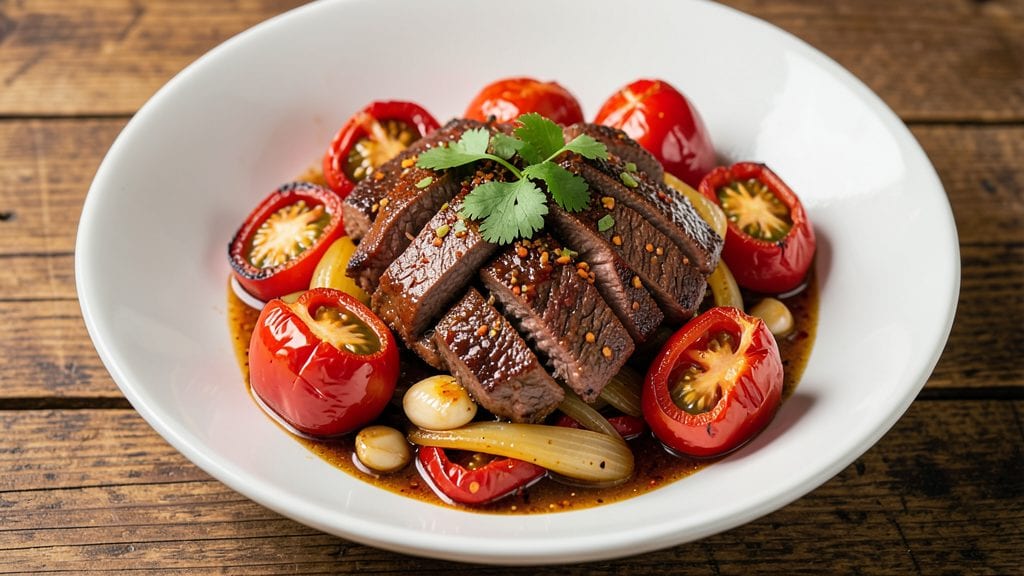
This Beef Saltado recipe brings the bold, smoky flavors of Filipino cuisine straight to your kitchen with one pan of fiery action. The dish transforms tender beef into caramelized perfection, balanced by tangy soy sauce and garlic—all while keeping prep simple yet authentic.
I perfected this method after years of experimenting with stir-fry techniques, ensuring every bite delivers that signature Filipino depth.
The magic lies in quick marinating and high-heat stir-frying, which creates those coveted charred edges on the beef while keeping the rice perfectly fluffy. Traditional ingredients like soy sauce, vinegar, and a touch of calamansi (or lime) cut through the richness, creating a sauce that clings to every piece.
This recipe delivers restaurant-quality results without the complexity—ideal for weeknight dinners that impress.
What you’ll achieve is a dish where each component shines: beef with a crispy exterior and juicy center, perfectly wilted vegetables, and a sauce that’s tangy, savory, and just sweet enough.
The aroma alone will transport you to bustling Filipino markets, but the taste proves you don’t need to travel to experience it. Serve it over steamed rice for the full experience.
This recipe is adaptable—swap bell peppers for whatever seasonal vegetables you have on hand, or add a splash of coffee to the sauce for deeper complexity. The key is confidence in the stir-fry technique, which turns this into a foolproof main course that feels special yet effortless.
Ingredients for beef saltado
Authentic Filipino flavors start with these carefully chosen ingredients—each playing a role in the dish's signature balance.
| Ingredient | Amount | Notes |
|---|---|---|
| Flank Steak 🥩 | 1 ½ lb | Thinly sliced against grain |
| Yellow Onions 🧅 | 2 whole | Thinly sliced, white and yellow |
| Red Bell Peppers 🍅 | 2 whole | Thinly sliced, any color |
| Garlic Cloves 🧄 | 8 cloves | Minced, fresh preferred |
| Tomatoes 🍅 | 4 whole | Medium, diced, Roma preferred |
| Soy Sauce 🥢 | ½ cup | High-quality Filipino or Japanese |
| Calamansi Juice 🍋 | ¼ cup | Or substitute lime juice |
| White Vinegar 🍶 | ¼ cup | White or cane vinegar |
| Brown Sugar 🍚 | 2 tbsp | Light or dark, packed |
| Olive Oil 🫒 | 2 tbsp | Extra-virgin, high smoke point |
| Ground Black Pepper 🌶️ | 1 tsp | Freshly ground preferred |
| Salt 🧂 | 1 tsp | Diamond Crystal kosher |
| Bay Leaves 🍃 | 2 whole | Dried, for aroma |
| Green Onions 🧅 | 4 whole | Thinly sliced, for garnish |
The flank steak is non-negotiable for this dish—its lean yet tender texture holds up perfectly to the stir-fry process. Ask your butcher to slice it thinly against the grain (about 1/4-inch thick) for maximum tenderness. If you can't find pre-sliced, invest in a sharp knife and take the time to do it yourself. For sourcing, Whole Foods Market or Filipino specialty markets often carry high-quality flank steak with better marbling. The onions and bell peppers should be fresh, with crisp edges—Trader Joe's bulk bins are a reliable spot for affordable, vibrant produce. Avoid pre-sliced onions from plastic containers; their flavor fades quickly.
No calamansi? Lime juice works beautifully—it's the citrus backbone that cuts through the richness. The soy sauce should be Filipino-style if available (like Silver Swan), but Japanese soy sauce in a pinch delivers similar depth. For the tomatoes, Roma varieties hold their shape better during cooking, but any medium tomato will work. The brown sugar adds just enough sweetness to balance the tangy sauce—light brown sugar dissolves more smoothly, but dark brown adds subtle molasses notes. If you're feeling adventurous, swap half the soy sauce for oyster sauce for a deeper umami punch, though traditionalists may prefer to skip it. The bay leaves might seem small, but they're essential for that subtle aromatic complexity—remove them before serving.
This dish reheats beautifully, making it perfect for meal prep. Store the cooked beef saltado in an airtight container for up to 4 days in the refrigerator, or freeze for 3 months in portion-sized containers. The flavors actually deepen overnight as the sauce melds further. For serving, steamed jasmine rice is traditional, but basmati or even cauliflower rice works well. Garnish with the green onions just before serving—their freshness provides a bright contrast to the rich, caramelized beef. If you have leftover sauce, it freezes well for up to 3 months and can be used as a quick stir-fry base or marinade.
Why You'll Love This Recipe
- One-Pan Magic: I swear by this recipe for lazy nights—just sear the steak, toss in the onions and peppers, and let everything sizzle together. No chopping boards full of mess, no extra pots to wash.
- Tender Crispy Perfection: That first bite? Juicy steak with a caramelized edge, all wrapped in a sauce that’s sweet from the tomatoes and bright from the garlic. It’s the kind of dish that makes you want to take a second helping.
- Lunchbox Hero: Between us, this is my go-to for meal prep—packs perfectly, reheats like a dream, and still tastes fresh the next day. My kids even ask for it (yes, even on a Tuesday).
- Budget Boost: Flank steak stretches far, and the veggies add bulk without breaking the bank. Honestly, it’s the kind of meal that makes grocery day feel like a win.
Step-by-step instructions for beef saltado recipe
Master this Filipino stir-fry with precise timing and technique for perfectly tender beef and vibrant vegetables.
Prepare the Flank Steak and Aromatics
Begin by slicing the 1.5 lb flank steak thinly against the grain into ¼-inch strips. This cut ensures maximum tenderness. Pat the slices dry with paper towels to remove excess moisture, which helps them sear properly. In a medium bowl, combine the sliced flank steak with 0.5 cup soy sauce, 0.25 cup calamansi juice, 0.25 cup white vinegar, 2 tbsp brown sugar, 1 tsp ground black pepper, 1 tsp salt, and 2 whole bay leaves. Let the mixture mar for at least 15 minutes at room temperature—this allows the flavors to penetrate deeply.
While the steak marinates, thinly slice the 2 whole yellow onions and 2 whole red bell peppers into even strips. Mince the 8 cloves garlic cloves finely. Dice the 4 whole tomatoes into small, uniform pieces. This preparation ensures everything cooks evenly and quickly in the stir-fry. Keep all prepped ingredients within easy reach for efficient cooking.
Sear the Beef and Build the Stir-Fry Base
Heat a large, deep skillet or wok over high heat until it's very hot. Add 2 tbsp olive oil and swirl to coat the bottom evenly. Working in batches to avoid overcrowding, add the marinated flank steak strips to the skillet. Sear for 2-3 minutes per batch until the beef is deep golden brown and cooked through. Remove the seared beef and set it aside on a plate.
In the same skillet, add the sliced yellow onions and red bell peppers. Stir-fry for 3-4 minutes until the onions soften and the peppers begin to blister slightly. Add the minced garlic cloves and stir for 30 seconds until fragrant. This step develops a rich, aromatic base for the dish. If the vegetables release too much liquid, reduce heat slightly to prevent steaming.
Combine and Finish the Stir-Fry
Return the seared beef to the skillet along with the diced tomatoes. Stir everything together and cook for an additional 2-3 minutes until the tomatoes soften slightly and the flavors meld. Taste the mixture and adjust seasoning if needed—add a splash of water or a pinch of salt if the dish feels too dry or needs more depth.
Remove the skillet from heat and let the beef saltado rest for 2-3 minutes. This brief resting period allows the juices to redistribute, ensuring each bite is flavorful and tender. Garnish with the thinly sliced 4 whole green onions just before serving. The dish should be vibrant, with perfectly seared beef, tender vegetables, and a balanced sauce that's tangy, sweet, and savory.
Serve Immediately for Best Results
Transfer the beef saltado to a serving platter or directly to individual plates. Serve hot, accompanied by steamed white rice to soak up the delicious sauce. The dish is best enjoyed immediately, as the flavors continue to develop and the textures remain ideal when served fresh. This one-pan stir-fry delivers the bold, complex flavors of Filipino cuisine with minimal effort and maximum impact.
Pro Tips For Making Beef Saltado
- SEAR STEAK IN BATCHES: Flank steak releases a ton of juice when it hits the pan—don’t drown it. Cut the slab into 1-inch strips, then sear in two rounds. First batch gets 2-3 minutes per side on high heat until deeply browned; set aside. Repeat with the second batch. Crowding the pan steams the meat instead of crisping it, and you’ll end up with sad, gray strips instead of caramelized perfection.
- CHAR THE ONIONS FIRST: Skip the slow cook until soft—this isn’t French onion soup. Slice the yellow onions into ¼-inch strips, then toss them straight into the searing pan after the steak. Let them caramelize for 3-4 minutes until the edges turn golden and slightly blackened. This builds flavor faster and cuts down on total cooking time by half.
- SMASH THE GARLIC: Minced garlic burns in seconds and turns bitter. Instead, peel the cloves, then press each one flat with the side of your knife or a glass. This exposes more surface area without turning to paste. Add them to the pan in the last 60 seconds of cooking—just enough time to perfume the oil without turning it acrid.
- DEGLAZE WITH TOMATO JUICE: That browned crust on your pan? That’s flavor gold. After removing the steak, pour in ¼ cup of tomato juice (or crushed tomatoes) instead of just water. Scrape every last bit of fond off the bottom with a wooden spoon—this dissolves into the sauce and adds depth. Skip this, and your saltado will taste flat, like it’s missing something.
Creative variations of this recipe
Spicy Coffee Twist
For a bold, modern take, add 1 tbsp instant coffee granules to the marinade along with the soy sauce. The coffee deepens the sauce's complexity, creating a smoky, slightly bitter contrast that balances the sweetness.
I like to use Starbucks VIA instant coffee for its smooth, rich flavor—just dissolve it in the soy sauce before mixing with other marinade ingredients. This variation is inspired by Filipino-American fusion, where coffee is often paired with savory dishes for depth. 💫
Vegetarian Adaptation
Swap the beef for extra-firm tofu or mushrooms to make this dish vegetarian-friendly. Press and slice 1.5 lbs firm tofu into strips, then marinate in the same sauce for 20 minutes. For mushrooms, use shiitake or oyster mushrooms sliced into strips—sear them in the same way as beef.
The umami from mushrooms mimics the beef's depth, while tofu absorbs the tangy sauce beautifully. Garnish with extra green onions to brighten the plate.
Sweet Potato Swap
Replace half the bell peppers with ½ cup diced sweet potato for a heartier, slightly sweet variation. The sweet potatoes add natural sweetness that complements the tangy sauce. I recommend using orange-fleshed sweet potatoes for their vibrant color and rich flavor.
Par-cook the sweet potatoes in the microwave for 3 minutes before stir-frying to ensure they soften without burning. This works especially well if you're serving the dish to kids or anyone who prefers a milder flavor profile.
Coconut Milk Creaminess
For a richer, creamier sauce, stir in ¼ cup coconut milk during the final 2 minutes of cooking. The coconut milk adds a subtle sweetness and velvety texture that pairs beautifully with the tangy soy-vinegar base.
I like to use full-fat coconut milk for the best mouthfeel, but light coconut milk works in a pinch. This variation is inspired by coastal Filipino regions where coconut is a staple ingredient. The sauce will have a luxurious sheen that makes the dish feel extra special.
Crispy Potato Topping
Add a crispy element by topping the dish with thinly sliced potatoes that you pan-fry separately.
Slice 1 large russet potato into ⅛-inch slices, toss with 1 tbsp olive oil and ½ tsp salt, then pan-fry in a separate skillet until golden and crispy (about 3-4 minutes per side).
Arrange these crispy potato slices on top of the finished beef saltado just before serving. The contrast between the crispy potatoes and tender beef creates an exciting textural experience. 🔥
Lemon-Garlic Shrimp
For a seafood twist, add ½ lb shrimp to the stir-fry in the final 2 minutes of cooking. Toss the peeled and deveined shrimp with 1 tbsp soy sauce and 1 minced garlic clove before adding them to the pan. The shrimp cook quickly and absorb the flavors beautifully.
I recommend using large shrimp (16/20 count) for their sweetness and firm texture. This variation transforms the dish into a seafood stir-fry while keeping the authentic Filipino flavor profile. Garnish with extra green onions and a squeeze of fresh lemon.
Nutrition facts
Frequently asked questions
Why does my beef saltado sauce turn out too salty?
Most likely, the soy sauce or vinegar is overpowering. Start by reducing the soy sauce to ¼ cup and add just 1 tbsp of vinegar. Taste as you cook—if needed, balance with 1 tsp brown sugar or a splash of water. The key is high heat to evaporate excess liquid while developing flavor.
Can I make beef saltado in an oven instead of a skillet?
While traditional, you can adapt it! Sear the beef in a skillet first, then transfer everything to a baking dish. Bake at 375°F for 15-20 minutes until vegetables soften. The sauce won't be as concentrated, but it's a good option for hands-off cooking. For best results, use a lid to trap steam.
What's the best way to store leftover beef saltado?
Store in an airtight container for up to 4 days in the fridge. For longer storage, freeze for 3 months. Reheat gently in a skillet over medium-low heat with a splash of water to restore moisture. The flavors actually improve overnight as the sauce melds further.
How do I make this dish spicier without losing authenticity?
Add ½ tsp of finely chopped chili peppers to the marinade or sprinkle ¼ tsp of cayenne directly into the pan during the final 2 minutes of cooking. For heat without spice, include 1 tbsp of sriracha in the sauce. Always taste first—Filipino flavors balance heat with acidity from vinegar or calamansi.
What's the secret to perfectly tender beef?
Slice the flank steak thinly against the grain (about ¼-inch strips) and marinate for at least 15 minutes before cooking. Pat dry thoroughly to ensure a good sear. Cook in batches over high heat for just 2-3 minutes—this creates a crispy exterior while keeping the inside juicy. Never overcrowd the pan!