
Side Dishes
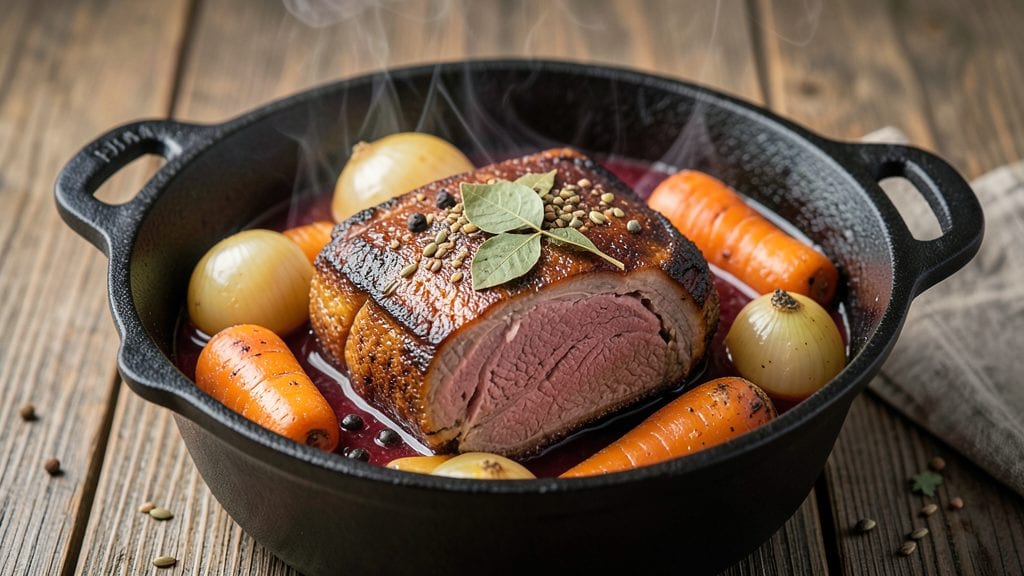
Boiling corned beef brisket transforms tough cuts into melt-in-your-mouth tenderness that defines St. Patrick's Day feasts. I remember my grandfather's slow-simmered method—three hours of patience, a pot of aromatic spices, and the unmistakable scent of a true Irish tradition filling the kitchen.
The key lies in the brine: salt, sugar, and spices that penetrate deep into the meat while the long simmer breaks down connective tissue into rich, velvety texture.
This method requires just five simple ingredients but delivers restaurant-quality results with minimal effort. The corned beef brisket emerges fork-tender, ready to slice against the grain for perfect bite-sized pieces.
Traditional sides like cabbage and potatoes soak up the flavorful cooking liquid, creating a complete meal that feeds a crowd without the fuss of elaborate preparation.
By the time you're done, you'll have perfectly seasoned brisket with a glossy exterior and tender interior that practically falls apart. The aroma alone will have everyone gathering at your table, while the rich, savory flavor makes every bite worth the wait.
This is comfort food at its finest—simple yet impressive, hearty yet elegant.
Serve with classic sides like colcannon or mustard greens for an authentic Irish spread. The leftovers reheat beautifully, making this recipe perfect for meal prep or feeding guests. Let's get started on creating your own tradition-worthy centerpiece.
Ingredients for boiled corned beef brisket
Five core ingredients plus aromatic spices create melt-in-your-mouth brisket for St. Patrick's Day tradition.
| Ingredient | Amount | Notes |
|---|---|---|
| Corned Beef Brisket 🥩 | 4 lb | Packaged corned beef brisket preferred |
| Water 💧 | 8 cups | Filtered for best flavor |
| Diamond Crystal Kosher Salt 🧂 | 1 ½ cups | For brining, not iodized |
| Granulated Sugar 🍚 | ½ cup | White or brown preferred |
| Bay Leaves 🌿 | 4 whole | Fresh or high-quality dried |
| Black Peppercorns 🌶️ | 1 tbsp | Whole, not ground |
| Garlic Cloves 🧄 | 6 cloves | Smashed, not minced |
| Carrots 🥕 | 2 whole | Whole, for aroma |
| Onions 🧅 | 1 whole | Yellow, halved |
| Apple Cider Vinegar 🍎 | ¼ cup | For tangy depth |
| Mustard Seeds 🌶️ | 1 tsp | Yellow preferred |
| Allspice Berries 🌿 | 1 tsp | Crushed lightly |
| Cloves 🌿 | 3 whole | Whole, for subtle warmth |
The brisket cut matters most here—packaged corned beef brisket from the deli section saves prep time, but if you're adventurous, grab a 3-4 lb whole packer-cut brisket from Whole Foods or your butcher. Look for good marbling and avoid anything with a grayish tint (that's old meat). The Diamond Crystal kosher salt is non-negotiable—it dissolves completely unlike table salt, which can make your brisket taste cloudy. I always grab the 1 lb bag from Trader Joe's—cheaper than the giant containers and lasts for years.
No packaged corned beef? Substitute a 4 lb brisket and make your own corning mix with 2 tbsp salt, 1 tbsp sugar, 1 tbsp black pepper, 1 tsp mustard seeds, and 1 tsp allspice per pound of meat. Skip the vinegar? Substitute lemon juice at the same amount—it won't be traditional, but still delicious. The bay leaves can be dried, but fresh ones from the market add a brighter aroma. Pro tip: Toast your spices in a dry pan for 30 seconds before adding to the pot—this deepens their flavor instantly. The carrots and onions aren't just for show—they infuse the broth with sweetness and depth that packaged mixes miss.
This brisket tastes even better the next day, so make it ahead if you can. Store the cooked meat in its juices in the fridge for 3-4 days or freeze for up to 3 months. The broth? Strain and freeze in ice cube trays—perfect for later soups or gravies. For serving, slice against the grain (that's the long direction of the muscle fibers) for perfect bite-sized pieces. The leftovers reheat beautifully—just add a splash of water or broth and simmer gently. Trust me, the aroma alone will have everyone at your table begging for seconds.
Why You'll Love This Recipe
- Five-Ingredient Magic: I swear, that’s all it takes—just brisket, water, salt, sugar, and bay leaves. No fancy gadgets, no stress. Honestly, I’ve made this while scrolling through my phone and still ended up with tender, flavor-packed meat.
- Salt-Sugar Symphony: Between us, the Diamond Crystal salt and sugar cure transforms tough brisket into something ridiculously good—deep, smoky, with just enough sweetness to balance the richness. That first bite? Pure satisfaction, no fancy plating needed.
- Leftovers That Save Me: This recipe makes way more than I can eat in one go, and the best part? The flavor only gets better the next day. I freeze portions for quick sandwiches or hash—no sad, dried-out leftovers here.
- Weeknight Crowd-Pleaser: Whether it’s a last-minute dinner for friends or a lazy Sunday feed, boiled brisket delivers. It’s hearty enough for a crowd but simple enough that I’m not stuck slaving over the stove. My kids even ask for seconds.
Step-by-step instructions for boiled corned beef brisket
Here's how to transform tough brisket into melt-in-your-mouth perfection through slow simmering.
Prepare the Brisket and Spice Packet
Start by placing the 4 lb corned beef brisket in a large stockpot. Peel and halve the 1 whole onion and add it to the pot along with the 2 whole carrots. These vegetables won't be eaten but will infuse flavor into the meat.
In a small bowl, combine the 1.5 cups diamond crystal kosher salt, 0.5 cup granulated sugar, 1 tbsp black peppercorns, 6 cloves garlic cloves (lightly smashed), 1 tsp mustard seeds, 1 tsp allspice berries, and 3 whole cloves. Sprinkle this aromatic blend evenly over the brisket and vegetables. The salt and sugar will work together to tenderize the meat while the spices create a fragrant crust.
Build the Flavorful Liquid Base
Pour in the 8 cups water and add the 0.25 cup apple cider vinegar. The vinegar adds a subtle tang that cuts through the richness of the meat. Tuck in the 4 whole bay leaves and bring the liquid to a full rolling boil over high heat. Once boiling vigorously, reduce the heat to low to maintain a gentle simmer.
Real talk: The water should just barely bubble with occasional small bubbles breaking the surface—this is the sweet spot for even cooking. If it's boiling too hard, the meat will cook unevenly and potentially toughen. You'll know you've got it right when you see tiny, consistent bubbles and hear a soft, steady murmur from the pot.
Simmer Until Fork-Tender
Cover the pot with a lid and let the brisket simmer gently for 3 to 3.5 hours. This is where patience pays off—the longer it cooks, the more tender the meat becomes. I like to set a timer for 3 hours first, then check for doneness by inserting a fork into the thickest part of the meat.
The fork should slide in easily with just slight resistance, and the meat should pull apart cleanly. If it's not quite there, return it to the simmering pot for another 15 to 30 minutes. The meat should be so tender that it nearly falls apart when you test it. This is the hallmark of perfectly boiled corned beef—no tough, chewy bites here.
Rest and Prepare for Serving
Once the brisket reaches the perfect tenderness, carefully remove it from the pot using tongs and transfer it to a cutting board. Let it rest for 10 to 15 minutes before slicing. This resting period allows the juices to redistribute throughout the meat, ensuring each bite is as moist as the first.
While the brisket rests, you can strain the cooking liquid if you prefer a cleaner presentation, or leave it as-is for a more rustic feel. The vegetables will have softened and infused the broth with their sweet, earthy flavors. Serve the sliced brisket with the pan juices spooned over the top, and enjoy the tender, flavorful results of your slow-simmered masterpiece.
Pro Tips For Making Boiled Corned Beef Brisket
- Boil It Slow: Start with a rolling boil for 5 minutes—yes, even if you’re impatient like me—to purge the meat of excess cure. Then drop the heat to a bare simmer (tiny bubbles, not a party). I learned this the hard way after a brisket that tasted like it’d been pickled twice.
- Rinse the Brisket: Give that brisket a quick cold-water rinse before boiling to wash off some of the cure’s salt. Skip this, and you’ll end up with a dish that’s aggressively salty, especially if you’re using a pre-cured pack. (Pro move: Pat it very dry afterward—wet meat steams instead of sears.)
- Don’t Crowd the Pot: Use a stockpot with at least 2 inches of water around the brisket—crowding traps steam and turns your meat into soggy cardboard. If your pot’s too small, boil in batches or use a larger one. (Trust me, your future self will notice the difference.)
- Save the Water: Strain the cooking liquid through a fine-mesh sieve into a clean jar—it’s liquid gold for mashed potatoes or cabbage. Tossing it? You’re wasting flavor. (Bonus: If it’s cloudy, chill it first; the fat will congeal on top and you can skim it off.)
Storing and reheating your boiled corned beef brisket
Refrigerator Storage
Your boiled corned beef brisket stays at its peak for 3-4 days in the fridge, assuming you store it properly. I always transfer the meat to an airtight glass container—I prefer Pyrex 4-cup bowls with lids—and pour the cooking juices over the top.
The fat layer helps preserve moisture and flavor. Keep it below 40°F for safety, and trust me, the aroma alone will have your kitchen smelling like an Irish pub. 🍀
Freezer Preservation
For longer storage, freeze your brisket for up to 3 months without losing quality. I recommend wrapping individual portions in plastic wrap first, then transferring to a freezer-safe bag with all air removed.
Label with the date—3 months from freezing is the absolute max for best texture. The cooking liquid? Strain and freeze in ice cube trays for easy use in future soups or gravies.
Stovetop Reheating
This is my preferred method because it keeps the meat juicy. Place slices in a skillet with 2 tablespoons of the reserved cooking liquid and heat over medium-low heat for 5-7 minutes, stirring occasionally.
The gentle warmth reactivates the meat's natural juices. If it looks dry, add more liquid—this is where those frozen broth cubes come in handy. 🔥
Slow Cooker Revival
For a hands-off approach, place the brisket in your slow cooker with ½ cup water or broth, cover, and cook on low for 2-3 hours. This method is perfect for busy days when you can't monitor the stove.
The slow heat ensures even warming without drying out the meat. I often use this technique for feeding a crowd during game day.
Microwave Safety
When you're in a rush, the microwave works—but use it carefully. Place slices on a microwave-safe plate with 1 tablespoon of cooking liquid, cover with a damp paper towel, and heat on 50% power for 1-2 minutes.
Stir halfway through to distribute heat evenly. Avoid high power settings—they can dry out the meat faster than you'd think. 💡
Leftovers Magic
Transform your brisket leftovers into new meals! Shred the meat for corned beef hash with diced potatoes and onions, or use it in Reuben sandwiches with sauerkraut and Russian dressing. The cooking liquid makes an excellent base for corned beef and cabbage soup.
I always keep a small container of leftovers in the fridge just for this purpose—it's my secret weapon for quick weeknight dinners.
Nutrition facts
Frequently asked questions about boiled corned beef brisket
Why does my corned beef turn out tough instead of tender?
The key is maintaining a gentle simmer—never a rolling boil—which breaks down connective tissue. If the water boils too vigorously, the meat will tighten up. Always reduce heat after the initial boil, cover tightly, and cook for the full 3-3.5 hours. A meat thermometer should read 203°F in the thickest part for perfect tenderness.
Can I use a slow cooker instead of stovetop?
Place the brisket and all ingredients in your slow cooker, cover, and cook on low for 8-10 hours or high for 5-6 hours. The slow cooker's gentle heat mimics the stovetop simmer perfectly. Just add ½ cup water if the liquid level gets too low during cooking. The result will be just as tender and flavorful.
What's the best way to slice boiled corned beef?
Always slice against the grain—that's the long direction of the muscle fibers—to create shorter, more tender pieces. Use a sharp knife and cut at a 45-degree angle for elegant slices. For sandwiches, slice thinner (about ¼-inch thick) while thicker slices (½-inch) work better for serving with sides.
How do I make the cooking liquid less cloudy?
Cloudiness comes from undissolved salt or fat. For clearer liquid, skim fat after cooking and strain through a fine-mesh sieve. If using packaged corned beef, the pre-seasoning can cause cloudiness—just let the broth sit uncovered in the fridge for 1 hour before skimming the hardened fat layer from the top.
What's the difference between corned beef brisket and regular brisket?
Corned beef brisket is pre-seasoned with a cure mix (salt, sugar, spices) before cooking, while regular brisket needs seasoning yourself. The curing process gives corned beef its distinctive flavor and color. For this recipe, packaged corned beef works perfectly—it's already prepped for boiling!