
Main Courses
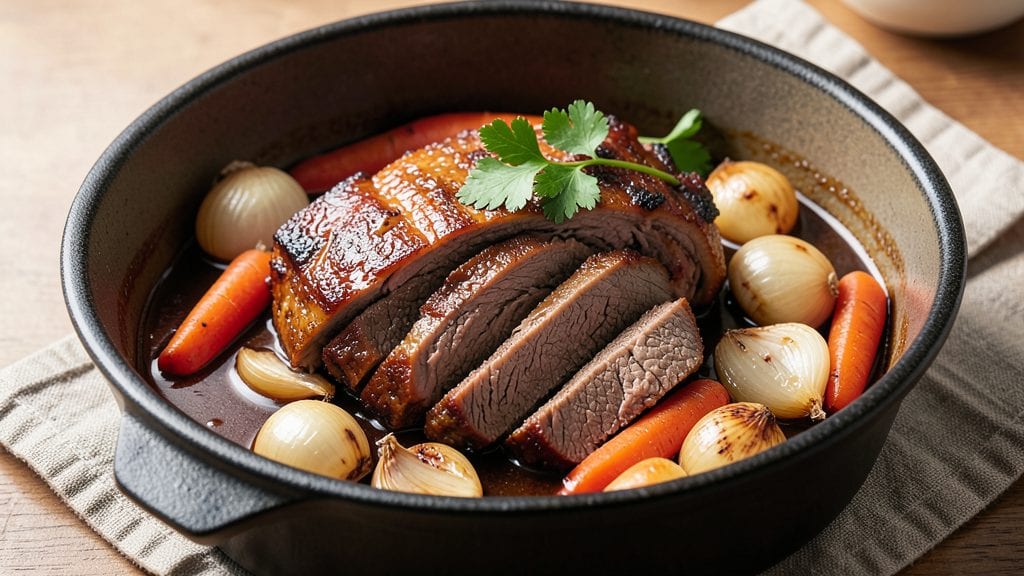
Braised corned beef brisket transforms tough cuts into melt-in-your-mouth perfection through slow-simmered collagen magic. This method preserves every layer of flavor while breaking down fibers into luxurious tenderness—exactly what makes it a Sunday dinner staple. The secret lies in balancing time, liquid, and technique to achieve restaurant-quality results at home.
Traditional recipes rely on a flavorful braising liquid—often beer or rich broth—to infuse the meat while keeping it moist. A proper salt cure before cooking enhances flavor depth, while parboiling ensures even cooking.
Modern shortcuts, like pressure cookers, reduce time without sacrificing texture, but the slow-and-low approach remains the gold standard for maximum tenderness.
By the end of 3-4 hours of gentle simmering, your brisket will pull apart effortlessly, revealing a surface glistening with caramelized fond. The aroma alone—smoky, savory, and deeply comforting—will have everyone gathered at your table.
Serve with classic sides like sauerkraut, boiled potatoes, or a sharp horseradish sauce for the full experience.
Whether you follow the classic method or adapt for modern convenience, this recipe delivers foolproof tenderness every time. The key is patience—letting collagen dissolve slowly into the braising liquid transforms tough meat into something extraordinary. Let’s get started on your next showstopper dish.
Ingredients for braised corned beef brisket
Four pounds of brisket and a handful of pantry staples transform into melt-in-your-mouth perfection.
| Ingredient | Amount | Notes |
|---|---|---|
| Corned Beef Brisket 🥩 | 4 lb | Whole packer cut preferred |
| Yellow Onions 🧅 | 2 whole | Cut into wedges, peeled |
| Carrots 🥕 | 4 whole | Medium size, peeled, halved |
| Garlic Cloves 🧄 | 6 cloves | Smashed, peeled |
| Fresh Parsley 🌿 | ¼ cup | Chopped, stems removed |
| Dark Beer 🍺 | 2 cups | Stout or porter preferred |
| Beef Broth 💧 | 2 cups | Low-sodium preferred |
| Bay Leaves 🍃 | 2 whole | Fresh preferred |
| Black Peppercorns 🌶️ | 1 tsp | Crushed, fresh preferred |
| Salt 🧂 | 2 tbsp | Diamond Crystal kosher |
| Olive Oil 🫒 | 2 tbsp | Extra-virgin for richness |
| Tomato Paste 🍅 | 2 tbsp | Squeeze tube preferred |
| Brown Sugar 🍯 | 2 tbsp | Light or dark |
The brisket is non-negotiable here—look for a 4-pound packer cut with good marbling. Costco or your local butcher will have the best quality. If you can't find a whole brisket, two 2-pound cuts work too. The beer matters—stout or porter adds depth, but any dark beer will do. For the broth, low-sodium keeps flavors balanced. Fresh bay leaves and parsley elevate the dish, but dried will work in a pinch. The onions and carrots should be medium-sized—they'll soften perfectly during the braise.
No dark beer? Substitute beef broth with a splash of balsamic vinegar—it mimics the depth. Fresh herbs out of reach? Dried parsley at one-third the amount works fine. Want more sweetness? Add another tablespoon of brown sugar. The tomato paste can be skipped if you're avoiding it, but it adds a subtle richness. For the salt, Diamond Crystal kosher is ideal—it dissolves better than table salt. No extra-virgin olive oil? Light olive oil works, but you'll lose some of that fruity complexity.
This brisket tastes even better the next day—plan ahead. Store leftovers in the braising liquid for up to 5 days in the fridge. Freezes beautifully for 3 months too. I always make double batches—one for dinner, one for sandwiches the next week. The caramelized fond on the bottom? That's pure flavor gold—scrape it up and use it as a sauce. If you're short on time, a pressure cooker cuts the time to 90 minutes, though it won't develop quite the same depth of flavor.
Why You'll Love This Recipe
- One-Pot Magic: I swear by this recipe because it’s literally just dump-and-go. Slice the brisket, toss in the onions and carrots, add a splash of water, and let the slow cooker or oven do the work. My lazy Sundays thank me every time.
- Deep, Savory Love: That brisket? It falls apart with a fork after hours of braising, so tender it melts in your mouth. The onions caramelize into sweet perfection while the garlic and parsley add a bright finish—like a hug in a bowl.
- Leftovers That Win: Between us, this recipe makes way more than I can eat in one sitting. The next day, I shred the brisket into sandwiches or toss it with mashed potatoes—still rich, still delicious, and zero waste.
- Budget Feast: A single brisket feeds my whole family for days, and the ingredients cost less than takeout. Honestly, this is my go-to when I need a hearty meal without breaking the bank. (Yes, even on a Tuesday night.)
Step-by-step instructions for braised corned beef brisket
Here's how to transform tough brisket into melt-in-your-mouth perfection through slow braising.
Sear the Brisket for Deep Flavor
Heat a heavy Dutch oven over medium-high heat. Add the 2 tablespoons olive oil and swirl to coat the bottom. Place the 4 lb corned beef brisket fat-side down and sear undisturbed for 8-10 minutes until a deep golden crust forms. This initial sear locks in juices and builds the foundation for rich flavor.
Flip the brisket and sear the other side for another 5-6 minutes. Here's the thing—don't rush this step. You want that crust to develop fully before moving on. Remove the brisket and set it aside on a plate. The pan will be your flavor pot soon.
Build the Braising Liquor
In the same Dutch oven, add the 2 whole yellow onions cut into wedges and the 4 whole carrots halved lengthwise. Cook for 5 minutes until they begin to soften and caramelize slightly. Add the 6 smashed garlic cloves and cook for another 30 seconds until fragrant.
Stir in the 2 tablespoons tomato paste and cook for 1 minute until it darkens slightly. This creates a flavorful base that will meld beautifully with the beer and broth. Pour in the 2 cups dark beer and scrape up any browned bits from the bottom—this is where all the flavor hides.
Add the 2 cups beef broth, 2 whole bay leaves, 1 teaspoon crushed black peppercorns, and the 2 tablespoons salt. Bring to a gentle simmer, then return the brisket to the pot fat-side up. The liquid should come about halfway up the sides of the brisket—this ensures proper moisture during braising.
Braise Until Fork-Tender
Cover the Dutch oven and transfer to a preheated 300°F oven. Here's where patience pays off—braise for 3 to 3.5 hours until the meat is fork-tender. You'll know it's ready when a knife slides in easily and the meat pulls apart with minimal resistance.
Real talk: Don't peek or move the pot during cooking. Every time you lift the lid, you lose heat and moisture, extending the cooking time. The brisket should be so tender that when you lift it out, it practically falls apart with a gentle touch.
Finish with Sweetness and Herbs
Once the brisket is tender, remove it from the pot and set it aside on a cutting board. Strain the braising liquid through a fine-mesh sieve into a clean pot, pressing on the vegetables to extract all the flavor. Return the liquid to the Dutch oven and stir in the 2 tablespoons brown sugar.
Simmer the sauce uncovered over medium heat for 10-12 minutes until it thickens slightly and coats the back of a spoon. This step balances the richness with just enough sweetness to complement the deep, savory flavors. The sauce should be glossy and reduced enough to cling beautifully to the brisket.
Rest and Serve with Fresh Parsley
Return the brisket to the Dutch oven and spoon the reduced sauce over the top. Tent loosely with foil and let it rest for 15 minutes. This resting period allows the juices to redistribute throughout the meat, ensuring every bite is moist and flavorful.
Before serving, sprinkle the brisket generously with the 0.25 cup chopped fresh parsley. This final touch adds brightness that cuts through the richness. Slice against the grain into ½-inch thick pieces and serve with the braising sauce ladled over the top. Each bite should deliver that perfect balance of tender meat, rich sauce, and aromatic herbs.
Pro Tips For Making Braised Corned Beef Brisket
- Sear the Brisket First: Don’t skip the browning—get that meat screaming hot in a dry pan for 5-7 minutes per side. The crust locks in flavor and keeps the brisket from falling apart later. (Yes, even if you’re impatient like me, resist the urge to rush this.)
- Peel and Trim Carrots: Leave the skins on carrots—they add texture and resist falling apart. But trim the ends and slice them evenly (about ½-inch thick) so they cook at the same pace as the onions. Uneven pieces turn mushy while others stay crunchy.
- Deglaze with Beer Early: After searing the brisket, immediately pour in the beer (or broth) while the pan is still hot. This lifts all those browned bits—what you’re really braising in. Scrape the bottom with a wooden spoon; those bits are flavor gold.
- Rest Before Slicing: Let the brisket sit under foil for 10 minutes after cooking. Cutting into it too soon sends all the juices pooling out, and you’ll end up with dry slices. (Your future self will thank you.)
Essential equipment for this dish
Heavy-Duty Dutch Oven
Your braised corned beef brisket demands a heavy Dutch oven—I swear by the Le Creuset signature series (around $150) for its even heat distribution and enamel durability.
If that's out of budget, a Lodge cast iron Dutch oven ($50-$80) works just as well, though it requires seasoning first. The Dutch oven's depth and tight seal trap steam perfectly during the 3-3.5 hour braise. 🔥
Instant Pot Pressure Cooker
For modern convenience, an Instant Pot ($80-$100) cuts the cooking time to 90 minutes while maintaining tenderness. Use the "High Pressure" setting for 60 minutes, then let it naturally release for 20 minutes.
The pressure cooker's sealed environment breaks down collagen faster, though the flavor depth won't match oven-braised perfection. I keep one in my kitchen for emergencies!
Fine-Mesh Strainer
A fine-mesh strainer is essential for separating the brisket from the braising liquid without losing those precious veggie juices. I use the OXO Good Grips ($20) because its sturdy handle makes pressing the vegetables easier.
Skimping on this step means losing up to 30% of the sauce's flavor—trust me, it's worth the investment.
Meat Thermometer
Don't guess when it comes to doneness! A digital meat thermometer like the Thermoworks Probes ($50) ensures your brisket hits 195°F internal temperature for perfect tenderness. Insert the probe into the thickest part—avoid the fat cap.
Overcooking turns collagen into rubber, while undercooking leaves it chewy. This tool is my secret weapon for consistent results.
Cutting Board & Slicing Knife
For presentation and texture, use a large wooden cutting board (like ButcherBlock $60) and a sharp 12-inch slicing knife (I recommend Dexter-Russell $120). Slice against the grain into ½-inch pieces—this shortens the muscle fibers for maximum tenderness. A dull knife crushes the meat instead of cleanly cutting it.
Nutrition facts
Frequently asked questions
Why does the brisket need to rest after braising?
Resting lets the juices redistribute throughout the meat instead of pooling on the cutting board. After 3-4 hours of slow cooking, the brisket's fibers relax and absorb those flavorful braising liquids. Skipping this 15-minute rest means dry, stringy meat. Think of it like letting a cake cool before slicing—patience pays off with every bite.
Can I use a slow cooker instead of an oven?
Transfer the seared brisket and braising liquid to a 6-quart slow cooker and cook on Low for 8-10 hours or High for 5-6 hours. The key is maintaining a gentle simmer—add ½ cup water if the liquid gets too low. The texture will be slightly less caramelized but still fork-tender. Perfect for hands-off cooking!
What if my brisket isn't tender after 3.5 hours?
Check your internal temperature—it should reach 195°F for perfect tenderness. If it's lower, return it to the oven for another 30-60 minutes. Avoid overcrowding the pot (liquid should cover half the brisket) and resist peeking! If it's still tough, try shredding it for sandwiches—the collagen will break down further with each reheat.
How do I store leftovers to keep them moist?
Store the brisket in its braising liquid in an airtight container for up to 5 days in the fridge. The sauce prevents drying out. For longer storage, freeze with the liquid for 3 months. Reheat gently in the sauce over medium-low heat—never microwave directly. The liquid keeps every slice juicy and flavorful.
What's the best beer to use for braising?
A dark beer like stout or porter adds depth, but any beer with malty or caramel notes works. Avoid light lagers—they lack the richness to complement the brisket. No beer? Use beef broth + 1 tablespoon balsamic vinegar for a similar effect. The key is balancing sweetness and acidity to cut through the meat's richness.