
Main Courses
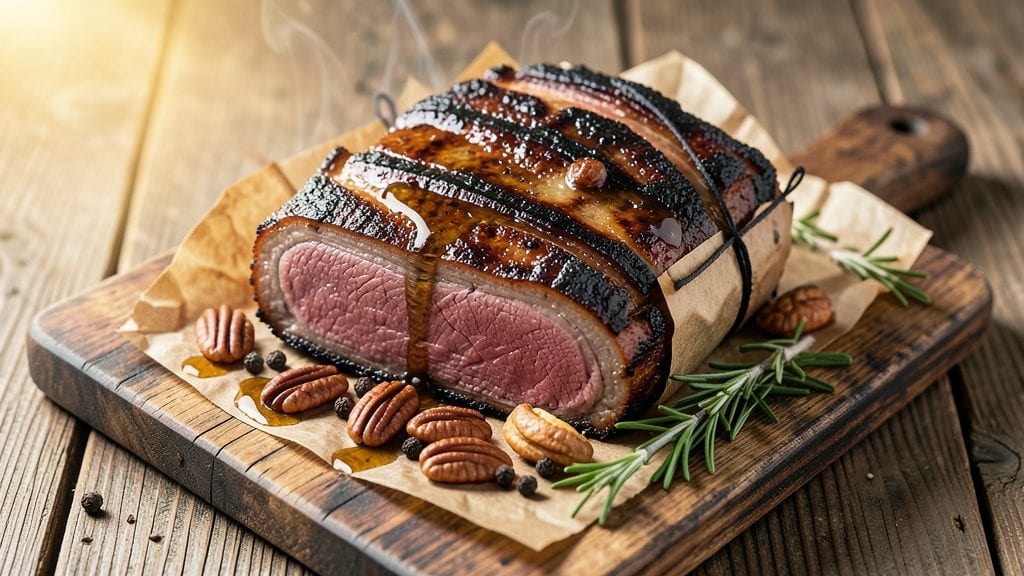
This Masterbuilt smoker beef brisket recipe reveals how to turn tough cuts into irresistible, bark-crusted perfection. This low-and-slow method unlocks deep, smoky flavors that turn weeknight dinners into showstopping centerpieces—something I perfected after years of experimenting with my Masterbuilt pellet smoker.
The secret lies in precise temperature control and a simple but powerful seasoning blend that builds that coveted crust.
What sets this recipe apart is how it leverages the Masterbuilt's consistent heat to cook brisket to perfection without babysitting the smoker. We'll use a two-stage process: an initial smoke phase at 225°F to develop flavor, followed by a wrap and rest period that ensures juicy, even doneness.
The result is a brisket so tender it practically falls apart at the touch, with a dark, crackling bark that's worth the wait.
By the time you're done, you'll have a brisket that rivals professional competition-style results—juicy, flavorful, and packed with that unmistakable smoky depth. The beauty of this method is its flexibility: you can serve it sliced thin for tacos, pulled for sandwiches, or as whole cuts for a dramatic presentation.
Let's get started on creating your best brisket yet.
This recipe includes Masterbuilt-specific tips like optimal pellet selection and probe usage to ensure foolproof results every time. We'll also cover proper resting techniques and how to test for doneness without guessing.
Whether you're feeding a crowd or treating yourself to a special meal, this brisket delivers restaurant-quality satisfaction with minimal effort.
Ingredients for masterbuilt smoker beef brisket
Eight hours of smoky magic. One brisket that steals the show every time.
| Ingredient | Amount | Notes |
|---|---|---|
| Beef Brisket Point Cut 🥩 | 10 lb | Fat cap left intact for bark |
| Kansas City Style BBQ Rub 🧂 | ½ cup | Homemade or quality store-bought |
| Pellet Smoker Pellets 🔥 | 2 lb | Hickory or cherry flavor |
| Butcher Paper 📄 | 1 sheet | For smoke control |
| Butcher Twine 🧵 | 1 roll | For wrapping |
| Dry White Wine 🍷 | ½ cup | For spritzing |
| Brown Sugar 🍚 | ¼ cup | For glaze |
| Apple Cider Vinegar 🍎 | ¼ cup | For spritzing |
| Masterbuilt Pellet Smoker Probe 🔍 | 1 piece | For internal temperature |
| Aluminum Foil 🔥 | 1 sheet | For wrapping |
| Chopped Onion 🧅 | 1 whole | For spritzing |
| Chopped Garlic 🧄 | 4 cloves | For spritzing |
| Unsalted Butter 🧈 | ¼ cup | For final application |
| Kosher Salt 🧂 | 1 tsp | For final seasoning |
| Freshly Ground Black Pepper 🌶️ | ½ tsp | For final seasoning |
The brisket cut is everything. Point cut (the leaner part) gives you that perfect balance of tenderness and bark—flat cut works too, but it’s more prone to drying out. Buy from a butcher who specializes in smoked meats; they’ll trim it properly and leave that essential fat cap for the bark. Costco or local meat markets are great spots. Pro tip: ask for it wrapped in butcher paper, not plastic—it breathes better during the smoke. The fat cap should be about ¼-inch thick; if it’s thinner, the bark won’t develop properly.
No butcher nearby? Pre-cut brisket from the grocery store works in a pinch—just make sure it’s well-marbled. For the rub, I swear by Jack Daniel’s Old No. 7 BBQ Rub, but homemade is just as good if you mix Kansas City seasoning with a pinch of cayenne. Dry white wine? Any decent bottle works—Sauvignon Blanc or Chardonnay are my go-tos. And if you’re short on time, apple cider vinegar and brown sugar make an excellent spritz alternative. Just don’t skip the spritzing—it keeps the bark moist and the meat juicy.
This brisket is all about patience. Smoke at 225°F for 10-12 hours, then wrap in foil with butter and rest for 2 hours—no shortcuts. The Masterbuilt probe is your best friend for tracking doneness; aim for 203°F internal temperature. Store leftovers in the fridge for 4-5 days or freeze for 3 months. I portion mine into containers so I can pull it out for tacos or sandwiches without stress. And trust me, the day-after brisket is even better—those flavors meld into something magical.
Why You'll Love This Recipe
- Set-It-and-Smoke Magic: I swear, the Masterbuilt smoker does all the work—just season the brisket with that KC rub, tie it up with twine, and let the pellets handle the rest. No babysitting, no stress, no "where’s my thermometer?" panic.
- Smoke Bomb Flavor: That brisket point cut? It’s the unsung hero—tender, juicy, and soaks up the pellet smoke like a sponge. The rub adds this perfect balance of sweet, smoky, and just a hint of spice that makes every bite irresistible.
- Leftovers for Days: Honestly, this recipe makes enough for a crowd and leftovers that taste even better the next day. Wrap slices in butcher paper for sandwiches, or shred it into tacos—no one will guess it’s not fresh off the smoker.
- Budget-Friendly Feast: A whole brisket point cut feeds a family for dinner and lunch the next day without breaking the bank. Plus, pellet smokers use fuel efficiently, so you’re saving money while making something restaurant-worthy. Win-win.
Step-by-step instructions for Masterbuilt smoker beef brisket
Here's the foolproof method for brisket with a deep smoke flavor and crackling bark.
Prep and Season the Brisket for Maximum Flavor
Remove the 10 lb beef brisket point cut from the refrigerator and pat it completely dry with paper towels. This step is critical—any moisture on the surface will prevent that perfect bark from forming. I press down firmly on the fat cap to ensure all surfaces are bone dry.
Next, apply the 0.5 cup Kansas City Style BBQ Rub generously to all sides of the brisket, including the fat cap. I use my fingers to work the rub into the meat, pressing firmly so it adheres well. This creates a flavorful crust that will develop into that coveted bark. Let the seasoned brisket sit at room temperature for 1 hour before smoking—this allows the rub to penetrate and the meat to cook more evenly from the start.
Set Up the Smoker and Load the Pellets
Fill the Masterbuilt pellet smoker with 2 lb pellet smoker pellets, choosing either hickory or cherry flavor for that classic BBQ taste. Preheat the smoker to 225°F and allow it to stabilize for 15-20 minutes. You'll know it's ready when you see clean, blue smoke—this indicates proper combustion and the right temperature for low-and-slow cooking.
While the smoker preheats, prepare a water pan by filling a shallow pan with water and placing it on the smoker grate. This helps maintain moisture throughout the cook. Once the smoker reaches 225°F, place the brisket fat-side up on the smoker grate. The fat will render slowly, basting the meat and contributing to that rich flavor. Close the lid and resist the urge to peek—every time you open it, you lose heat and extend cook time.
Smoke the Brisket and Manage the Stall
Smoke the brisket undisturbed for 6-8 hours, or until the internal temperature reaches 165-170°F. Use the Masterbuilt pellet smoker probe to check the temperature in the thickest part of the meat. This is where you'll hit "the stall"—the point where the meat's moisture evaporates and the temperature plateaus. Don't panic; this is normal and expected.
When the brisket hits the stall, it's time to wrap it. Remove the brisket from the smoker and wrap it tightly in the 1 sheet butcher paper, using the 1 roll butcher twine to secure it. This technique, known as the "Texas crutch," helps the brisket push through the stall while preserving that beautiful bark. Return the wrapped brisket to the smoker and continue cooking.
Finish and Apply the Glaze
Continue smoking the brisket until the internal temperature reaches 200-205°F, which should take an additional 4-6 hours. The brisket is done when the probe slides in like butter with no resistance. At this point, remove the brisket from the smoker and let it rest for 1 hour before slicing—this allows the juices to redistribute throughout the meat.
While the brisket rests, prepare the glaze by combining the 0.25 cup brown sugar, 0.5 cup dry white wine, and 0.25 cup apple cider vinegar in a small saucepan. Bring to a simmer over medium heat and reduce until the mixture thickens slightly. Once the brisket has rested, brush the glaze evenly over the surface. Return the brisket to the smoker and smoke for an additional 15-20 minutes to caramelize the glaze and create that glossy finish.
Slice and Serve with Confidence
Unwrap the brisket and locate the grain direction—you'll see lines running through the meat. Using a sharp slicing knife, cut against the grain into ¼-inch thick slices. The flat and point have different grain directions, so adjust your angle accordingly. Serve immediately while still warm, and top each slice with a small pat of the 0.25 cup unsalted butter. Finish with a sprinkle of the 1 tsp kosher salt and 0.5 tsp freshly ground black pepper for a burst of flavor.
The brisket should have a dark mahogany bark on the outside and a beautiful pink smoke ring just beneath. Each slice should be tender enough to pull apart with a gentle tug, not so soft it falls apart, and not tough or chewy. This method guarantees a brisket that's packed with smoky depth and a bark that cracks with every bite.
Pro Tips For Making Masterbuilt Smoker Beef Brisket
- Trim the Fat First: The Masterbuilt’s fan-forced heat struggles with thick fat caps—trim it down to ¼-inch before smoking. I learned this the hard way when my brisket took 12 hours instead of 8 because the fat turned into a grease bomb. Use a sharp knife and don’t be shy; less fat means better bark and faster cook times.
- Wrap at 165°F: The point cut hits 165°F faster than the flat—wrap it in butcher paper only when the probe reads 165°F in the thickest part. I used to wrap too early, and the bark turned soggy. Butcher paper lets moisture escape just enough to keep the crust crisp while locking in juices.
- Spritz with Apple Juice: Skip the water—use a 50/50 mix of apple juice and beef broth every 2 hours after the initial crust forms. The sugar caramelizes for extra bark, and the acid cuts through the richness. (Yes, even if you’re impatient like me, resist the urge to skip this.)
- Rest Under Foil: Let the brisket rest under foil for 5–10 minutes before slicing against the grain. I was skeptical until I tried it—the internal temp drops 10°F, and the juices redistribute instead of pooling on the cutting board. Trust the process, even if your guests are already grabbing plates.
Common mistakes when making your masterbuilt smoker beef brisket
Skipping the Rest
I cannot stress this enough: never skip the rest. Brisket needs at least 2 hours of resting time after hitting 203°F to let juices redistribute. When I first tried this recipe, I sliced too soon and ended up with dry, disappointing meat.
The juices need time to soak back into the fibers—10 minutes isn't enough. Use this time to make sides or prep your serving plates. 💡
Ignoring the Stall
Assuming your brisket is done before it reaches 165°F internal temperature is a rookie mistake. The stall (where temperature plateaus) is normal and expected—it happens because moisture evaporates from the meat's surface. When your Masterbuilt probe shows 165-170°F, it's time to wrap the brisket in butcher paper and twine.
This Texas crutch technique helps it push through the stall faster while keeping that precious bark intact. 🔥
Overlooking the Fat Cap
Leaving the fat cap intact is non-negotiable for that crackling bark. If your butcher trims it too thin, ask them to leave at least a ¼-inch layer of fat. This fat renders slowly, basting the meat and creating the perfect crust.
I’ve seen beginners trim it all off—big mistake. If yours is too thin, use a thin layer of lard or bacon fat to compensate before applying the rub. 🥩
Using the Wrong Pellets
Not all pellets are created equal. Hickory and cherry are the classic choices for brisket, but oak or mesquite can overpower the meat’s natural flavor. Avoid fruitwood blends—they often contain artificial flavors that ruin the authentic taste.
I stick to Lumpkin’s or Traeger pellets for consistent, clean smoke. Pro tip: If your Masterbuilt starts smoking too heavily, switch to alder pellets—they produce lighter smoke. 🔥
Peeking Too Often
Every time you open the smoker lid, you lose heat and smoke, extending cook time. I’ve timed myself—opening the lid just once adds 10-15 minutes to your cook. Use the Masterbuilt’s built-in probe to monitor temperature without lifting the lid.
If you must check, do it quickly and minimize exposure. Patience here pays off in juicier, more flavorful brisket. ⏰
Skipping the Spritz
Spritzing the brisket every 2-3 hours with a mix of apple cider vinegar, chopped onion, and garlic keeps the bark moist and prevents it from drying out. I’ve seen briskets turn into leather when people forget this step.
If you’re short on time, even a light spray of water helps. The acidity in the vinegar also tenderizes the meat slightly. Don’t skip it—your bark will thank you. 💦
Nutrition facts
Frequently asked questions
What's the ideal internal temperature for brisket on a Masterbuilt?
For perfect tenderness, aim for 203°F in the thickest part of the meat. The Masterbuilt's precise temperature control makes this easy to track with its built-in probe. The stall (around 165-170°F) is normal—just wrap it in butcher paper when you hit that range to push through it faster.
Can I use a flat cut instead of a point cut?
Yes, but with caution! Flat cuts have more connective tissue and can dry out faster. For a 10 lb flat cut, add 1-2 extra hours to your cook time. The point cut's leaner nature makes it more forgiving for beginners. If using flat, consider a thicker fat cap (½-inch) to protect the meat.
How do I know when the bark is done?
The bark should be dark mahogany with visible cracks when gently pressed. It's ready when it's crispy but not burnt. Pro tip: If your Masterbuilt's smoke is too heavy, switch to alder pellets for lighter smoke that won't overpower the bark. The perfect bark develops during the last 2-3 hours of cooking.
What's the best way to store leftover brisket?
Wrap cooled slices tightly in plastic wrap, then store in an airtight container for up to 5 days in the fridge. For longer storage, portion into freezer bags with the cooking juices and freeze for 3 months. Reheat in the oven at 300°F until warmed through—microwaving makes brisket tough.
Can I make this brisket in a Masterbuilt with limited space?
For smaller smokers, cook the brisket fat-side down first to render fat faster. If your smoker holds only 4-5 lbs, consider halving the recipe. The Masterbuilt's efficient pellet system means you can maintain 225°F even with less space—just monitor the temperature closely.