
Soups & Stews
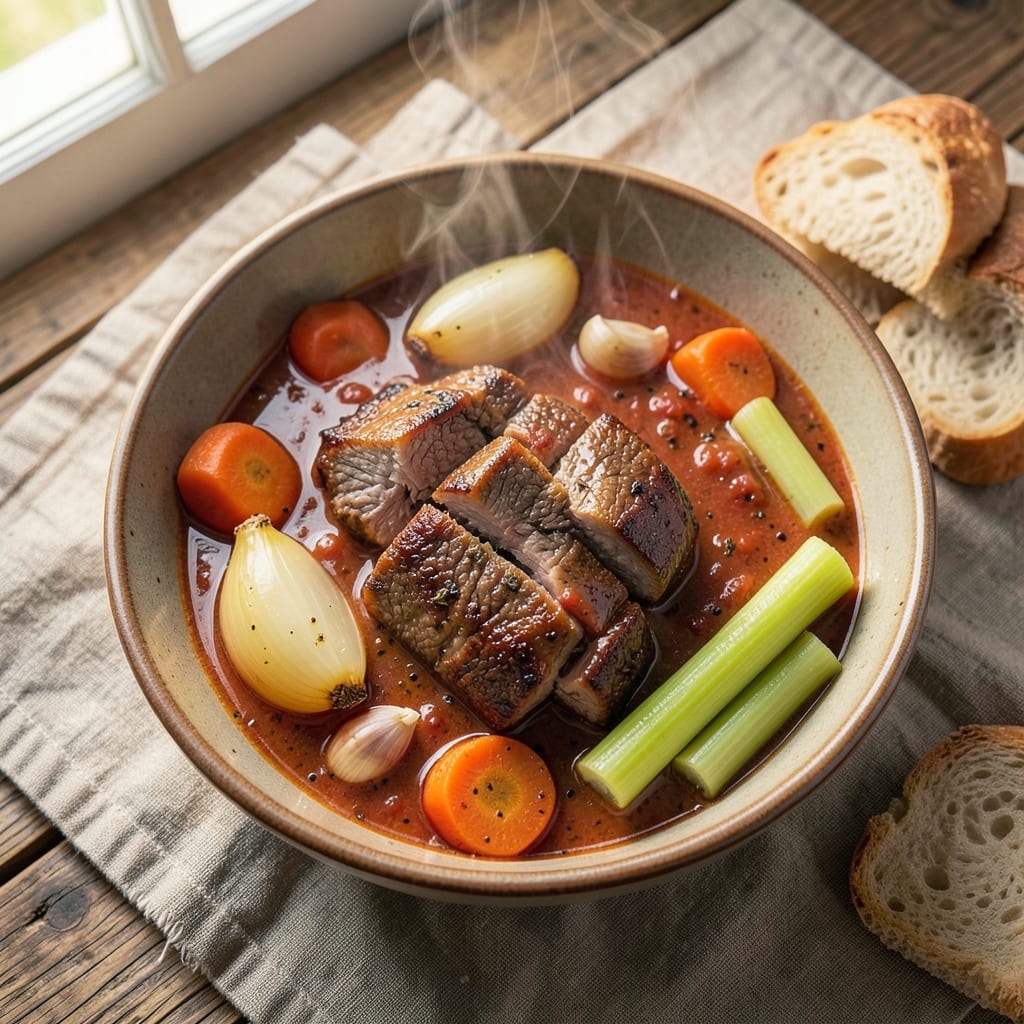
An 8-hour beef stew transforms tough cuts into melt-in-your-mouth perfection through slow simmering, where collagen dissolves into a rich, velvety broth. This recipe delivers deep umami flavor through a balanced blend of beef, vegetables, and aromatic herbs—no shortcuts, just time-tested tradition. The secret lies in browning the meat first, creating a flavorful crust that forms the stew's foundation, while low-and-slow cooking tenderizes even the toughest cuts.
The result is a hearty, comforting dish where tender beef floats in a deeply flavorful broth, vegetables melting into perfect softness without losing texture. Unlike rushed versions, this method develops complex flavors through hours of gentle simmering, turning simple ingredients into something extraordinary. The aroma alone will have everyone anticipating dinner hours before it's ready.
Perfect for feeding a crowd or meal prepping, this stew scales beautifully while maintaining its rich, satisfying qualities. Serve with crusty bread or roasted potatoes to soak up every last drop of that velvety broth. The patience pays off in every bite—restaurant-quality comfort food made at home.
For those short on time, adaptations for Instant Pot or pressure cookers preserve the essence while cutting hours off the process. The key remains the same: slow cooking transforms ordinary ingredients into something truly special. Let's get started on creating your own deeply flavorful beef stew.
Ingredients for 8 hour beef stew
Sixteen ingredients transform tough beef into melt-in-your-mouth perfection through slow simmering.
| Ingredient | Amount | Notes |
|---|---|---|
| Chuck Roast 🥩 | 3 lb | Pre-cut into 1.5-inch cubes |
| Yellow Onion 🧅 | 2 whole | Chopped into 1/2-inch pieces |
| Carrots 🥕 | 4 whole | Peeled and cut into 1-inch chunks |
| Celery Stalks 🌿 | 4 whole | Chopped into 1/2-inch pieces |
| Garlic Cloves 🧄 | 6 cloves | Minced for depth of flavor |
| Tomato Paste 🍅 | ½ cup | High-quality for umami richness |
| Beef Broth 💧 | 6 cups | Homemade or high-quality store-bought |
| Red Wine 🍷 | 1 cup | Bold dry variety like Cabernet Sauvignon |
| Fresh Thyme 🌿 | 2 tbsp | Leaves only, stems removed |
| Fresh Rosemary 🌿 | 1 tbsp | Chopped finely for aromatic depth |
| Bay Leaves 🌿 | 2 whole | For subtle earthy flavor |
| All-Purpose Flour 🌾 | 2 tbsp | For thickening the stew |
| Extra-Virgin Olive Oil 🫒 | ½ cup | For searing the beef |
| Kosher Salt 🧂 | 1 ½ tbsp | Diamond Crystal preferred |
| Freshly Ground Black Pepper 🌶️ | 1 tbsp | For balanced seasoning |
The chuck roast is non-negotiable for this recipe—its high collagen content dissolves during slow cooking, creating that signature velvety texture. Look for well-marbled cuts at your local butcher or Costco's bulk beef section for the best value. If you're using pre-cut beef, opt for 1.5-inch cubes to ensure even cooking. The yellow onion, carrots, and celery form the classic 'holy trinity' of stew vegetables, providing both flavor and structure. For the best quality, source these from local farmers markets or the produce section of Whole Foods—their freshness makes a noticeable difference in the final dish. The garlic should be freshly minced just before cooking to preserve its aromatic oils, and Penzeys Spices offers the highest quality if you're willing to invest in premium ingredients.
No red wine on hand? Beef broth with a splash of balsamic vinegar delivers a similar depth of flavor, though the acidity will be slightly different. The tomato paste can be substituted with crushed tomatoes (about 1 cup) if you prefer a chunkier texture, but paste provides a more concentrated umami punch. Fresh herbs are ideal, but dried thyme and rosemary work at one-third the amount—just ensure they're recently opened for maximum potency. For the flour, all-purpose works fine, but bread flour adds a subtle richness worth considering if you're baking at home. The olive oil should be extra-virgin for its fruity notes, though regular olive oil will suffice if that's what you have. If you're short on time, pre-chopped frozen vegetables can be used, though fresh will always yield superior results.
This stew tastes even better the next day as flavors meld further, so make extra portions if you have the capacity. Store leftovers in airtight containers in the refrigerator for up to 5 days or freeze for 3 months in ziplock bags with all air removed. For meal prep, portion into individual containers with a layer of broth to prevent drying. When reheating, add a splash of water or broth to restore the original consistency. The bay leaves should be removed before serving, as they can be quite bitter when chewed. This recipe scales beautifully—double the ingredients for a crowd, adjusting cooking time proportionally.
Why You'll Love This Recipe
- Deep, Rich Payoff: Here’s what sold me—the way the garlic and onions caramelize into the beef over time. It’s not just flavor; it’s layered flavor. The chuck roast gets so tender it’s practically melting, while the carrots stay crisp enough to bite into. Honestly, I’ve had beef stews that were just “meh,” but this? This is the kind that makes you close your eyes and sigh.
- Leftovers That Beg for More: Between us, the second day is often the best. The flavors deepen, the beef gets even more fork-tender, and suddenly you’re reheating it for lunch because it’s that good. I’ve even frozen portions—thawed and reheated, it’s still solid. That’s eight hours of work turning into a month’s worth of easy dinners.
- Budget-Friendly Crowd-Pleaser: A chuck roast is cheap, the veggies are cheap, and one pot feeds six. That’s right: you’re serving a restaurant-quality meal without breaking the bank. My college roommates and I lived on this—it’s the kind of dish that makes people ask for seconds, then thirds, without you feeling guilty about the grocery bill. Plus, no one complains when it’s on the table.
Step-by-step instructions for perfectly simmered beef stew
Transform tough chuck roast into tender, flavorful beef through precise technique and patience.
Sear the Chuck Roast for Deep Flavor
Heat the 0.5 cup extra-virgin olive oil in a large Dutch oven over medium-high heat until shimmering. Working in batches to avoid crowding, sear the 3 lb chuck roast cubes until deeply browned on all sides—about 3-4 minutes per side. This step develops the Maillard reaction, creating complex flavors that form the stew's foundation.
Remove the beef from the pot and set aside. If the oil appears too cool after the first batch, let it heat up again before adding more beef. The goal is golden-brown crust on each piece, not just light coloring. This takes time but is worth every minute for that rich, caramelized flavor.
Build the Aromatic Base
In the same Dutch oven, add the 2 whole chopped yellow onion, 4 chopped celery stalks, and 4 chopped carrots. Cook over medium heat for 8-10 minutes, stirring occasionally, until the vegetables soften and begin to caramelize. This process concentrates their natural sweetness and forms the stew's flavor backbone.
Add the 6 minced garlic cloves and cook for 30 seconds until fragrant. Immediately stir in the 0.5 cup tomato paste, spreading it evenly over the bottom of the pot to prevent burning. This creates a rich, umami base that will meld perfectly with the beef during the long simmer.
Deglaze and Combine Ingredients
Pour in the 1 cup red wine, scraping up any browned bits from the bottom of the pot with a wooden spoon. This deglazing step captures all the flavorful fond that would otherwise burn. Let the wine simmer for 3-4 minutes until reduced by half, allowing its alcohol to cook off and concentrate the flavor.
Return the seared beef to the pot. Add the 6 cups beef broth, 1.5 tbsp kosher salt, 1 tbsp freshly ground black pepper, 2 tbsp fresh thyme, 1 tbsp fresh rosemary, and 2 whole bay leaves. Stir gently to combine, ensuring all ingredients are evenly distributed. The broth should just cover the beef—this ensures even cooking without dilution.
Simmer for Maximum Tenderness
Bring the stew to a gentle boil, then reduce heat to low to maintain a steady simmer. Partially cover the pot with a lid, leaving a small gap for steam to escape. This slow cooking method breaks down the tough muscle fibers in the chuck roast, transforming it into fork-tender beef over 8 hours.
Check the stew periodically, adding hot water if needed to maintain the liquid level. The vegetables should become tender and the beef should easily pull apart with a fork. Avoid lifting the lid completely—each time you do, you release heat and moisture, extending the cooking time. Patience here is key to achieving that melt-in-your-mouth texture.
Thicken and Finish
In the final 30 minutes of cooking, sprinkle the 2 tbsp all-purpose flour over the stew and stir gently to combine. This creates a natural thickening without altering the stew's rich flavor profile. The flour should blend seamlessly, creating a velvety consistency that coats each bite.
Taste and adjust seasoning if needed, adding more kosher salt or black pepper as required. Remove and discard the bay leaves before serving. The stew should have a deep, complex flavor with layers of umami from the beef and wine, bright acidity from the tomato paste, and aromatic notes from the herbs. Serve immediately with crusty bread to soak up every last drop of this labor-of-love dish.
Pro Tips For Making 8 Hour Beef Stew
- Brown the Roast First: I learned this the hard way—skipping the sear means bland, gray beef. Get that chuck roast screaming hot in a Dutch oven with 1 tablespoon of oil per side until it’s deep brown, not just pink. The crust locks in flavor and keeps the meat tender during those 8 hours.
- Cut Onions Like a Pro: Dice those yellow onions into even ¼-inch pieces—no big chunks, no slivers. Smaller pieces cook faster and soften completely, while larger ones turn to mush and make the stew look sloppy. (Yes, even if you’re impatient like me, resist the urge to rush this.)
- Don’t Overcrowd the Pot: After browning the beef, let it cool for 5 minutes before adding everything else. Crowding the pot steams the veggies instead of browning them, and you’ll end up with a watery stew. Work in batches if needed—trust me, it’s worth the extra minute.
- Deglaze with Wine First: After removing the beef, pour in that red wine (or broth) before adding tomatoes or herbs. The alcohol burns off faster on its own, leaving deeper flavor instead of a boozy aftertaste. Stir for 2 minutes, then add the rest—your future self will notice the difference.
Perfect pairings for this dish
Bread Pairings
Nothing complements beef stew like a crusty baguette or sourdough loaf—the perfect vehicle for soaking up that rich, velvety broth. I always toast a baguette with garlic butter (mix 2 tbsp softened butter with 1 minced garlic clove and ½ tsp parsley) for an extra layer of flavor. For a heartier option, try rustic country bread or chewy focaccia—their open crumbs catch every drop of stew beautifully. 🥖
Wine Selections
A bold Cabernet Sauvignon or Syrah mirrors the stew's depth, with their dark fruit and earthy notes complementing the beef's richness. For something lighter, a Merlot or Malbec offers smooth tannins that won't overpower the dish. If you prefer red wine alternatives, a dry rosé or Pinot Noir provides bright acidity to cut through the stew's richness. I often reach for a 2018 Argentine Malbec—its velvety texture and blackberry flavors make it a perfect match. 🍷
Side Dish Harmony
Roasted potatoes (tossed in olive oil, rosemary, and sea salt) add a crispy contrast to the stew's softness. For a lighter option, buttery mashed potatoes with a touch of garlic and chives balance the hearty flavors. I also love serving creamy polenta or warm egg noodles—their mild taste lets the stew shine. Don’t forget a simple green salad with a lemon vinaigrette to refresh the palate between bites. 🥔
Cheese Pairings
A sharp aged cheddar or Gruyère on the side adds a salty, nutty contrast to the stew's savory depth. For something creamier, brie or camembert melts beautifully into the stew in the last 10 minutes of cooking. I often serve cubed cheddar alongside the bread for guests to add to their bowls. If you prefer a tangier option, blue cheese crumbles bring a bold, funky note that pairs surprisingly well with the rich beef. 🧀
Herb Garnishes
Brighten the stew with fresh parsley or chives just before serving—their freshness cuts through the richness. For a pop of color and extra flavor, sprinkle thinly sliced scallions or microgreens on top. I also love adding toasted breadcrumbs (mix 2 tbsp breadcrumbs with 1 tbsp melted butter and toast in a pan) for a crispy texture. These finishing touches elevate the dish from comforting to extraordinary. 🌿
Nutrition facts
Frequently asked questions
Why does this recipe require an 8-hour simmer?
The 8-hour slow cook is essential for breaking down tough beef muscles through collagen conversion, creating that signature velvety texture. This method also allows flavors to meld deeply, transforming simple ingredients into a rich, complex dish.
Can I use a pressure cooker instead of 8 hours?
Yes! A pressure cooker cuts time to 90 minutes on high pressure. Follow the same searing and deglazing steps, then cook with 1 cup liquid for 45 minutes, release pressure naturally, then cook another 45 minutes with remaining broth. The result will be just as tender.
What if my stew is too thin after 8 hours?
Thin stews happen when liquid evaporates. Stir in 1 tbsp cornstarch mixed with 2 tbsp cold water and simmer 5 minutes until thickened. For prevention, use 1/2 cup less broth initially or add 1/2 cup diced potatoes (they absorb excess liquid).
How do I make this stew vegetarian?
Replace beef with 3 lbs mushrooms (cremini or portobello) and 1 lb extra-firm tofu (pressed and cubed). Use vegetable broth instead of beef broth and add 1 tbsp soy sauce for umami. Cook for 6 hours instead of 8 to prevent mushiness.
Can I freeze beef stew?
Let it cool completely, then store in airtight containers for up to 3 months. Thaw overnight in the fridge and reheat on low heat, adding 1/4 cup water if needed to restore consistency. Freeze portions separately for easy serving.