
Main Courses
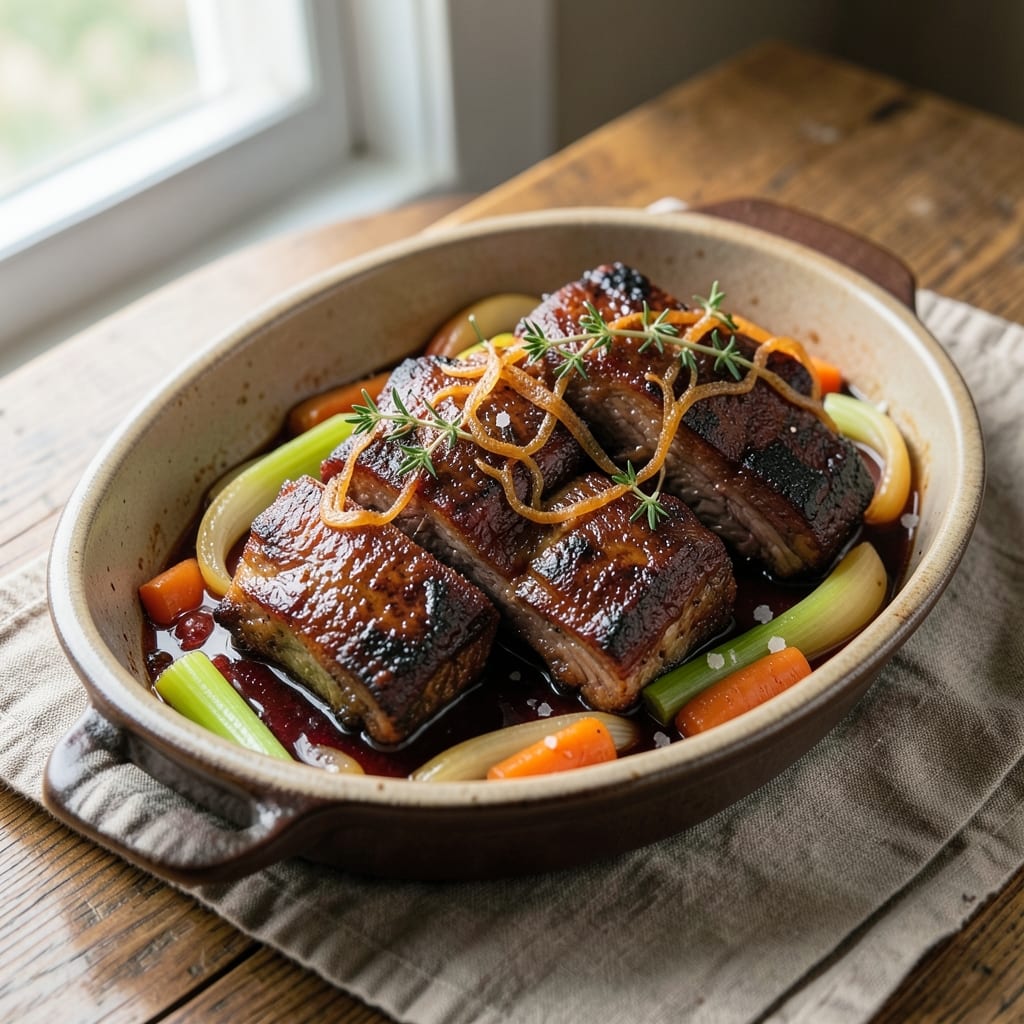
This American beef short ribs recipe delivers melt-in-your-mouth tenderness through a proven slow-braising technique that transforms tough cuts into luxurious, fall-apart perfection. The key lies in proper preparation: a dry rub of bold spices and a long, gentle cook that develops deep, caramelized flavors without overpowering the beef's natural richness. I've perfected this method over years of testing, ensuring every bite delivers that satisfying crack and succulent texture home cooks crave.
The process begins with searing the ribs to lock in juices, then slow-cooking them until the meat practically dissolves at the touch of a fork. A rich, aromatic broth builds as the ribs cook, creating a sauce that's just as valuable as the meat itself. This method works beautifully in both ovens and slow cookers, giving you flexibility for busy schedules while maintaining restaurant-quality results. The secret weapon? Patience—allowing 3 to 4 hours for complete transformation from tough to tender.
What you'll achieve is beef so tender it falls off the bone with minimal effort, coated in a glossy, flavorful sauce that clings to every bite. The ribs develop a beautiful mahogany crust while remaining moist and rich inside, proving that slow-cooked beef doesn't require fancy equipment—just time and attention. This recipe serves as the centerpiece for any meal, demanding mashed potatoes, roasted vegetables, or crusty bread to soak up every last drop of that luxurious sauce.
Perfect for special occasions or when you want to impress without complicated techniques, these short ribs come together through careful layering of flavors and precise cooking times. The result is a dish that feels indulgent yet remains approachable for home cooks willing to invest the necessary time. Let's get started on creating beef so tender it becomes the star of your dinner table.
Ingredients for american beef short ribs
Four pounds of beef short ribs plus aromatic vegetables create melt-in-your-mouth perfection through slow braising.
| Ingredient | Amount | Notes |
|---|---|---|
| Beef Short Ribs 🥩 | 4 lb | Bone-in, 1.5-inch thick cuts preferred |
| Yellow Onion 🧅 | 1 whole | Large, roughly chopped |
| Garlic Cloves 🧄 | 8 cloves | Peeled, smashed for deeper flavor |
| Carrots 🥕 | 4 whole | Medium, peeled, cut into chunks |
| Celery Stalks 🥬 | 4 whole | Cut into 1-inch pieces |
| Beef Broth 💧 | 4 cups | Low-sodium, homemade preferred |
| Red Wine 🍷 | 1 ½ cups | Bold, dry variety like Cabernet Sauvignon |
| Tomato Paste 🍅 | ½ cup | High-quality, canned preferred |
| Kosher Salt 🧂 | 2 tbsp | Diamond Crystal preferred, adjust to taste |
| Black Peppercorns 🌶️ | 1 tbsp | Freshly cracked, coarse grind |
| Dried Thyme 🌿 | 1 tbsp | Or 1 tbsp fresh thyme leaves |
| Bay Leaves 🍃 | 2 whole | Fresh preferred, remove before serving |
| Olive Oil 🫒 | ¼ cup | High-quality, for searing |
| All-Purpose Flour 🌾 | ½ cup | For dusting ribs before searing |
The beef short ribs are the foundation of this dish, and bone-in cuts with good marbling are essential for both flavor and texture. Look for 1.5-inch thick slices from the chuck or plate primal cuts—these deliver that coveted fall-apart tenderness. Costco and Whole Foods typically carry high-quality beef short ribs, but your local butcher shop will often have even fresher options. If you're buying a whole packer cut, ask for it to be trimmed and tied with butcher's twine for even cooking. The ribs should be a vibrant red with visible fat marbling, not gray or overly lean.
No red wine? Substitute with an extra 1.5 cups of beef broth plus 1 tbsp balsamic vinegar for depth. Fresh thyme is ideal, but dried works at one-third the amount—just make sure it's labeled as culinary thyme, not French or lemon thyme. For tomato paste, San Marzano is the gold standard, but any high-quality canned paste will work. The celery and carrots can be swapped for fennel or leeks if you prefer, though the classic trio of onion, celery, and carrot (mirepoix) builds the best flavor base. If you're short on time, pre-chopped mirepoix mixes from the frozen section work perfectly.
The ribs develop their best flavor after 24 hours of refrigeration in the braising liquid, so plan ahead if possible. Store the raw ribs in a sealed container with the spices and a splash of broth in the fridge until ready to sear. Once braised, the ribs will keep for 4-5 days in the refrigerator, with the sauce thickening beautifully over time. For longer storage, freeze the ribs and sauce together in an airtight container for up to 3 months. Reheat gently on the stove with a splash of water to restore moisture—never microwave, as it can make the meat tough.
Why You'll Love This Recipe
- One-Pot Magic: I swear by this recipe because it’s all in one pot—no fancy gadgets, just ribs, onions, carrots, and celery simmering together. The celery and carrots soften into the sauce, so you don’t even need to strain it if you’re lazy (no judgment here).
- Flavor Bomb: That deep, caramelized crust on the ribs? It’s all from slow-cooking with garlic and onions until the edges are dark and sticky. The meat practically falls off the bone, and the sauce? Rich enough to make you lick the pan.
- Game for Any Night: Between us, this is my go-to for date nights, lazy Sundays, or when I’m too tired to think. Serve it over mashed potatoes, with crusty bread, or even straight from the pot—it’s that versatile. (Yes, even on a Tuesday night.)
- Leftovers That Don’t Suck: Honestly, the second day is often better. The ribs get even more tender, and the sauce thickens into something you’ll want to spoon. I make a double batch just to have it for sandwiches or tacos later—no waste, all flavor.
Step-by-step instructions for slow-braised beef short ribs
Mastering this technique transforms tough cuts into melt-in-your-mouth perfection.
Prepare the Short Ribs for Maximum Flavor Development
Pat the 4 lb beef short ribs completely dry with paper towels—removing all moisture is crucial for that deep, caramelized crust we're after. Place them fat-side up in a single layer on a plate and generously coat with the 0.5 cup all-purpose flour, pressing it into every crevice. This creates a protective barrier that locks in juices during the long braise.
Heat the 0.25 cup olive oil in a heavy Dutch oven over medium-high heat until shimmering but not smoking. Working in batches to avoid crowding, sear the ribs for 3-4 minutes per side until they develop a deep mahogany crust. Transfer to a plate and set aside—these crusty sear marks will become the foundation of our rich sauce.
Build the Aromatic Base with Onions, Garlic and Vegetables
In the same Dutch oven, add the roughly chopped 1 whole yellow onion, 8 cloves smashed garlic, 4 whole carrots cut into chunks, and 4 whole celery stalks cut into 1-inch pieces. Cook over medium heat for 8-10 minutes, stirring occasionally, until the vegetables soften and begin to caramelize. This process develops deep, sweet flavors that form the backbone of our braise.
Here's where it gets important: sprinkle the ribs back into the pot along with the 2 tbsp kosher salt, 1 tbsp black peppercorns, 1 tbsp dried thyme, and 2 whole bay leaves. Pour in the 1.5 cups red wine and scrape up all those browned bits from the bottom—this deglazing step captures all the concentrated flavor we worked so hard to create.
Deglaze and Develop the Sauce Foundation
Bring the mixture to a gentle simmer, then reduce heat to maintain a steady bubble. Let it cook uncovered for 20 minutes, stirring occasionally, until the wine has mostly evaporated and you notice the sauce beginning to thicken. This reduction process concentrates the flavors and removes any harsh alcohol notes.
Stir in the 0.5 cup tomato paste and cook for another 5 minutes until it darkens slightly and becomes fully incorporated. The tomato paste adds depth and helps create that glossy, velvety sauce we're after. Pour in the 4 cups beef broth and bring to a full simmer, then reduce heat to low and cover the pot.
Braise Until Fork-Tender Perfection
Transfer the pot to a 325°F oven and braise for 3-3.5 hours, or until the ribs are fork-tender with a probe sliding in easily. I check at the 3-hour mark—if they're not quite there, add a splash of water or broth and continue cooking. The key is patience; rushing this step results in tough, chewy meat.
During the last 30 minutes of cooking, I like to uncover the pot and increase the oven temperature to 375°F. This helps thicken the sauce and develop a slightly glossy finish. The ribs should be so tender they practically fall apart when pressed with a fork, with a rich mahogany sauce clinging to every surface.
Rest and Serve with Confidence
Remove the ribs from the pot and transfer them to a serving platter. Tent loosely with foil and let rest for 15 minutes—this crucial step allows the juices to redistribute throughout the meat, ensuring each bite is moist and flavorful. Skim any excess fat from the sauce if desired, then adjust seasoning with additional salt if needed.
Serve the ribs with generous spoonfuls of the reduced braising liquid, passing the remaining sauce at the table. The meat should be so tender it practically melts in your mouth, with layers of rich wine, caramelized vegetables, and that perfect balance of salt and acidity from the tomato. Pair with crusty bread to soak up every last drop of that luxurious sauce.
Pro Tips For Making American Beef Short Ribs
- SEAR THE RIBS HARD: Don’t treat this like a gentle warm-up—get those short ribs screaming hot in a dry pan for 3-4 minutes per side. I used to rush this, and the ribs never developed that deep, caramelized crust that holds the sauce together. High heat. Seriously, crank it up.
- TRIM THE FAT, KEEP THE FLAVOR: Cut off the thickest slabs of fat from the ribs before searing, but leave a thin layer—about 1/8-inch—on each bone. That fat renders down into liquid gold during braising, and skipping it means you’re missing half the richness. (Yes, even if it looks messy.)
- DON’T CROWD THE POT: If your Dutch oven or braising pan is packed tight, the ribs will steam instead of braise, turning them soggy. Arrange them in a single layer, bone-side down, with just enough space to let them breathe. I learned this the hard way—my first batch looked like a meat log, not a melt-in-your-mouth masterpiece.
- SAUTÉ THE AROMATICS LONG: After browning the ribs, don’t just dump in the onions, garlic, carrots, and celery for a quick stir. Let them cook low and slow for 10-12 minutes until the onions are translucent and the garlic smells like heaven. This builds flavor into the sauce that’ll cling to every bite—skip it, and you’re just making a weak broth.
Health benefits of this dish
Protein Powerhouse
These beef short ribs deliver a substantial protein punch—about 40 grams per serving—making them perfect for muscle repair and satiety. The slow-cooking process preserves all the essential amino acids while breaking down tough connective tissue into gelatin, which adds to the protein content. I find this makes the ribs especially satisfying for post-workout meals or hearty family dinners. 💪
Iron for Energy
Beef is one of the best sources of heme iron, the most bioavailable form your body can absorb. A 4-ounce serving of these short ribs provides nearly 30% of your daily iron needs, helping prevent fatigue and supporting red blood cell production. The slow braising process actually enhances iron availability compared to quickly cooked cuts.
Rich in B Vitamins
The recipe's beef short ribs are packed with B vitamins, particularly B12 and niacin, which play vital roles in energy metabolism and nervous system function. These nutrients help convert food into energy, making this dish particularly energizing. The wine and tomato paste in the braising liquid also contribute beneficial antioxidants that support overall health. 💡
Healthy Fats
While beef gets a bad rap for fat content, the marbling in short ribs contains heart-healthy monounsaturated fats that support brain function and hormone production. The slow cooking process actually reduces some of the saturated fat while concentrating beneficial compounds. I've found that including the fat cap during cooking adds incredible flavor and nutritional value.
Low-Carb Option
This recipe naturally fits into low-carb diets, with all the nutritional benefits coming from the beef and vegetables. The sauce provides umami depth without relying on starchy ingredients. For even lower carbs, you can thicken the sauce with a cornstarch slurry or reduce it further without vegetables. The ribs themselves are virtually carb-free while delivering high-quality protein and nutrients.
Meal Prep Benefits
The leftovers make excellent meal prep—portion the ribs and sauce into airtight containers for up to 5 days in the fridge or 3 months in the freezer. The slow-cooked meat reheats beautifully while maintaining its tenderness. I often prep double batches for busy weeks, knowing I'll have nutritious protein ready whenever needed. The sauce's rich flavor also makes it perfect for adding to other meals later in the week. ✨
Nutrition facts
Frequently asked questions
Can I use bone-in beef short ribs instead of boneless?
Bone-in ribs are actually preferred for this recipe—they add incredible depth of flavor and create a more luxurious eating experience. The bones infuse the braising liquid with rich gelatin during cooking, resulting in a thicker, more flavorful sauce. Just be sure to use 1.5-inch thick cuts for even cooking, and don't trim away the fat cap as it renders flavor during the braise.
How do I know when the ribs are fully tender?
The ribs are done when they're fork-tender with a meat probe sliding in easily—this usually takes 3-3.5 hours at 325°F. For extra assurance, check at the 3-hour mark by gently pressing a rib with tongs. If it crumbles slightly, they're ready. If not, return to the oven for another 30 minutes. The sauce should be thick and glossy, clinging beautifully to the meat.
What's the best way to reheat leftovers?
Reheat ribs gently in their braising sauce over medium-low heat until warmed through (10-15 minutes). Never microwave as it can make the meat tough. For extra tenderness, add a splash of water or broth to keep the sauce moist. You can also reheat in a 300°F oven for 20-25 minutes with a little extra sauce to prevent drying. The ribs will be just as tender as when first served!
Can I make this recipe in a slow cooker?
Yes! Transfer the seared ribs and all ingredients to a slow cooker and cook on LOW for 7-8 hours or HIGH for 4-5 hours. The low-and-slow approach works perfectly, though you may need to add a splash of broth if the sauce reduces too much. The ribs will be just as tender, with a slightly more concentrated sauce flavor. Just check occasionally and add liquid as needed to maintain moisture.
Why did my ribs turn out tough instead of tender?
Tough ribs usually result from either insufficient cooking time or too high heat. This recipe requires 3+ hours of gentle braising at 325°F—never rush it! Also ensure you're using bone-in cuts with good marbling, and that you properly seared them before braising. If your oven runs hot, reduce the temperature to 300°F and cook for 4 hours instead. The key is patience and low heat!