
Soups & Stews
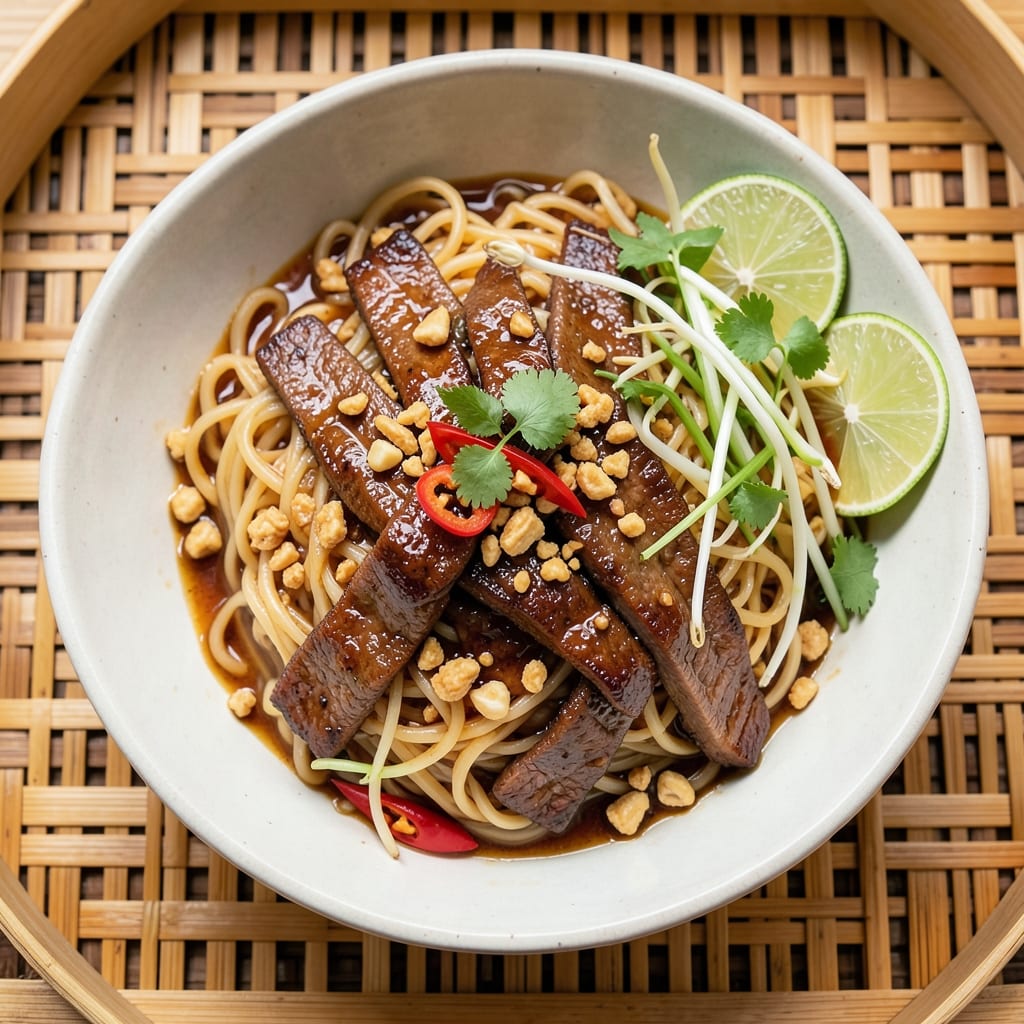
This authentic beef Pad Thai recipe delivers the perfect balance of sweet, sour, and savory flavors that define Thailand's most iconic street food. The secret lies in a wok-tossed technique that creates crisp-tender noodles and a fragrant sauce infused with tamarind, fish sauce, and palm sugar. I've perfected this recipe after years of testing, ensuring every bite captures the restaurant-quality experience you crave.
The foundation begins with rice noodles soaked just until pliable, then tossed in a wok with beef that's been marinated in a blend of soy sauce, garlic, and lime. The sauce—sweet from palm sugar, tangy from tamarind, and umami-rich from fish sauce—coats each strand perfectly. Traditional garnishes like crushed peanuts, lime wedges, and bean sprouts add texture and freshness that elevate this dish beyond ordinary stir-fry.
What sets this recipe apart is the authentic wok technique, where high heat and constant tossing create those signature crisp edges on the noodles while keeping the beef tender. The sauce is built in layers, starting with a tamarind base that develops depth as it simmers with garlic, shallots, and chili. The result is a dish that's vibrant, aromatic, and packed with the complex flavors that make Pad Thai unforgettable.
Serve this dish immediately with extra lime wedges and chili flakes on the side, or pair it with jasmine rice for a complete meal. The balance of textures—chewy noodles, crispy peanuts, and fresh bean sprouts—makes every bite satisfying. Let's bring the flavors of Bangkok to your kitchen.
Ingredients for authentic beef pad thai
Rice noodles, tender beef, and a vibrant tamarind-fish sauce balance create this iconic dish.
| Ingredient | Amount | Notes |
|---|---|---|
| Rice Noodles 🍜 | 8 oz | Flat rice noodles, 1/4-inch wide |
| Flank Steak 🥩 | 1 lb | Thinly sliced against grain |
| Tamari or Soy Sauce 🥢 | ½ cup | For beef marinade |
| Garlic Cloves 🧄 | 6 cloves | Minced for marinade |
| Fresh Lime 🍋 | 1 whole | Juiced for marinade |
| Palm Sugar 🍯 | ¼ cup | Or substitute brown sugar |
| Fish Sauce 🍶 | ¼ cup | Red Boat brand preferred |
| Tamarind Paste 🍈 | ¼ cup | Or tamarind concentrate |
| Shallots 🧅 | ¼ cup | Finely chopped |
| Bird's Eye Chilies 🌶️ | 4 whole | Or substitute Thai chilies |
| Crushed Peanuts 🥜 | ¼ cup | For garnish |
| Bean Sprouts 🌱 | 1 ½ cups | Fresh, rinsed |
| Fresh Thai Basil 🌿 | ¼ cup | Or regular basil |
| Vegetable Oil 🫒 | ½ cup | For wok frying |
| Salt 🧂 | ½ tsp | Kosher or sea salt |
The beef is non-negotiable—flank steak sliced paper-thin against the grain ensures tender bites. Look for Red Boat fish sauce at Asian markets or the international aisle—it's the gold standard for authentic flavor. Palm sugar can be tricky to find; Trader Joe's or Whole Foods usually carry it, but brown sugar works in a pinch. Fresh Thai basil adds that signature aroma, but regular basil gets you close. The rice noodles should be flat and about 1/4-inch wide—check the label or ask at the store.
No tamarind paste? Mix lime juice with a little brown sugar to mimic the tang. Swap bird's eye chilies for Thai chilies if they're easier to find, or even serrano peppers for a milder kick. The Red Boat fish sauce is essential—don't substitute with soy sauce. For the marinade, let the beef soak for at least 30 minutes (longer if possible) to develop flavor. The crushed peanuts should be lightly toasted in the wok for extra crunch—just a minute or two with the other aromatics.
Keep the noodles in a sealed bag until ready to use—they dry out fast. Store the sauce separately in the fridge for up to 5 days, or freeze it for 3 months. The beef marinade can be prepped a day ahead. Garnishes like bean sprouts and basil stay fresh for 3 days in the fridge, wrapped in damp paper towels. This dish is best served immediately, but the sauce reheats beautifully for quick stir-fries later in the week.
Why You'll Love This Recipe
- No-Soaking Noodles: I swear by the trick of boiling the rice noodles first—no waiting, no fuss. They soften in minutes, not hours, and still hold up when tossed with the beef and sauce. (Yes, even on a Tuesday night when you’re starving.)
- Umami Bomb: That tamari or soy sauce? It’s the secret weapon here. The moment the garlic hits the hot pan, the sauce caramelizes just enough to coat the tender flank steak in a glossy, addictive layer. The lime cuts through it like a breath of fresh air—bright, tangy, perfect.
- Lunch or Dinner: Make a big batch and eat it for days. The leftovers reheat beautifully—just add a splash of water to loosen the sauce. Honestly, it’s my go-to for packed lunches or when friends drop by unexpectedly. (They always ask for the recipe.)
- Budget-Friendly Feast: Flank steak stretches far when sliced thin, and rice noodles are cheaper than takeout. Between us, this is how I feed a crowd without breaking the bank. Not the prettiest, but the taste makes up for it every time.
Step-by-step instructions for authentic beef Pad Thai
Here's how to balance umami, sweetness, and bright acidity in every wok-tossed bite.
Marinate the Flank Steak for Maximum Flavor
Slice the 1 lb flank steak thinly against the grain into strips about ¼-inch thick. In a bowl, combine the 0.5 cup tamari or soy sauce, 0.25 cup fish sauce, 0.25 cup palm sugar, 6 minced garlic cloves, and juice from the 1 whole fresh lime. Add the sliced steak and toss until fully coated. Let it marinate for at least 30 minutes at room temperature - this ensures deep flavor penetration.
I press the marinade into the meat with my fingers to guarantee even distribution. The tamari provides that authentic umami depth while the lime juice brightens the profile. Don't skip this step - proper marinating transforms tough flank steak into tender, flavorful strips that hold up perfectly during wok tossing.
Prepare the Tamarind Sauce Base
In a small saucepan, combine the 0.25 cup tamarind paste, 0.25 cup palm sugar, and 0.5 tsp salt. Add ½ cup water and heat over medium until the mixture dissolves completely. Simmer for 5 minutes until slightly thickened - you're looking for a glossy, syrupy consistency that will coat the noodles beautifully.
This sauce is the soul of authentic Pad Thai. The tamarind provides that signature tangy-sour note while the sugar balances it. Taste as you go - you want a balance between sweet, sour, and salty. If it's too thick, add a splash of water; if too thin, simmer longer. The sauce should coat the back of a spoon but still be pourable.
Cook the Rice Noodles Al Dente
Soak the 8 oz rice noodles in warm water for exactly 20 minutes until pliable but still slightly firm to the bite. Drain thoroughly and toss with 1 tablespoon vegetable oil to prevent sticking. The noodles should be al dente - they'll finish cooking in the wok but shouldn't be mushy.
Over-soaking makes them gummy; under-soaking means they'll be raw in the center. I test by pressing a noodle between my fingers - it should hold its shape but give slightly. Keep them covered with a damp towel until ready to cook to maintain moisture without making them soggy.
Wok-Toss the Beef and Aromatics
Heat 0.5 cup vegetable oil in a wok or large skillet over high heat until shimmering. Add the marinated beef and stir-fry for 2-3 minutes until just cooked through - the meat should remain tender. Remove and set aside. In the same wok, add 0.25 cup chopped shallots and 4 whole bird's eye chilies (seeds removed if you prefer less heat) and stir-fry for 30 seconds until fragrant.
The high heat is crucial here - it creates that signature wok hei flavor. Don't overcrowd the pan or the beef will steam instead of sear. The shallots should soften slightly while the chilies should just blister at the edges. This quick cooking preserves the beef's tenderness while building the aromatic base for your dish.
Combine Everything for Perfect Balance
Return the cooked beef to the wok. Add the drained noodles, 1.5 cups bean sprouts, and 0.25 cup fresh Thai basil. Pour the tamarind sauce over everything and toss vigorously for 2-3 minutes until everything is well-coated and heated through. The noodles should be glossy and the sauce should cling to every strand.
This is where the magic happens - the tamarind sauce binds everything together while the wok heat ensures perfect texture. Taste and adjust seasoning - you might need a splash more fish sauce for saltiness or a squeeze of lime for brightness. The dish should be balanced between sweet, sour, salty, and umami with just a hint of spicy heat.
Garnish and Serve Immediately
Transfer the Pad Thai to serving plates and immediately top with 0.25 cup crushed peanuts. Serve with additional lime wedges on the side. The peanuts add texture contrast while the lime lets everyone adjust the acidity to their preference.
Authentic Pad Thai is meant to be eaten fresh from the wok. The noodles should be tender but still have a slight bite, the sauce should cling beautifully, and each bite should deliver that perfect balance of flavors. Serve with a cold beer or iced tea to complement the dish's vibrant flavors.
Pro Tips For Making Authentic Beef Pad Thai
- Sear Steak Fast: Flank steak needs a screaming-hot pan—no waiting for it to heat. Slice against the grain after it hits 135°F (57°C) internal temp, then sear for 30 seconds per side. Overcooking turns it chewy; undersearing makes it bland. ---
- Soak Noodles Cold: Skip the warm water—soak rice noodles in room-temp water for 10-15 minutes. Warm water cooks them unevenly, and cold water keeps them from sticking together. Drain just before tossing in the wok. ---
- Balance Tamari Early: Add half the tamari to the wok before the beef hits—it deglazes faster and caramelizes. Save the rest for tossing with noodles. Too much at once makes the sauce cloying; too little leaves it flat. ---
- Squeeze Lime Last: Toss noodles with lime after everything else cools slightly—hot lime juice curdles the egg (if using) and kills the garlic’s freshness. A few drops of lime water in the sauce? That’s a shortcut, but whole wedges at the end are non-negotiable.
Essential equipment for this recipe
Wok Essentials
A carbon steel wok is my go-to for authentic Pad Thai—it heats up fast and retains high temperatures perfectly. The 14-inch diameter is ideal for tossing noodles without overcrowding. I use a Made In wok from Amazon because it's affordable and performs like professional-grade woks. For beginners, a stainless steel wok works, but it won't develop that signature wok hei flavor over time. 🔥
High Heat Tools
You'll need a long-handled spatula (I recommend Norpro's 12-inch wok spatula) for tossing and a tongs set for handling the beef and bean sprouts. A cast iron lid helps control heat when needed. Preheat your wok until it smokes slightly—this ensures proper searing and flavor development. Avoid nonstick pans; they can't handle the high heat required for authentic texture.
Sauce Prep Gear
A small stainless steel saucepan (like All-Clad's 2-quart version) is perfect for making the tamarind sauce. Use a fine-mesh strainer to remove any tamarind pulp if needed. For measuring, a digital kitchen scale ensures precise amounts of palm sugar and fish sauce. I keep a small whisk handy to stir the sauce smoothly while it simmers. 🌡️
Noodle Prep Tools
Soak your rice noodles in a large bowl with warm water—never boiling, or they'll turn mushy. A fine-mesh colander makes draining easy, and a silicon spatula helps transfer noodles without breaking them. Keep them covered with a damp kitchen towel while prepping the rest of the dish. Pro tip: Use a timer for the 20-minute soak—over-soaking is the #1 mistake with rice noodles.
Garnish Must-Haves
Crushed peanuts need a small cast iron skillet for quick toasting—just 1 minute over medium heat until fragrant. A microplane is perfect for fresh lime zest garnishes. Keep a small bowl of lime wedges on the table for serving. For extra authenticity, add Thai basil leaves torn by hand rather than chopped—they release more aroma. 🥜
Nutrition facts
Frequently asked questions
Can I substitute flank steak with another cut?
Yes, but choose carefully! Sirloin or ribeye work well if sliced thinly against the grain. Avoid tougher cuts like chuck—they won't tenderize properly in the quick stir-fry. For extra-lean options, try top round but marinate longer (1 hour) to prevent dryness.
How do I get the noodles perfectly crisp-tender?
Soak them for exactly 20 minutes in warm water (not hot!) until pliable but still firm. Drain well and toss with 1 tablespoon oil to prevent sticking. The key is high wok heat—toss constantly for 2-3 minutes until edges turn golden. Overcrowding steams instead of crisps!
What if I can't find tamarind paste?
Mix 0.25 cup lime juice with 1 tablespoon brown sugar and 1 teaspoon fish sauce to mimic the tangy-sweet balance. For deeper flavor, add 1 teaspoon soy sauce. The texture won't be identical, but it'll work in a pinch!
Can I make this vegetarian?
Swap beef for tofu (extra-firm) or mushrooms (shiitake or oyster). Marinate tofu in soy sauce + lime juice for 30 minutes before cooking. Add 1 cup firm tofu or 8 oz sliced mushrooms to the wok. The sauce ratios stay the same—just adjust protein quantity to 1 lb equivalent.
Why does my sauce taste too salty?
Fish sauce is potent—start with 2 tablespoons and taste as you go. Balance with 1 teaspoon lime juice to cut saltiness. If needed, add 1 tablespoon sugar to sweeten. The sauce should taste complex, not just salty. Pro tip: Use Red Boat fish sauce—it's less salty than generic brands.