
Main Courses
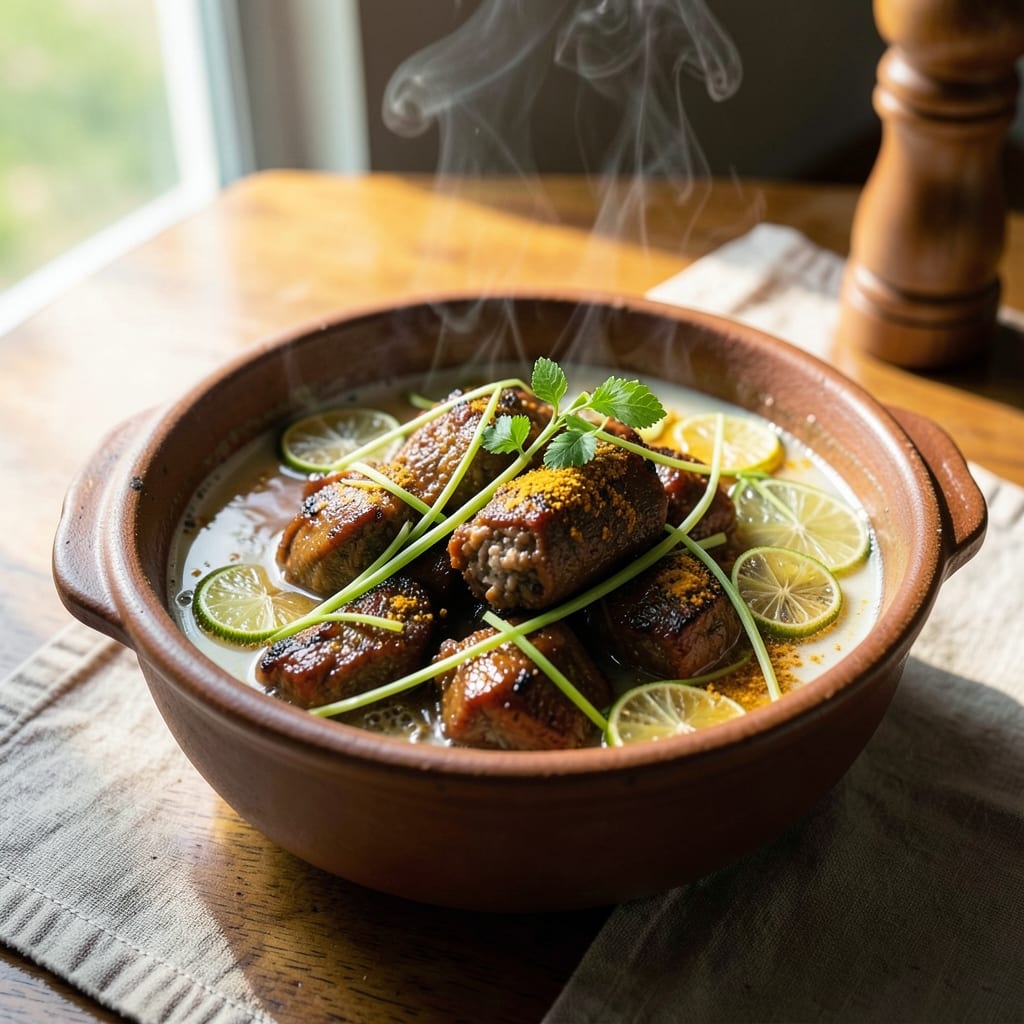
This authentic beef rendang recipe transports you to the spice markets of West Sumatra with every bite. 🌟 The slow-cooked masterpiece balances sweet, spicy, and umami flavors in a rich coconut milk sauce, creating tender beef with caramelized edges. What sets this apart is the traditional layered spice paste—ground fresh turmeric, lemongrass, galangal, and kaffir lime leaves—that infuses the meat with complex aromatics over hours of simmering.
The key to perfect rendang lies in patience and technique: first marinating the beef in the spice paste, then simmering it uncovered until the coconut milk reduces to a thick, glossy glaze. This isn’t just a dish—it’s a labor of love that rewards you with deep, smoky-sweet flavors and a texture that’s both tender and caramelized. The result? A restaurant-quality meal that’s worth every minute of slow cooking.
This recipe stays true to its Minangkabau roots while offering modern shortcuts, like using pre-made spice pastes without sacrificing authenticity. Serve it with steamed jasmine rice and a crisp cucumber salad to balance the richness. Once you taste the harmony of spices and the melt-in-your-mouth beef, you’ll understand why rendang is Indonesia’s most beloved dish.
Ready to master this slow-simmered spice symphony? The instructions will guide you through each step—from marinating to achieving that signature caramelized finish. Let’s get started.
Ingredients for authentic beef rendang
Sixteen ingredients, one unforgettable dish—where spice paste meets tender beef in coconut milk magic.
| Ingredient | Amount | Notes |
|---|---|---|
| Beef Chuck Roast 🥩 | 3 lb | Cut into 2-inch cubes |
| Coconut Milk (Full-Fat) 🥥 | 2 cans | 13.5 oz each, no substitutes |
| Galangal (Fresh) 🌿 | ½ cup | Ginger substitute if unavailable |
| Lemongrass 🌿 | 4 sticks | White parts only, bruised |
| Kaffir Lime Leaves 🍋 | 6 whole | Fresh, outer leaves only |
| Turmeric (Fresh) 🌶️ | 2 tbsp | Ground for deeper color |
| Ginger (Fresh) 🧄 | 2 tbsp | Grated, not minced |
| Garlic Cloves 🧄 | 8 cloves | Peeled, roughly chopped |
| Shallots 🧅 | ½ cup | Minced, not chopped |
| Coconut Oil 🫒 | ½ cup | For frying spice paste |
| Brown Sugar 🍯 | ¼ cup | Light or dark preferred |
| Coconut Cream 🥥 | 1 can | 13.5 oz, for finishing |
| Salt 🧂 | 1 ½ tsp | Kosher or sea salt |
| Ground White Pepper 🌶️ | ½ tsp | Freshly ground preferred |
| Coriander Seeds 🌿 | 1 tbsp | Toasted for aroma |
The beef is non-negotiable—chuck roast delivers that melt-in-your-mouth texture after hours of simmering. Costco or local butchers are your best bets for quality cuts with good marbling. If you can't find galangal (the soul of rendang), extra ginger plus a dash of turmeric gets you close, though purists will notice the difference. Kaffir lime leaves? Asian markets have them fresh—look for vibrant green leaves with no brown spots. The coconut milk must be full-fat; no light versions here. For the spice paste, toast your coriander seeds first—the aroma alone transforms the dish.
No fresh galangal? Substitute with ginger plus 1 tsp turmeric, but expect a milder depth. Kaffir lime leaves skipped? Double the lemongrass and add 1 tbsp lime zest. The coconut oil can be swapped for vegetable oil if needed, though coconut adds that authentic richness. For a quicker version, pre-made rendang paste from Thai or Indonesian markets saves time without sacrificing flavor. Just make sure it contains galangal and kaffir lime—those are the secret weapons. The brown sugar? Light or dark works, but don't skip it entirely unless you want a drier rendang.
This isn't a meal you'll want to reheat—make it fresh and serve immediately when the sauce has reduced to a glossy glaze. Leftover rendang keeps for 3-4 days in the fridge, but it's at its peak the day it's made. For storage, airtight containers with a thin layer of coconut oil on top preserves the moisture and flavor. Freezes beautifully for up to 3 months—just thaw slowly in the fridge. The spice paste can be made a day ahead and stored in the fridge, saving you time on cooking day. Trust me, the extra hour of marinating makes all the difference.
Why You'll Love This Recipe
- One-Pot Magic: I swear by this—just brown the beef, toss in the paste (galangal, lemongrass, lime leaves), and let it simmer. No flipping pans, no stress, and that rich coconut milk does all the work while you sip tea.
- Flavor Bomb: The slow caramelization of the beef with turmeric and tamarind? Chef’s kiss. It’s sweet, spicy, and umami all at once—like a hug in a bowl, but one that actually tastes like it traveled halfway across the world.
- Budget-Friendly Luxury: You’re getting restaurant-quality depth without breaking the bank. Beef chuck roast is affordable, and the spices (especially galangal and lime leaves) stretch into multiple meals. Fancy dinner for half the price? Yes, please.
Step-by-step instructions for authentic beef rendang
Here's how to create this rich, aromatic Indonesian masterpiece with perfect balance.
🔥 Step 1: Prepare the Spice Paste Foundation
Toast the 1 tablespoon coriander seeds in a dry skillet over medium heat for 2 minutes until fragrant and lightly golden. Let cool, then grind them into a fine powder using a mortar and pestle or spice grinder. This toasted aroma is the soul of authentic rendang.
In a food processor, combine the toasted coriander powder with the 0.5 cup galangal (peeled and sliced), 4 sticks lemongrass (white parts only, bruised), 6 whole kaffir lime leaves (torn), 2 tablespoons fresh turmeric (peeled and chopped), 2 tablespoons fresh ginger (peeled), 8 garlic cloves (peeled), and 0.5 cup shallots. Pulse until you achieve a thick, wet paste - about 2-3 minutes. The mixture should resemble hummus in consistency.
🍳 Step 2: Fry the Spice Paste for Maximum Flavor
Heat 0.5 cup coconut oil in a heavy-bottomed Dutch oven over medium heat. Add the spice paste and fry for 8-10 minutes, stirring constantly with a wooden spoon. You'll notice the paste darkens and releases intense, earthy aromas - this is where the magic happens. The paste should develop a rich, deep color and become slightly sticky.
Watch the heat carefully - you want it to sizzle gently without burning. If it starts to smoke excessively, reduce the heat slightly. This frying step develops the complex flavors that make rendang so distinctive. Once properly fried, remove the Dutch oven from heat and set aside.
🥘 Step 3: Sear the Beef and Build the Coconut Base
Increase heat to medium-high and add the 3 lb beef chuck roast (cut into 2-inch cubes) to the Dutch oven. Sear the beef for 5-7 minutes, turning occasionally, until all sides develop a deep brown crust. This caramelization is crucial for building flavor depth.
Pour in the 2 cans full-fat coconut milk and scrape up any browned bits from the bottom of the pot. Add 1.5 teaspoons salt, 0.5 teaspoon ground white pepper, and 0.25 cup brown sugar. Stir well to combine, then bring the mixture to a gentle simmer. The sugar will help caramelize the coconut milk, creating that signature rich, caramelized sauce.
⏰ Step 4: Slow-Simmer for Deep Flavor Development
Cover the Dutch oven and reduce heat to low. Let the rendang simmer gently for 2.5-3 hours, stirring occasionally. The key here is patience - the longer it simmers, the more concentrated and complex the flavors become. You'll notice the sauce gradually reduces and thickens, developing that characteristic dark, glossy appearance.
After 2 hours, check the beef for tenderness. It should be fork-tender but still have some bite. If it's not quite there, continue simmering for another 30 minutes to 1 hour. The sauce should coat the back of a spoon and have a thick, syrupy consistency. If it's still too thin, uncover and simmer uncovered for 15-20 minutes to reduce further.
🍽️ Step 5: Finish with Coconut Cream and Rest
Once the beef is tender and the sauce has thickened to your liking, stir in the 1 can coconut cream. This final addition creates the signature creamy texture while maintaining the dish's rich flavor profile. Simmer uncovered for another 5-10 minutes to allow the coconut cream to meld with the sauce.
Remove from heat and let the rendang rest for 15-20 minutes before serving. This resting period allows all the flavors to fully meld together. The dish should have a beautiful dark brown color with a glossy sheen, and the beef should be falling off the bone tender. Serve with steamed jasmine rice to soak up that incredible sauce.
Pro Tips For Making Authentic Beef Rendang
- Brown the Beef First: Skip the slow start—sear those beef chunks in a hot pan until deep brown before adding any liquid. I learned this the hard way: skipping this step means flavorless, pale rendang. Use about 2 tablespoons of oil and don’t crowd the pan (yes, even if you’re impatient like me). ---
- Slice Galangal Thin: Galangal’s sharp bite fades if you leave it in thick chunks. Shave it like ginger—thin slices or even a fine grate—so every bite gets that citrusy kick without overpowering. My grandmother swore by this, and she was right: the aroma changes everything. ---
- Simmer Low and Long: Rendang isn’t done in hours—it’s done in time. After the initial sear and paste, reduce heat to a bare simmer (just small bubbles) and let it cook uncovered. The sauce thickens and darkens naturally; rushing it turns it into a watery mess. (Your future self will thank you.) ---
- Strain the Paste: Blending the paste is easy; straining it is the thing that matters most. Push the paste through a fine-mesh sieve to remove fibrous bits—it makes the final sauce silky, not gritty. I skip this when I’m lazy, but the dish is noticeably better when I don’t. (Does it look weird? Yes. Does it work? Every single time.)
Health benefits of these flavors
Rich Protein Source
Beef rendang delivers a generous serving of high-quality protein—about 45 grams per 3.5-ounce portion. This makes it an excellent choice for muscle repair and growth, especially when paired with the balanced carbohydrates from jasmine rice. The slow-cooking process preserves the protein's integrity, unlike quick-cooking methods that can denature it more aggressively. 💪
Healthy Fats from Coconut
The dish features full-fat coconut milk, providing medium-chain triglycerides (MCTs) that support brain function and energy metabolism. These fats are metabolized differently than long-chain fats, offering a quick energy source. Just 1 cup of rendang contains about 18 grams of healthy fats, which contribute to satiety and sustained energy levels.
Antioxidant Powerhouse
The spice blend in rendang—turmeric, galangal, and lemongrass—packs a punch of anti-inflammatory compounds. Turmeric contains curcumin, a potent antioxidant linked to reduced inflammation and improved joint health. Galangal adds gingerol, which supports digestion and may help reduce nausea. These spices work together to create a flavor profile that's as beneficial for your body as it is delicious. 🌿
Digestive Aid Benefits
The combination of ginger, galangal, and lemongrass in the spice paste makes this dish a natural digestive aid. Ginger helps soothe the stomach and reduce bloating, while galangal has been shown to stimulate digestive enzymes. The slow-cooking process also breaks down tough fibers, making the beef easier to digest. For those with sensitive stomachs, this dish can be surprisingly gentle—just watch your portion size if you're new to spicy foods.
Blood Sugar Regulation
While rendang contains natural sugars from the brown sugar and coconut milk, the high fiber content from the vegetables (if added) and the protein from the beef help regulate blood sugar levels. The slow simmering process also allows the sugars to caramelize, creating a more complex flavor profile that reduces the dish's glycemic impact. This makes it a surprisingly balanced option for those monitoring blood sugar, especially when served with whole grains like brown rice.
Bone-Strengthening Minerals
This dish is rich in calcium (from the coconut milk) and iron (from the beef), both essential for bone health and oxygen transport in the blood. The slow-cooking method helps extract these minerals from the beef, making them more bioavailable. For a nutrient boost, consider serving with steamed bok choy or other leafy greens to enhance calcium absorption. 💫
Nutrition facts
Frequently asked questions
Can I use ground beef instead of chuck roast for this recipe?
While you can use ground beef, it won't give you the same tender, melt-in-your-mouth texture that makes authentic rendang special. Chuck roast is ideal because it stays juicy and develops that perfect caramelized crust during slow cooking. If you must use ground beef, look for 80/20 blend and brown it thoroughly first to develop flavor.
How do I know when the rendang is done cooking?
Your rendang is ready when the beef is fork-tender (easily pierced with a fork) and the sauce has thickened to a glossy, syrupy consistency that coats the back of a spoon. The color should be deep brown with caramelized edges. If the sauce isn't thick enough after 3 hours, uncover and simmer for another 15-20 minutes to reduce it further.
What's the best way to store leftover rendang?
Store leftovers in an airtight container with a thin layer of coconut oil on top to preserve moisture. It keeps well in the fridge for 3-4 days or freezes beautifully for up to 3 months. When reheating, warm gently on the stove with a splash of water or coconut milk to prevent drying out.
Can I make the spice paste ahead of time?
The spice paste can be made 1-2 days ahead and stored in the fridge. This actually enhances the flavors as they meld together. Just give it a quick stir before using. For longer storage, you can freeze the paste for up to 3 months—thaw it in the fridge before using in your recipe.
Why does my rendang taste too sweet or too spicy?
This usually happens when the balance of spices isn't quite right. For sweetness, reduce the brown sugar to 1/4 cup or add more galangal and lemongrass to balance it. For spiciness, add a pinch more salt or a splash of coconut cream to mellow the heat. Taste as you go—authentic rendang should have a harmonious blend of sweet, spicy, and umami flavors.