
Soups & Stews
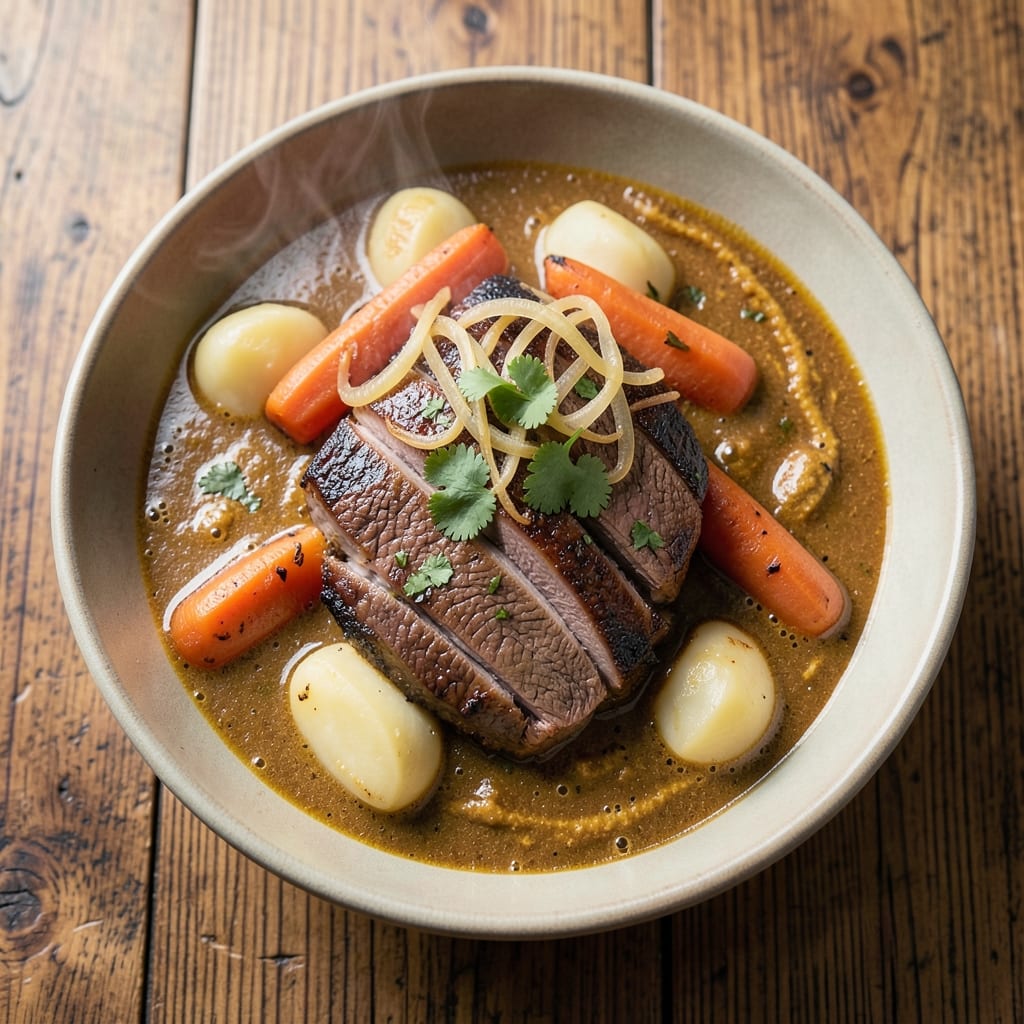
This authentic Japanese beef curry recipe delivers the rich, complex flavors that make it a comfort food staple across Japan. The secret lies in the Japanese curry roux—a carefully balanced blend of spices, sweetness, and umami that transforms simple ingredients into something deeply satisfying. After years of perfecting the technique, I’ve found the right combination of beef cut, cooking method, and roux variation to create a dish that’s both restaurant-worthy and achievable at home.
The process begins with tenderizing beef chuck or brisket, which breaks down beautifully during the long simmer, creating melt-in-your-mouth texture. The roux, whether you choose Tokyo-style (milder, sweeter) or Osaka-style (bolder, spicier), dissolves into a velvety sauce that coats every bite. What sets this curry apart is the harmony of flavors—sweet, savory, and slightly spicy—all tied together by the deep umami of the roux and the richness of coconut milk.
By the time you serve it, you’ll have a deeply aromatic, hearty stew that pairs perfectly with steamed rice, pickles, or even a simple miso soup. The sauce thickens just enough to cling to the beef and vegetables, ensuring every spoonful is packed with flavor. This isn’t just a curry; it’s a taste of Japan’s home cooking, where simplicity meets depth in every bite.
The beauty of this recipe lies in its versatility—adjust the roux to your preference, swap in vegetables like potatoes or carrots, and even use chicken or pork if needed. But the beef version? That’s the one that delivers the true essence of Japanese curry: comforting, flavorful, and impossible to resist. Let’s get started.
Ingredients for authentic japanese beef curry
Fourteen ingredients. One unforgettable flavor journey through Japan's home kitchens.
| Ingredient | Amount | Notes |
|---|---|---|
| Beef Chuck Roast 🥩 | 1 ½ lb | Pre-cubed, 1-1.5 inch pieces |
| Japanese Curry Roux 🌶️ | ½ cup | Tokyo-style preferred, or homemade blend |
| Coconut Milk 🥥 | 1 can | Full-fat, 13.5 oz can |
| Onions 🧅 | 1 whole | Yellow or white, sliced |
| Carrots 🥕 | 2 medium | Peeled, sliced into rounds |
| Potatoes 🥔 | 2 medium | Russet, peeled, cubed |
| Garlic Cloves 🧄 | 4 cloves | Minced, fresh preferred |
| Ginger 🌿 | 1 inch | Fresh, grated, peeled |
| Soy Sauce 🍶 | 2 tbsp | Japanese preferred, like Kikkoman |
| Sake 🍶 | ¼ cup | Dry preferred, or substitute mirin |
| Honey 🍯 | 1 tbsp | Or agave for vegan option |
| Salt 🧂 | 1 tsp | Kosher or sea salt |
| Black Pepper 🌶️ | ½ tsp | Freshly ground preferred |
| Vegetable Oil 🫒 | 2 tbsp | For searing beef |
| Steamed White Rice 🍚 | 2 cups | Cooked, for serving |
The beef cut is non-negotiable—chuck roast delivers that signature melt-in-your-mouth texture after hours of simmering. Costco or Trader Joe's usually have pre-cubed chuck, which saves you the chopping work, but if you're buying a whole roast, ask the butcher to cut it into 1-1.5 inch cubes. For the roux, Mae Ploy or S&B Golden Curry are the gold standards, but if you're making your own, balance is key: equal parts chili powder, turmeric, coriander, and cumin. The coconut milk? Full-fat only—it's where the richness comes from, and none of those 'light' versions will cut it here.
No Japanese curry roux? Mix 2 tbsp chili powder, 1 tbsp turmeric, 1 tbsp coriander, 1 tsp cumin, and 1 tsp garam masala—that's your DIY version. Running low on sake? Dry white wine works in a pinch, but it'll taste different. The honey adds that signature sweetness, but if you're avoiding it, maple syrup does the trick just as well. Fresh ginger and garlic are ideal, but if you're using powdered, reduce to half the amount. And for the potatoes? Baby potatoes work great—just halve them before adding.
This curry tastes even better the next day—honestly, it's when all the flavors truly meld together. Store leftovers in an airtight container in the fridge for up to 5 days, or freeze portions for 3 months. The roux keeps indefinitely in a cool, dark place, so make extra if you're feeling ambitious. And pro tip: Save the last scoop of roux to make instant curry paste for future meals—just mix with a little oil and store in the fridge.
Why You'll Love This Recipe
- One-Pot Magic: I swear by this recipe when I’m too tired to scrub pots—just brown the beef, toss in the roux and coconut milk, and let it simmer. The curry thickens right in the pan, so no straining, no extra dishes. Honestly, I’ve made it after a 10-hour shift, and it still tasted like I’d spent hours.
- Deep Umami Bomb: That Japanese curry roux? It’s where the magic happens—earthy, slightly sweet, with just enough kick to wake up your taste buds. The beef chuck melts into tender strands while soaking up all those flavors, and the coconut milk balances it with creamy richness. Between us, the first bite makes me forget about takeout forever.
- Leftover Goldmine: This curry begs to be made in bulk—it reheats like a dream and only gets better the next day. I’ll freeze portions for lazy Mondays or pack it in bento boxes for work. Even my picky teenage son asks for seconds, and that’s saying something.
- Budget Feast: Beef chuck is cheap, carrots and onions stretch the pot, and a bag of curry roux lasts for ages. For under $15, I feed my family four hearty servings with sides to spare. Plus, the flavors are so satisfying, no one misses the fancy (or expensive) ingredients. My secret weapon for stretching paychecks.
Step-by-step instructions for authentic Japanese beef curry
Here's how to craft this deeply flavorful dish with perfect texture and balance every time.
Sear the Beef for Maximum Flavor
Heat the 2 tablespoons vegetable oil in a heavy-bottomed pot over medium-high heat until shimmering. Add the 1.5 lb beef chuck roast in a single layer, working in batches if needed, and sear for 3-4 minutes per side until deeply browned with a crust forming. This step builds the rich, caramelized foundation that carries through the entire curry.
Once browned, remove the beef and set aside. The goal is to develop that deep, meaty flavor through the Maillard reaction. If the oil starts smoking excessively, reduce heat slightly—you want a steady sizzle, not a fire. The beef will finish cooking later, so don't worry about full doneness yet.
Build the Aromatic Base
In the same pot, add the 1 whole onions and cook for 5 minutes until softened and golden. Add the 2 medium carrots and 2 medium potatoes, stirring to coat in the fond at the bottom. Cook for another 5 minutes until the vegetables begin to caramelize slightly.
Stir in the 4 cloves garlic cloves and 1 inch ginger, cooking for 30 seconds until fragrant. Here's where the magic happens—the combination of sweet onions, earthy ginger, and sharp garlic creates the aromatic backbone. If you smell anything burning, reduce heat immediately. Add the 0.5 cup Japanese curry roux and stir constantly for 2 minutes to toast the spices gently.
Simmer the Curry to Perfection
Pour in the 1 can coconut milk, scraping up any browned bits from the bottom. Add the 2 tablespoons soy sauce, 0.25 cup sake, 1 tablespoon honey, 1 teaspoon salt, and 0.5 teaspoon black pepper. Return the beef to the pot, then add enough water to just cover the ingredients—about 3 cups. Bring to a gentle simmer over medium-low heat.
Cover and cook for 1 hour 15 minutes, stirring occasionally, until the beef is fork-tender and the sauce has thickened to a velvety consistency. The curry should coat the back of a spoon—if it's too thin, uncover and simmer longer. If the sauce looks too thick, add 2-3 tablespoons water to reach the perfect balance. The potatoes should be tender but still hold their shape.
Finish and Serve with Steamed Rice
Once the curry reaches the ideal consistency, adjust seasoning if needed—another splash of soy sauce for saltiness, or a touch of honey for sweetness. Taste carefully; Japanese curry should balance sweet, salty, and umami perfectly. For the final touch, stir in the reserved beef juices to enhance richness.
Serve immediately over 2 cups steamed white rice, ladling generous portions of curry over each serving. The rice acts as a canvas, soaking up the complex flavors while providing the perfect contrast to the rich, spiced sauce. Each bite should deliver tender beef, sweet potatoes, and that signature umami depth from the curry roux.
Pro Tips For Making Authentic Japanese Beef Curry
- Sear the Chuck First: The roux needs something to cling to, and that’s not just flavor—it’s texture. After slicing the beef thinly (against the grain, if you’re feeling fancy), hit a screaming-hot pan with oil and sear each piece for 30 seconds per side until deep brown. I used to skip this, and the curry just tasted like a sad, watery hug.
- Slice the Carrots Lengthwise: Round slices turn to mush in coconut milk. Instead, cut them into thin matchsticks or half-moons—surface area matters. My grandmother swore by this, and it’s the only way the carrots stay crisp enough to cut through the roux’s richness without turning to paste.
- Bloom the Roux in Oil: Don’t just toss the curry roux into the pot with everything else. Heat 1 tablespoon of oil in the same pan you seared the beef, then add the roux and stir for 2 full minutes until it’s fragrant and just starting to darken. This step makes a real difference—skipping it means your curry will taste like powdered chalk.
- Simmer Low and Slow: Japanese curry isn’t a race. After adding the coconut milk and broth, drop the heat to a bare simmer and let it bubble gently for at least 45 minutes. I was skeptical until I tried it—rushing this turns the roux into a gluey mess instead of a velvety, flavor-packed sauce. Cover it loosely and walk away.
Serving suggestions for authentic japanese beef curry
Steamed Rice Essentials
Japanese curry demands short-grain white rice—specifically Koshihikari or sushi rice—for its sticky texture that clings to the sauce beautifully. Cook 2 cups uncooked rice (about 4 cups cooked) using a 1:1.25 rice-to-water ratio in a rice cooker or heavy pot. I swear by a Zojirushi rice cooker for perfect, fluffy grains every time. For extra flavor, rinse the rice 3-4 times before cooking to remove excess starch. 🍚
Pickled Vegetable Contrast
Add a small side of takuan (yellow pickled daikon) or quick-pickled cucumbers to cut through the richness. Thinly slice 1 small daikon radish and 1 cucumber, then soak in a mix of 2 tbsp rice vinegar, 1 tbsp sugar, and ½ tsp salt for 30 minutes. The tangy crunch balances the curry’s sweet-spicy depth perfectly. For a shortcut, grab pre-made sunomono from the Asian grocery aisle.
Miso Soup Pairing
Serve with a small bowl of miso soup made with 2 cups dashi stock, 2 tbsp red miso paste, and 1 tbsp tofu. Simmer for 5 minutes and top with green onions and wakame seaweed. The umami from the miso complements the curry’s depth while adding a light, comforting element. I like to make a big batch on Sunday—it reheats beautifully for the week. 🥣
Garnish Like a Pro
Finish each bowl with 1 tsp toasted sesame seeds and 1 thin slice of scallion for color and aroma. For extra flair, drizzle with 1 tsp neutral oil (like avocado oil) and sprinkle with flaky sea salt. The visual contrast makes the dish feel restaurant-quality. Pro tip: Toast sesame seeds in a dry pan over low heat for 1-2 minutes until golden—don’t walk away or they’ll burn! ✨
Beverage Harmony
Pair your curry with a light Japanese beer like Asahi Super Dry or Sapporo—the crisp, clean flavor cleanses your palate between bites. For non-alcoholic options, green tea (sencha) or ramune soda add refreshing contrast. Avoid heavy wines; they’ll overpower the delicate balance of flavors. I love serving iced matcha latte on hot days for a vibrant twist. 🍺
Nutrition facts
Frequently asked questions
What's the best beef cut for Japanese curry?
Use chuck roast or brisket—they're fatty enough to stay tender during the long simmer and develop rich flavor. Avoid lean cuts like sirloin; they'll dry out. Pre-cubed chuck from Costco or Trader Joe's works perfectly, or ask your butcher for 1-1.5 inch cubes.
Can I make this curry without Japanese curry roux?
Yes! Mix 2 tbsp chili powder, 1 tbsp turmeric, 1 tbsp coriander, 1 tsp cumin, and 1 tsp garam masala for a DIY version. For deeper flavor, add 1 tsp smoked paprika. Toast the spices in oil for 2 minutes before adding coconut milk to develop their aromas.
Why does my curry sauce turn out too thin?
Japanese curry should coat the back of a spoon. If yours is too thin, uncover the pot and simmer uncovered for 10-15 minutes to reduce. For extra thickness, mix 1 tbsp cornstarch with 2 tbsp water, stir into the curry, and simmer 2 minutes. Never use flour—it can make the sauce grainy.
How do Tokyo-style and Osaka-style roux differ?
Tokyo-style is milder and sweeter with more honey and less spice, while Osaka-style is bolder with deeper chili heat. For Tokyo-style, add 1 extra tbsp honey; for Osaka-style, increase chili powder to 3 tbsp. Both use the same base spices but adjust sweetness and spice levels dramatically.
Can I make this curry in an Instant Pot?
Yes! Sear the beef as directed, then add all ingredients except water. Set to High Pressure for 30 minutes, then quick-release. Add 1 cup water instead of 2 cups, as the pressure cooking reduces liquid faster. Finish by simmering on low heat for 5 minutes to thicken the sauce.