
Main Courses
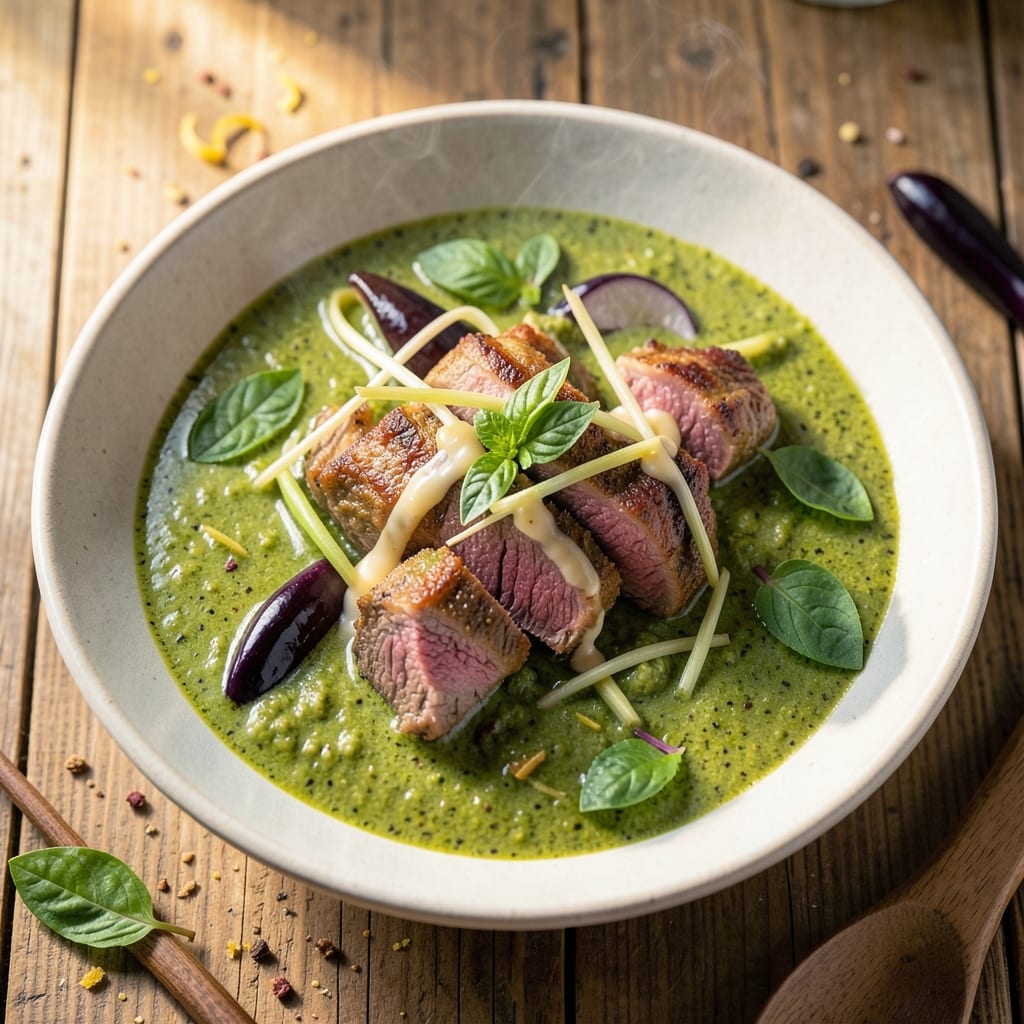
The authentic Thai green curry recipe delivers the perfect balance of herbal heat and creamy coconut richness that defines this beloved dish. ✨ What sets this recipe apart is the homemade green curry paste, packed with fragrant lemongrass, galangal, and kaffir lime leaves—key ingredients that transform ordinary beef into something extraordinary. The slow simmering process develops deep, complex flavors that store-bought pastes simply can't match.
This recipe stays true to Thai tradition while being approachable for home cooks, with simple instructions that guide you through blending the paste and achieving that signature vibrant green color. The beef becomes fork-tender as it cooks in rich coconut milk, absorbing all the aromatic spices. Every bite delivers layers of flavor—spicy, tangy, sweet, and savory—all perfectly balanced.
What makes this curry truly special is the attention to authentic techniques: proper paste preparation, careful simmering, and the right balance of sweet, sour, and spicy elements. The result is a dish that tastes like you've been transported to a bustling Bangkok street market, where the aroma alone would have locals lining up for seconds.
Serve this restaurant-quality curry over steamed jasmine rice with a side of cucumber salad for the full Thai dining experience. The recipe scales beautifully for feeding a crowd, making it perfect for gatherings where you want to impress without sacrificing authenticity.
Ingredients for authentic thai green beef curry
Homemade curry paste and aromatic herbs transform simple beef into restaurant-quality Thai green curry.
| Ingredient | Amount | Notes |
|---|---|---|
| Beef Chuck Roast 🥩 | 1 ½ lb | Cut into 1-inch cubes |
| Coconut Milk 🥥 | 1 can | Full-fat, 13.5 oz can |
| Green Curry Paste 🌿 | ¼ cup | Homemade or quality store-bought |
| Lemongrass Stalks 🌿 | 2 whole | Bruised, bottom 6 inches only |
| Galangal Root 🌿 | 2 oz | Peeled, sliced thinly |
| Kaffir Lime Leaves 🍋 | 4 whole | Torn into strips |
| Thai Eggplant 🍆 | 1 whole | Medium-sized, sliced |
| Fish Sauce 🍶 | 1 tbsp | Red Boat preferred |
| Palm Sugar 🍬 | 1 tbsp | Or substitute brown sugar |
| Jasmine Rice 🌾 | 1 ½ cups | Uncooked, long-grain |
| Cucumber 🥒 | 1 whole | Medium, sliced thinly |
| Lime 🍋 | 1 whole | Juiced, seeds removed |
| Fresh Thai Basil 🌿 | ¼ cup | Chopped, stems removed |
| Vegetable Oil 🫒 | 2 tbsp | For high-heat searing |
| Salt 🧂 | 1 tsp | Diamond Crystal preferred |
The homemade green curry paste is non-negotiable for authentic flavor. Look for fresh galangal and kaffir lime leaves at Asian markets—they make all the difference. Red Boat fish sauce is the gold standard, but any reputable brand works. For the beef, chuck roast delivers the best texture when cubed evenly. Jasmine rice should be long-grain and uncooked—short-grain rice will turn mushy. The palm sugar adds just the right sweetness, though brown sugar works in a pinch if you can't find it.
No galangal? Ginger at half the amount gets you close, though it lacks that unique citrusy kick. Substituting store-bought curry paste saves time, but Penzeys or Maesri brands are superior. Thai eggplant can be swapped for regular eggplant, though it has a slightly sweeter flavor. Vegetable oil is ideal for searing, but avocado or peanut oil work equally well. The lime juice should be freshly squeezed—bottled juice lacks the bright acidity needed to balance the richness.
This curry develops deeper flavor when reheated—make extra and store portions for up to 5 days in the fridge or 3 months frozen. Jasmine rice reheats beautifully in a rice cooker with a splash of water. For serving, toss cucumber slices with lime juice and a pinch of salt to create the perfect refreshing contrast. Fresh Thai basil should be added just before serving to preserve its vibrant aroma.
Why You'll Love This Recipe
- One-Pot Magic: I swear by this—just sear the beef, toss in the curry paste and coconut milk, and let it simmer. No chopping mountains of veggies, no last-minute ingredient scrambles. That galangal and lemongrass do all the heavy lifting while you stir for 20 minutes.
- Flavor Bomb: The moment the green curry paste hits the pan, your kitchen smells like a Bangkok street stall. That creamy, slightly spicy, herbal punch—with the beef melting into tender perfection—is the kind of dish that makes you pause mid-bite. Honestly, I’ve made it three times this month already.
- Meal Prep MVP: This curry tastes even better the next day, which is perfect because it’s so easy to double. I keep a batch in the freezer for lazy Fridays or when friends drop by unannounced. Just reheat and serve—no one will guess it was made ahead.
- Budget Stretch: Beef chuck roast is affordable, and a single jar of green curry paste stretches across multiple meals. Between us, I’ve fed six people for under $15 with this—plus, the leftovers turn into the best rice bowl the next day. Practical? Absolutely. Delicious? Ridiculously.
Step-by-step instructions for authentic Thai green beef curry
Master the balance of herbal heat and creamy coconut—this method delivers restaurant-quality depth.
🔥 Step 1: Sear the Beef for Maximum Flavor
Heat the 2 tablespoons vegetable oil in a heavy-bottomed pot over medium-high heat until shimmering. Add the 1.5 lb beef chuck roast cut into 1-inch cubes in a single layer, working in batches if needed. Let each piece sear undisturbed for 2-3 minutes until deep golden brown on all sides—this builds the rich, caramelized foundation.
Don't overcrowd the pot or the beef will steam instead of sear. I press down gently on the cubes during the first minute to prevent curling, which ensures even contact with the hot oil. Transfer the seared beef to a plate and set aside—it'll continue cooking in the curry.
🍳 Step 2: Build the Curry Base with Aromatics
Reduce heat to medium and add the 0.25 cup green curry paste, stirring constantly for 1 minute until fragrant and the raw paste smell disappears. Add the 2 oz sliced galangal root and 2 bruised lemongrass stalks (bottom 6 inches only), cooking for 2 minutes until the galangal softens slightly and releases its citrusy aroma.
Here's the thing—galangal can be bitter if overcooked, so keep a close eye. When the paste turns a vibrant green and the aromatics release their oils, you're ready for the next step. The curry paste contains chili, lemongrass, and kaffir lime leaf, so you'll notice the room filling with that distinctive Thai herbal heat.
🥘 Step 3: Simmer the Curry with Coconut and Vegetables
Pour in the 1 can coconut milk, stirring to combine with the paste. Add 1 tablespoon fish sauce and 1 tablespoon palm sugar, then return the seared beef to the pot. Bring to a gentle simmer, then reduce heat to low and cover partially. Let it cook for 45-50 minutes until the beef is fork-tender and the sauce thickens slightly.
About 15 minutes before the beef is done, add the 1 whole sliced Thai eggplant and 4 torn kaffir lime leaves. The eggplant should absorb the rich curry sauce while remaining tender. Stir occasionally to prevent the coconut milk from separating—this is when you'll see the curry transform from a thin sauce to a velvety, aromatic stew.
⏰ Step 4: Finish with Fresh Herbs and Bright Lime
Remove the pot from heat and stir in the 0.25 cup chopped fresh Thai basil and juice of 1 lime. Taste and adjust seasoning—add more fish sauce if it needs saltiness, or more palm sugar if it needs sweetness. The basil should brighten the dish with its peppery aroma, while the lime cuts through the richness of the coconut.
Let the curry rest for 5 minutes before serving. This resting period allows the flavors to meld completely. Serve over 1.5 cups cooked jasmine rice and garnish with thinly sliced cucumber on the side for freshness. The contrast of cool cucumber against the warm, spicy curry is what makes this dish truly authentic.
Pro Tips For Making Authentic Thai Green Beef Curry
- Bloom the paste first: After burning three batches where the curry tasted raw and bitter, I finally learned to cook the green curry paste in coconut oil for 3-4 minutes before adding anything else. The heat releases its full aroma and deepens the flavors—don’t rush this, even if you’re impatient like me.
- Slice beef against the grain: Thinly slice your chuck roast before cooking, cutting perpendicular to the muscle fibers. I used to leave it in chunks, and the result was tougher than expected—this way, it melts in your mouth while staying tender.
- Use two cans of coconut milk: Start with one can of full-fat coconut milk to build the sauce, then stir in the second can only after the beef is nearly done. This prevents the curry from splitting into a greasy mess—trust me, I’ve made that mistake.
- Char the lemongrass: Lightly blacken the lemongrass stalks over a flame or in a dry pan for 10 seconds per side before adding them to the curry. It intensifies the citrusy, smoky depth—sounds weird, but it works. Just don’t burn it completely.
Perfect pairings for this dish
Rice Pairing Essentials
Jasmine rice is the undisputed star for Thai green curry—its delicate floral aroma and slightly sticky texture perfectly complement the rich coconut sauce. Cook 1.5 cups uncooked rice with 2 cups water in a rice cooker or pot, then let it steam for 15 minutes off heat after cooking. For extra authenticity, rinse the rice 2-3 times before cooking to remove excess starch. 🌾
Pro tip: Spread the cooked rice on a tray to cool slightly before serving. This prevents soggy rice when the hot curry is poured over it. I also like to lightly toast the rice in a dry pan for 1 minute before serving to enhance its nutty flavor and crisp the edges.
Cucumber Salad Contrast
A simple cucumber salad cuts through the curry's richness with its cool, refreshing crunch. Thinly slice 1 medium cucumber and toss with 1 tbsp lime juice, ½ tsp salt, and ½ tsp sugar. Add 2 tbsp chopped fresh mint or Thai basil for an extra herbal note. The acidity from the lime brightens the dish while the crisp texture provides a satisfying contrast to the creamy curry. 🥒
Thai-Inspired Sides
For a complete Thai meal, add steamed bok choy or green beans>—both absorb the curry's aromatic oils beautifully. Blanch 2 cups bok choy in boiling water for 1 minute, then shock in ice water to preserve color. Toss with a pinch of salt and serve alongside the curry. The slight bitterness balances the dish's sweetness perfectly.
Beverage Pairings
A cold Thai iced tea> (like Thai Tea Lemon>) is the classic pairing—its sweet, creamy notes complement the curry's herbal heat. For a non-alcoholic option, try sparkling lime soda> with a squeeze of fresh lime. If you prefer beer, a crisp Singha or Chang> lager cleanses the palate without overpowering the dish. 🍺
Garnish Like a Pro
Finish your curry with fresh Thai basil leaves> and a drizzle of chili oil> for authentic restaurant flair. The basil adds a peppery aroma, while the chili oil intensifies the heat. I also sprinkle toasted sesame seeds> on top for a nutty crunch. These final touches elevate the dish from homemade to restaurant-quality. ✨
Nutrition facts
Frequently asked questions
Why is galangal so important in authentic Thai green curry?
Galangal provides that signature citrusy, peppery aroma that sets green curry apart from other Thai dishes. Unlike ginger, it has a unique floral note that balances the coconut's richness and cuts through the heat. If you can't find it, ginger works in a pinch, but expect a slightly different flavor profile.
Can I make this curry less spicy for kids or sensitive eaters?
Reduce the curry paste to 2 tablespoons instead of 0.25 cup and omit any added chili oil when serving. For extra mildness, strain the curry sauce before serving to remove visible chili pieces. The coconut milk naturally mellows the heat, so the dish stays flavorful even with less spice.
How do I prevent the coconut milk from separating?
Keep the heat at a gentle simmer (low-medium) and stir occasionally during cooking. Adding 1 tablespoon cornstarch mixed with 2 tablespoons water at the end can help thicken it naturally. Avoid boiling, which causes separation—this curry should never reach a rolling boil.
What's the best way to reheat leftover green curry?
Reheat gently on the stovetop over low heat with a splash of water or coconut milk to restore creaminess. Microwaving can make the sauce oily, so stovetop is ideal. For extra flavor, add a splash of fish sauce or lime juice when reheating—it revives the dish beautifully.
Can I substitute chicken or tofu for the beef?
Yes! For chicken, use 1.5 lbs boneless thighs (they stay juicier than breast) and reduce cooking time to 25-30 minutes. For tofu, use 1 block extra-firm pressed and cubed, then simmer for 20 minutes after adding to the curry. The cooking times adjust based on protein density—always check for tenderness.