
Main Courses
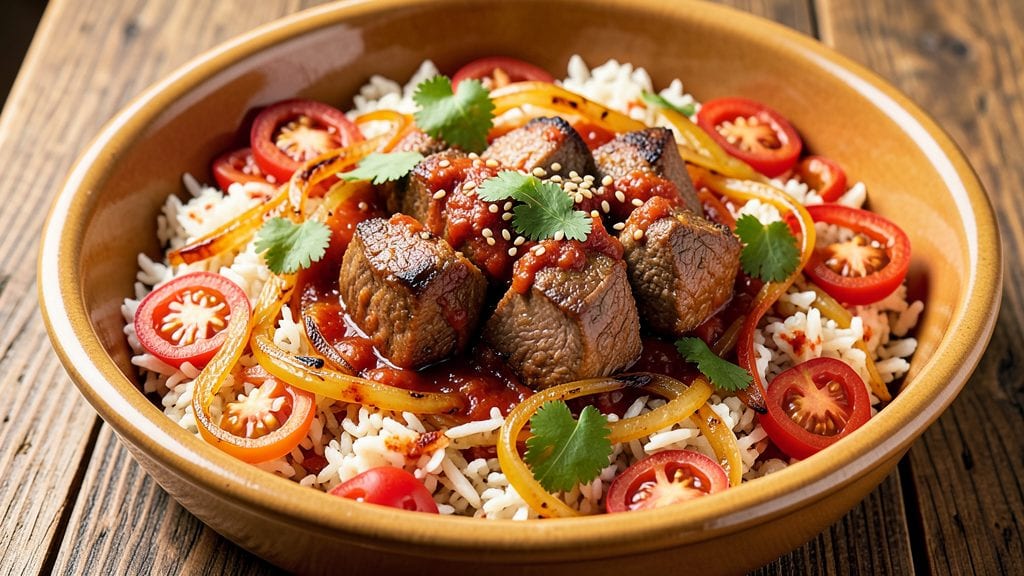
This beef jollof recipe delivers the bold, aromatic flavors of West Africa in a single pot—where tender beef simmers alongside fragrant rice in a rich tomato-pepper sauce.
The key lies in slow-cooking the beef until fork-tender while building layers of spice through traditional techniques like toasting whole peppers and blending fresh tomatoes. I developed this version after years of testing, balancing authenticity with modern shortcuts like pressure cooker adaptations for busy weeknights.
The magic happens in the sauce: a vibrant red blend of tomatoes, bell peppers, and aromatic spices that coats every grain of rice and bite of beef.
What makes this recipe special is the one-pot method, where the beef infuses the rice with deep, savory flavors while the sauce reduces to a perfect consistency—neither too watery nor overly thick. The result is a dish that’s both restaurant-quality and foolproof for home cooks.
By the time you serve this, you’ll have perfectly tender beef, grains of rice infused with smoky, spicy notes, and a sauce that’s rich yet balanced. The aroma alone will have everyone gathering at the table, while the first bite delivers that signature West African flavor profile.
This is comfort food at its finest—bold, satisfying, and impossible to resist.
Serve with fried plantains or coleslaw for a complete meal that feels like a celebration. The best part? Leftovers taste even better the next day as the flavors meld further. Let’s get cooking!
Ingredients for beef jollof
Bold flavors start with these 15 essential ingredients—where West African spices meet hearty beef and fragrant rice.
| Ingredient | Amount | Notes |
|---|---|---|
| Beef Chuck Roast 🥩 | 2 lb | Cut into 1.5-inch cubes |
| Long-Grain White Rice 🍚 | 2 cups | Uncooked, preferably basmati |
| Fresh Tomatoes 🍅 | 4 whole | Roma or vine-ripened, blended |
| Red Bell Pepper 🌶️ | 1 whole | Seeds removed, chopped |
| Yellow Onions 🧅 | 2 whole | Peeled, roughly chopped |
| Scotch Bonnet Peppers 🌶️ | 2 whole | Seeds removed, chopped (adjust for heat) |
| Ginger Root 🌿 | ½ cup | Fresh, grated (about 2 oz) |
| Garlic Cloves 🧄 | 6 cloves | Peeled, minced |
| Tomato Paste 🍅 | ¼ cup | High-quality, no sugar added |
| Vegetable Oil 🫒 | ½ cup | For sautéing |
| Beef Bouillon Cube 🥫 | 2 cubes | Dissolved in 2 cups hot water |
| Ground White Pepper 🌶️ | 1 tsp | Freshly ground preferred |
| Salt 🧂 | 1 ½ tsp | Adjust to taste |
| Thyme Leaves 🌿 | 1 tbsp | Fresh or 1 tsp dried |
| Bay Leaves 🌿 | 2 whole | Dried, removed before serving |
The beef is non-negotiable—chuck roast delivers that signature fall-apart texture, while Scotch bonnet peppers bring the signature heat. For the peppers, West African markets often carry them fresh, but Trader Joe's or Latin grocery stores usually stock them too. If you can't find Scotch bonnet, habanero at half the amount works in a pinch. The ginger and garlic? Freshly grated and minced makes all the difference—pre-minced garlic loses flavor fast. For the tomatoes, Roma varieties concentrate the sweetness better than beefsteak types, but use what's ripe in your kitchen.
No Scotch bonnet? Jalapeño or cayenne at one-third the amount keeps the heat without overpowering. Fresh thyme is ideal, but dried thyme at one-quarter the amount works if that's all you have. The bouillon cubes can be swapped for 2 cups beef broth—just check the sodium content. For the rice, jasmine or basmati both work, but basmati holds up better to the long cooking time. The tomato paste? Muir Glen or Rao's are my go-tos—they're consistent and free of added sugar. If you're using a pressure cooker, reduce the liquid slightly since it won't evaporate as much.
This dish tastes even better the next day as the flavors meld. Store leftovers in an airtight container in the fridge for up to 5 days, or freeze portions for 3 months. The rice absorbs all the sauce, so a quick splash of water before reheating keeps it from drying out. For serving, I like to garnish with extra Scotch bonnet slices and fresh thyme—just a sprinkle to remind everyone of the bold flavors. The beef stays tender for days, making this a perfect meal prep dish for busy weeks.
Why You'll Love This Recipe
- One-Pot Magic: I swear by this trick—just brown the beef, toss in the onions and peppers, then let the tomatoes and rice simmer together. No separate pots, no extra bowls, and honestly? That’s half the battle won.
- Rich, Deep Umami: The beef chuck roast breaks down into tender, fall-apart perfection, while the tomatoes and bell peppers caramelize into a sauce that’s dangerously flavorful. Between us, the first bite makes you question why you ever bought takeout.
- Weeknight to Party: Make it for yourself on a Tuesday night (it’s that unfussy), then double the batch for Sunday dinner or your friend’s potluck. The rice soaks up all the juices, so every grain tastes like the main event—no one will guess it’s just white rice.
- Leftovers That Beg for More: This dish actually improves the next day—yes, really. The flavors meld, the beef gets even more tender, and I’ve reheated portions straight from the fridge for lunch without a second thought. Budget-friendly? Absolutely. But more importantly, it’s my secret weapon for lazy afternoons.
Step-by-step instructions for beef jollof one-pot mastery
This method delivers authentic West African flavors in a single pot with minimal cleanup.
Prepare the Beef and Aromatics
Cut the 2 lb beef chuck roast into 1.5-inch cubes for even cooking. In a large, heavy-bottomed pot, heat 0.5 cup vegetable oil over medium-high heat until shimmering. Working in batches, brown the beef for 3-4 minutes per side until deeply golden. Remove and set aside—this step develops the rich, caramelized foundation.
In the same pot, add 2 whole yellow onions (roughly chopped) and 1 whole red bell pepper (seeds removed, chopped). Sauté for 5 minutes until softened and fragrant. Add 2 whole scotch bonnet peppers (seeds removed, chopped) and cook for 2 minutes to release their heat. Stir in 6 cloves garlic cloves (minced) and 0.5 cup ginger root (fresh, grated) for 30 seconds until aromatic. Here's where the flavor builds—don't rush this step.
Build the Tomato Base
Add 4 whole fresh tomatoes (blended) and 0.25 cup tomato paste to the pot. Stir well to combine with the aromatics. Cook uncovered over medium heat for 10 minutes, stirring occasionally, until the mixture thickens and darkens slightly. You'll notice the sauce reduce and develop a deep, rich color—this is crucial for authentic jollof flavor.
Dissolve 2 cubes beef bouillon in 2 cups hot water in a separate bowl, then pour into the pot. Add 1.5 tsp salt, 1 tsp ground white pepper, 1 tbsp thyme leaves, and 2 whole bay leaves. Bring to a gentle boil, then reduce heat to low and simmer for 20 minutes, stirring occasionally. This allows the spices to meld and the beef to partially tenderize in the aromatic broth.
Layer and Simmer the Jollof
Return the browned beef to the pot and stir to coat in the sauce. Add 2 cups uncooked long-grain white rice, spreading it evenly over the beef. Pour in 1 cup additional hot water (just enough to cover the rice by about ½ inch). The rice should be submerged but not drowned—this prevents mushiness.
Bring to a gentle boil, then immediately reduce heat to low. Cover tightly with a lid and cook for 25 minutes without disturbing. After 25 minutes, fluff the rice gently with a fork, then cover and cook for another 15 minutes. The rice should be tender with just a slight bite—this ensures it doesn't turn mushy. If the top appears dry, sprinkle 2 tablespoons hot water over it and cover for 5 more minutes.
Rest and Serve
Remove from heat and let the jollof rest, covered, for 10 minutes. This resting period allows the rice to absorb any remaining liquid and the flavors to fully meld. Stir once before serving to redistribute any sauce that may have settled at the bottom—this is where the rich, peppery goodness lives.
Serve immediately with a side of fried plantains or coleslaw. The dish should have a vibrant red-orange hue, tender beef, and perfectly cooked rice with a slight chew. Each bite should deliver a balance of smoky, spicy, and savory flavors—this is the hallmark of a well-made beef jollof.
Pro Tips For Making Beef Jollof
- Sear the Beef First: Don’t skip this step—it’s the thing that matters most for flavor. Cut the chuck roast into 1.5-inch chunks, pat them dry, and sear in batches over medium-high heat with 2 tablespoons of oil until deep brown (about 3-4 minutes per side). I learned this the hard way—skipping the sear leaves your beef tasting bland no matter how much tomato paste or spices you add later.
- Blister the Onions: After sautéing your onions with the bell pepper, crank the heat and let them cook until charred in spots—dark edges, soft centers. This adds a smoky depth that cuts through the richness of the beef. I was skeptical until I tried it: the flavor jumps from good to unexpectedly complex.
- Use Two Tomato Batches: Start with 4-5 fresh tomatoes blended into the sauce, but add another 2-3 tablespoons of tomato paste later (after the initial cooking). The fresh tomatoes give brightness, while the paste thickens the sauce without making it taste like a can. Does it look weird? Yes. Does it work? Every single time.
- Parboil the Rice Separately: Cook the rice in a separate pot until it’s 70% done (about 8-10 minutes), then drain and fold it into the beef stew. This guarantees even cooking and prevents a mushy, gloppy texture—no matter how much you stir. I skip this when I’m lazy, but the dish is noticeably better when I don’t.
Perfect pairings for this recipe
Side Dishes Harmony
Fried plantains are my go-to side—they balance the rich jollof perfectly. Slice ripe plantains into ½-inch thick rounds, fry in 1 cup vegetable oil at 350°F until golden (3-4 minutes per side). The caramelized edges add sweet contrast to the spicy beef. 🍌
Cool Contrast Options
A crisp cabbage slaw with ½ cup mayo, 1 tbsp vinegar, 1 tsp sugar, and ½ tsp salt cuts through the dish's heat. Toss with 2 cups shredded cabbage and ½ cup diced carrots for a refreshing bite that cleanses the palate.
Bread for Absorbing
Serve with West African pate bread or crusty Italian loaves to soak up the rich tomato sauce. Toast slices in ½ inch of oil at 375°F for 3-4 minutes until crisp. The bread's texture creates a delightful contrast to the tender beef and rice.
Extra Flavor Boosters
Top with fried shallots for crunch—fry 4 shallots in ½ cup oil at 350°F for 2 minutes until golden. A sprinkle of fresh cilantro adds freshness, while sliced avocado brings creamy richness to each bite. ✨
Sauce Pairing Perfection
Serve with peanut sauce for an African fusion twist. Blend ½ cup peanut butter, 2 tbsp soy sauce, 1 tbsp vinegar, 1 tsp ginger, and 1 tsp chili flakes. The nutty, tangy sauce enhances the jollof's depth without overpowering it.
Nutrition facts
Frequently asked questions
Why does my beef jollof turn out dry?
The most common cause is using too much rice or not enough liquid. For 2 cups uncooked rice, you need about 3 cups total liquid (including the bouillon water). Always use a heavy-bottomed pot and reduce heat to low once boiling to prevent evaporation. If it's still dry, add 2 tbsp hot water and cover for 5 more minutes.
Can I make beef jollof in a slow cooker?
Brown the beef first, then combine all ingredients in your slow cooker. Cook on low for 6-7 hours or high for 3-4 hours. The slow cooker's gentle heat keeps the beef tender while allowing the rice to absorb all the flavorful sauce. Just check the liquid level halfway and add water if needed.
What's the secret to that perfect red color?
The vibrant hue comes from cooking the tomato mixture uncovered for 10 minutes to reduce it and develop its natural sugars. Using fresh tomatoes (not canned) and tomato paste also helps. For extra depth, add 1 tsp paprika to the sauce while cooking. The longer you simmer the sauce, the richer the color becomes.
How spicy should beef jollof be?
The heat level depends on your preference! The recipe uses 2 Scotch bonnet peppers (seeds removed) for a mild-medium heat. For less spice, reduce to 1 pepper or swap for ½ jalapeño. If you love heat, keep the seeds in or add ½ tsp cayenne pepper to the sauce. Always taste and adjust before serving.
Can I substitute chicken for beef?
Yes, but chicken will cook faster and stay juicier. Use 2 bone-in, skin-on chicken thighs (about 2 lbs) and reduce cooking time by 10 minutes. The skin adds flavor, but you can remove it if preferred. For breast meat, cook it separately and add back at the end to avoid drying out.