
Soups & Stews
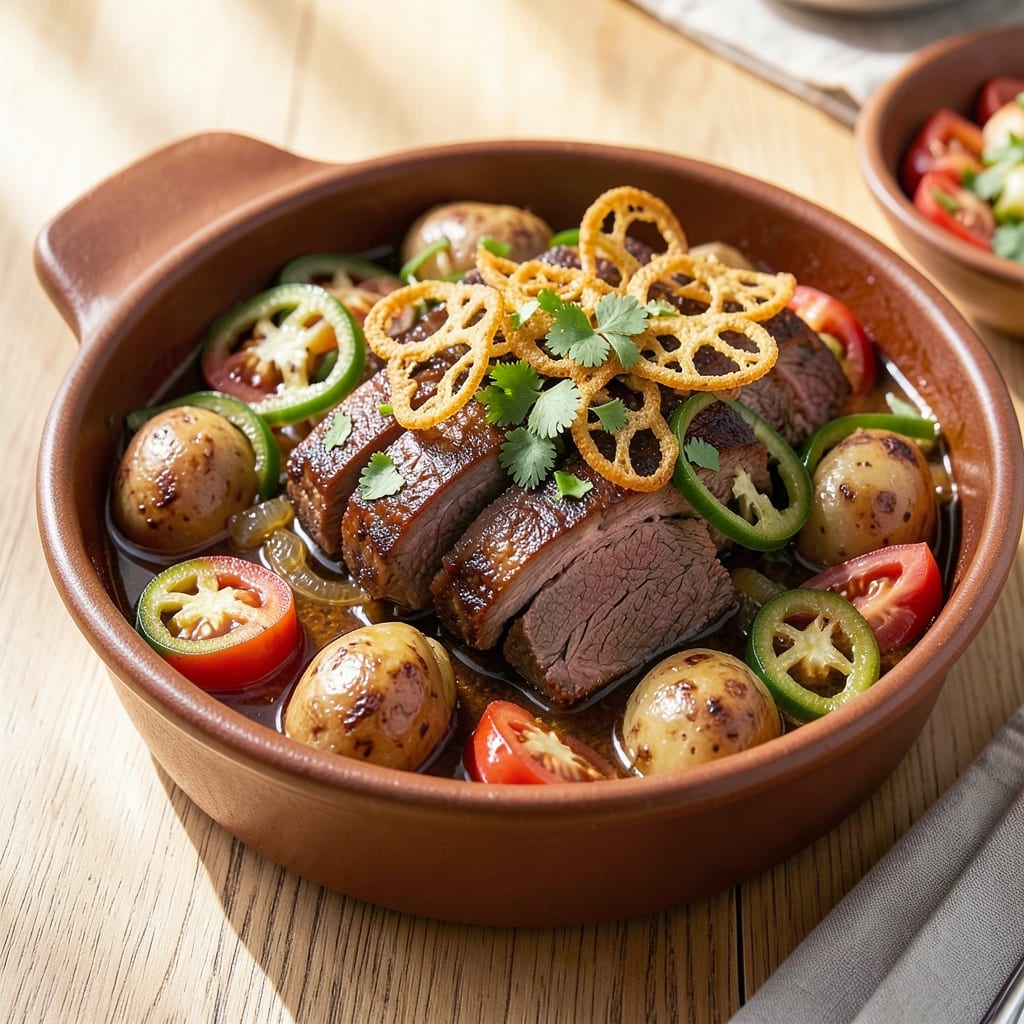
This ampalaya con beef recipe captures the soul of Filipino home cooking in every savory, hearty bite. 💛 The bitterness of ampalaya (bitter gourd) beautifully balances the richness of beef, creating a dish that’s both comforting and deeply flavorful. Growing up, this was the kind of meal that turned ordinary weeknights into family gatherings—simmered low and slow until the flavors melded into something truly special.
The beauty of this recipe lies in its simplicity and tradition. You’ll start by searing beef in a Dutch oven until deeply caramelized, then layer in aromatic vegetables and the star ingredient—ampalaya—cooked just until tender. The sauce thickens as it simmers, creating a rich, velvety broth that coats every ingredient. What makes it truly Filipino is the balance of flavors: the bitterness of the gourd, the umami from the beef, and the subtle sweetness of tomatoes and potatoes.
By the time you serve this dish, your kitchen will smell like home, and your table will be filled with the kind of hearty, satisfying meal that brings people together. The beef becomes fork-tender, the vegetables perfectly cooked, and the sauce thick enough to cling to every bite. It’s the kind of recipe that tastes even better the next day—perfect for meal prep or feeding a crowd.
Serve it with steamed rice to soak up every last drop of that flavorful sauce, and don’t forget a side of atchara (pickled papaya) for a tangy contrast. This isn’t just a recipe; it’s a taste of Filipino comfort food at its finest. Let’s get cooking!
Ingredients for ampalaya con beef
These 15 ingredients transform into a Filipino family favorite that tastes even better the next day.
| Ingredient | Amount | Notes |
|---|---|---|
| Beef Chuck Roast 🥩 | 1 ½ lb | Cut into 1-inch cubes |
| Ampalaya (Bitter Gourd) 🍆 | 1 medium | Peeled, deseeded, sliced thin |
| Russet Potatoes 🥔 | 2 medium | Peeled, cut into chunks |
| Onions 🧅 | 1 whole | Yellow, sliced thin |
| Tomatoes 🍅 | 2 medium | Ripe, quartered |
| Garlic Cloves 🧄 | 6 cloves | Minced |
| Carrots 🥕 | 2 whole | Peeled, sliced into rounds |
| Bay Leaves 🌿 | 2 whole | Fresh preferred |
| Salt 🧂 | 1 ½ tsp | Kosher or sea salt |
| Black Pepper 🌶️ | ½ tsp | Freshly ground |
| Olive Oil 🫒 | 2 tbsp | For searing |
| Tomato Paste 🍅 | 1 tbsp | For thickening sauce |
| Soy Sauce 🍶 | 1 tbsp | For umami depth |
| White Vinegar 🍶 | 1 tbsp | Balances bitterness |
| Sugar 🍚 | 1 tsp | Brown sugar preferred |
The beef is non-negotiable here—chuck roast gives you that melt-in-your-mouth texture after hours of simmering. Most grocery stores carry it pre-cut, but if you're buying whole, look for good marbling. Filipino markets often have it prepped and ready to go, saving you time. Ampalaya (bitter gourd) can be tricky to find fresh, so Asian grocery stores are your best bet. If you can't find it, substitute with okra—it won't be identical, but it'll add a similar texture. The potatoes and carrots should be firm with no soft spots, and the tomatoes ripe enough to burst when squeezed. Bay leaves add that subtle earthiness that makes this dish authentic.
No bitter gourd? Okra or zucchini will work in a pinch, though the flavor won't be the same. Running low on soy sauce? Coconut aminos gives a similar umami punch. The tomato paste can be swapped for crushed tomatoes*, but you'll lose some of that rich, concentrated flavor. Fresh bay leaves are ideal, but dried at half the amount will do. The sugar balances the bitterness—don't skip it, even if you're watching your sweet intake. For extra depth, add a splash of calamansi juice if you can find it at a Filipino market.
This dish tastes even better the next day, so make extra. Store in the fridge for up to 5 days or freeze portions for 3 months. The sauce thickens as it cools, so add a splash of water or broth when reheating. Serve with steamed rice—it's traditional, and the rice soaks up every last bit of that rich, savory sauce. Leftovers reheat beautifully in a pot or microwave, though I prefer the stovetop method for even warming. Keep the beef and vegetables separate in containers if you're prepping for meal prep—it stays fresher that way.
Why You'll Love This Recipe
- One-Pot Magic: I swear by this recipe because it’s all in one pot—no fussing with multiple pans or dishes. The beef, potatoes, and bitter gourd all simmer together until tender, and honestly? That’s half the battle won before you even taste it.
- Rich, Unexpected Depth: Between us, I didn’t expect the bitter gourd to shine like this, but the slow braise turns it into something silky and savory. The beef stays juicy, the tomatoes caramelize into a thick, tangy sauce, and the onions? They melt into sweetness that ties everything together.
- Weeknight to Weekend: This dish works for lazy Tuesday nights when I’m too tired to chop much—just slice the beef, dice the veggies, and let it cook. But it’s also the star of Sunday family dinners because it feeds a crowd without feeling like a chore. My in-laws ask for seconds every time.
- Budget-Friendly Leftovers: A whole chuck roast and potatoes stretch this into three solid meals, and the flavor only gets better the next day. I’ll be real: the second night is my favorite—when the sauce reduces even more and the beef gets that fall-apart tenderness. Plus, it’s cheaper than takeout, but way more impressive.
Step-by-step instructions for ampalaya con beef
This one-pot Filipino classic delivers rich beef flavors balanced by bitter gourd's unique crunch.
🔥 Step 1: Sear the Beef for Deep Flavor
Heat a large Dutch oven over medium-high heat until hot. Add the 2 tablespoons olive oil and swirl to coat the bottom. Add the 1.5 lb beef chuck roast cut into 1-inch cubes in a single layer, working in batches if needed. Let each piece sear undisturbed for 2-3 minutes until deep golden brown on all sides.
Here's the thing—this browning creates the Maillard reaction that builds the dish's rich foundation. Don't rush this step. You'll know it's ready when the beef releases easily from the pan. Transfer the seared beef to a plate and set aside.
👨🍳 Step 2: Sauté the Aromatic Vegetables
In the same Dutch oven, add the 1 whole onion sliced thin and the 2 whole carrots sliced into rounds. Cook for 4-5 minutes until the onions soften and turn translucent. Add the 6 cloves minced garlic and cook for 30 seconds until fragrant—this prevents the garlic from burning.
Next, add the 2 medium tomatoes quartered and the 2 medium russet potatoes cut into chunks. Stir everything together and cook for another 3 minutes until the tomatoes begin to break down and release their juices. This layering of flavors forms the base of our sauce.
🥘 Step 3: Build the Sauce with Key Ingredients
Stir in the 1 tablespoon tomato paste, 1 tablespoon soy sauce, 1 tablespoon white vinegar, and 1 teaspoon sugar. Cook for 2 minutes to allow the tomato paste to deepen in color and develop its flavor. Add 1.5 teaspoons salt and 0.5 teaspoon black pepper, then pour in 1 cup water.
Bring to a gentle simmer, then return the seared beef to the pot. Add the 1 medium ampalaya (bitter gourd) sliced thin and the 2 whole bay leaves. The bitter gourd will soften as it cooks, losing its sharp edge while retaining a pleasant bite. Let the mixture simmer uncovered for 15 minutes to allow the flavors to meld.
⏰ Step 4: Simmer Until Tender and Flavorful
Cover the Dutch oven and reduce heat to low. Let the dish simmer for 45-50 minutes, stirring occasionally, until the beef is fork-tender and the vegetables are fully cooked. The sauce should thicken slightly and coat the back of a spoon—this indicates the flavors have melded perfectly.
I know it might seem like a long time, but patience is key. The beef should pull apart easily with a fork, and the bitter gourd should be tender with just a slight bite. If the sauce gets too thick, add 1-2 tablespoons water to reach your desired consistency.
🍽️ Step 5: Finish and Serve Warm
Remove the bay leaves and discard them. Taste the dish and adjust seasoning if needed—you might want to add a pinch more salt or a splash of vinegar to balance the flavors. The dish should have a harmonious blend of savory, slightly sweet, and just a hint of bitterness from the ampalaya.
Serve the ampalaya con beef hot, straight from the pot. The rich beef broth will coat every bite, while the tender vegetables add texture and balance. This hearty dish tastes even better the next day as the flavors continue to develop, so it's perfect for meal prep or feeding a crowd.
Pro Tips For Making Ampalaya Con Beef
- SEAR THE BEEF FIRST: Ampalaya con beef needs that deep, caramelized crust on the chuck roast to hold up through hours of braising—don’t skip the 3-4 minute sear in a screaming-hot pan with oil. I used to rush this, and the beef would turn out tender but bland; now I let it brown properly, even if it means waiting for the pan to heat up.
- PEEL AND SLICE AMPALAYA THIN: The bitter gourd’s texture is everything—slice it paper-thin (about ⅛-inch) and soak in cold water for 10 minutes to mellow the bitterness. Thick slices stay rubbery; thin slices soften perfectly and soak up the beefy sauce. (Yes, even if you’re impatient like me.)
- ADD POTATOES LATE: Toss the russet potatoes in at the 45-minute mark, not the start—they’ll absorb too much liquid and turn to mush if simmered too long. Their job is to soak up the rich beef sauce, not compete for it. I learned this the hard way when my first batch looked like a sad potato soup.
- SAVE THE BEEF JUICES: After shredding the beef, don’t drain the pan—those juices are gold. Deglaze with a splash of water or broth, scrape up every browned bit, and stir it back into the stew. That’s where half the flavor hides, and skipping it leaves the sauce watery. (Your future self will notice.)
Flavor customization for this ampalaya con beef
Sweet & Tangy Twist
Balance that bitterness with a sweet-tangy kick by adding 1 tablespoon of pineapple juice and ½ teaspoon of sugar during the final 5 minutes of simmering. The natural acidity brightens the dish while the sugar rounds out the flavors. I’ve found that Filipino-style calamansi juice (if available) works even better—just 1 tablespoon adds a citrusy depth that’s hard to beat. 🍍
Creamy Coconut Version
For a richer, more luxurious take, stir in ½ cup coconut milk with the tomato paste. This transforms the dish into a creamy curry-style ampalaya, perfect for those who prefer their bitter gourd in a velvety sauce. Use full-fat coconut milk for the best texture, and add a pinch of turmeric for warmth. The coconut balances the bitterness beautifully while keeping the dish authentically Filipino.
Spicy Heat Boost
If you love heat, add 1-2 tablespoons of siling labuyo (Filipino chili) or ½ teaspoon of cayenne pepper when sautéing the vegetables. For a smoky kick, swap the white vinegar for 1 tablespoon of balsamic vinegar—it adds depth without overpowering. I like to finish with freshly chopped siling haba (long green chili) on top for a fresh, spicy crunch. Adjust to taste, but start light—Filipino chilis pack serious heat! 🌶️
Vegetarian Adaptation
Swap the beef for extra-firm tofu or mushrooms (like oyster or shiitake) for a plant-based version. Press and cube the tofu, then pan-fry it until golden before adding it to the pot. For mushrooms, use 8 oz sliced and sauté them with the onions. The umami from mushrooms mimics beef’s depth, while tofu adds a satisfying texture. Don’t forget to boost the soy sauce to 2 tablespoons for extra flavor.
Extra Hearty Add-Ins
Make this dish even heartier by adding 1 cup of green beans or 1 small eggplant (diced) when you add the potatoes. Both veggies hold up well to long simmering and add texture. For a protein boost, stir in ½ cup cooked chickpeas during the last 10 minutes of cooking. These additions bulk up the dish without altering its core flavors, making it perfect for larger gatherings or meal prep.
Smoky Grilled Touch
For a smoky twist, grill the beef cubes over medium-high heat for 2-3 minutes per side before searing in the pot. This adds a charred depth that pairs perfectly with the bitter gourd. If you don’t have a grill, broil the beef for 3-4 minutes on high. Finish with a sprinkle of smoked paprika for an extra layer of complexity—it’s a simple trick that elevates the dish to restaurant-quality. 🔥
Nutrition facts
Frequently asked questions
Why does ampalaya (bitter gourd) taste so bitter?
The bitterness comes from compounds called cucurbitacins, which are concentrated in the skin and seeds. When you peel and slice the gourd thinly (as in this recipe), you reduce the bitterness while keeping its signature texture. The long simmering time in the beef sauce actually softens it further, making it more palatable while retaining just a pleasant hint of that familiar bitter note.
Can I substitute ampalaya if I can't find it?
Yes! For a similar texture, try okra or zucchini, though neither will perfectly replicate ampalaya's flavor. Okra holds its shape better during simmering, while zucchini becomes softer. If you want to mimic the bitterness, add ½ teaspoon of grapefruit juice or 1 teaspoon of lemon zest to the sauce during the final 10 minutes of cooking.
How do I know when the beef is fully cooked?
The beef should be fork-tender with no pink center—this means it reaches an internal temperature of 165°F. Cut into a piece: if it pulls apart easily and the juices run clear, it's done. The long simmering time (about 45-50 minutes) ensures the connective tissues break down, so don't rush this step. If you're unsure, use a meat thermometer for accuracy.
Can I make this dish in a slow cooker?
Brown the beef first in a skillet, then transfer everything to the slow cooker. Use the low setting for 6-7 hours or high for 3-4 hours. The slow cooker's gentle heat enhances the beef's tenderness while letting the flavors meld perfectly. Just add ½ cup water if the sauce gets too thick during cooking.
What's the best way to store leftovers?
Store in an airtight container in the fridge for up to 5 days or freeze for 3 months. The flavors actually improve overnight! When reheating, add 1-2 tablespoons of water or beef broth to prevent the sauce from thickening too much. For best texture, reheat on the stovetop over medium-low heat until warmed through.