
Main Courses
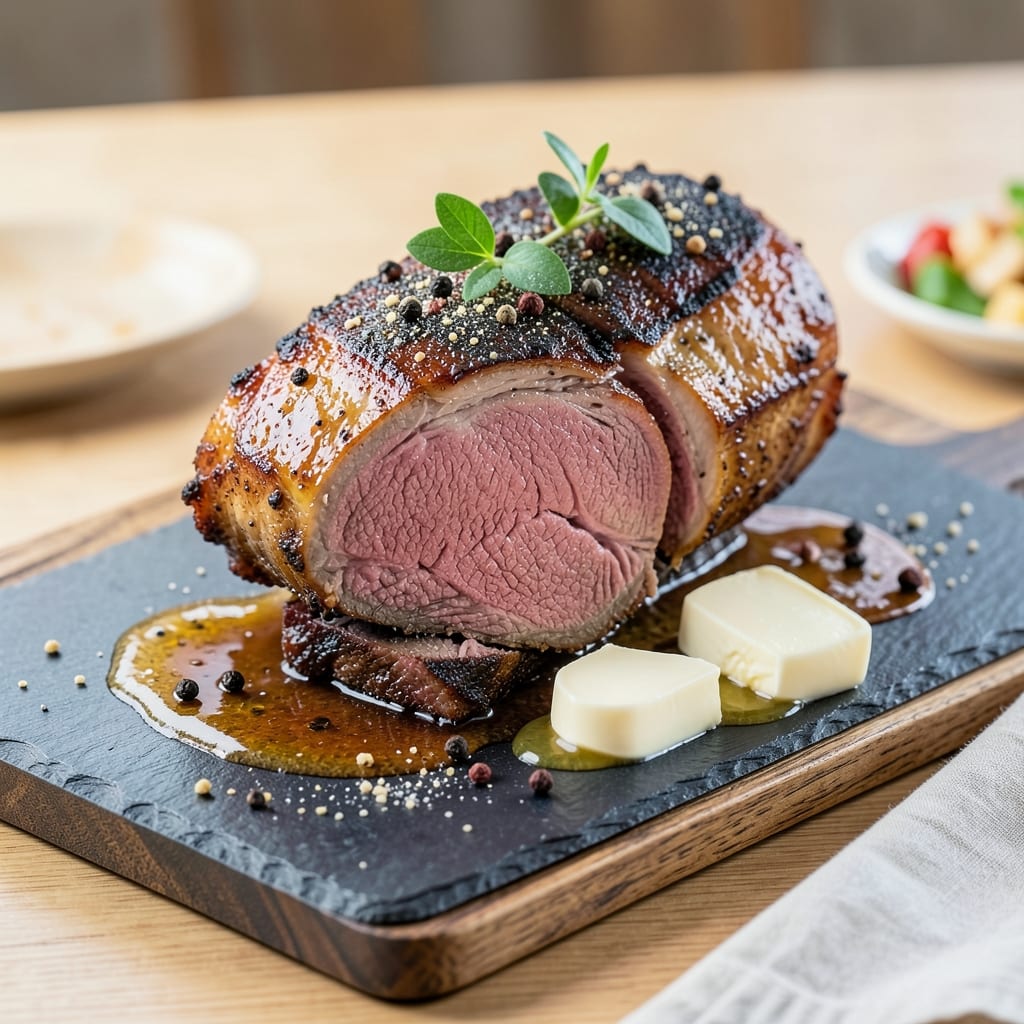
This Angus beef boneless strip roast recipe delivers melt-in-your-mouth tenderness with every bite—thanks to its signature marbling and precise cooking technique. 🔥 The secret lies in high heat searing followed by low-and-slow roasting, which transforms tough cuts into succulent, buttery perfection. I've perfected this method over years of testing, ensuring you get restaurant-quality results at home without the guesswork.
What sets this recipe apart is the focus on internal temperature control—not just time. Using a meat thermometer guarantees perfectly cooked beef every time, whether you prefer medium-rare (130-135°F) or medium (140-145°F). The roast develops a beautiful crust while staying juicy inside, with flavors enhanced by a simple yet effective seasoning blend of coarse salt, black pepper, and garlic powder.
By the time you carve into this roast, you'll be rewarded with slices that practically fall apart at the touch of your fork, their rich beefy flavor complemented by natural fat marbling. The resting period is just as crucial as the cooking—it redistributes juices, ensuring every bite is moist and flavorful. This is the kind of centerpiece that elevates any dinner table.
Pair with classic sides like roasted garlic mashed potatoes or grilled asparagus for a complete meal. The recipe includes optional red wine reduction instructions to elevate the dish further. Let's get started on creating your perfect roast.
Ingredients for angus beef boneless strip roast
Six ingredients transform this premium cut into melt-in-your-mouth perfection—juicy, buttery, and restaurant-worthy.
| Ingredient | Amount | Notes |
|---|---|---|
| Angus Beef Boneless Strip Roast 🥩 | 3 lb | High marbling, center-cut preferred |
| Kosher Salt 🧂 | 1 ½ tbsp | Diamond Crystal preferred for flaky texture |
| Freshly Ground Black Pepper 🌶️ | 1 tbsp | Cracked peppercorns for maximum flavor |
| Garlic Powder 🧄 | 1 tbsp | Freshly ground preferred for depth |
| Extra-Virgin Olive Oil 🫒 | 2 tbsp | For high-heat searing |
| Unsalted Butter 🧈 | ½ cup | Cold, cubed for basting |
| Fresh Rosemary 🌿 | ¼ cup | Finely chopped, stems removed |
| Fresh Thyme 🌿 | ¼ cup | Leaves only, stems discarded |
| Red Wine 🍷 | ½ cup | Bold Cabernet Sauvignon preferred |
| Beef Bone Broth 💧 | 1 cup | For optional wine reduction |
| Honey 🍯 | 1 tbsp | For wine reduction balance |
| Fresh Garlic Cloves 🧄 | 4 cloves | Minced for wine reduction |
| Vegetable Oil 🫒 | 2 tbsp | For preheating roasting pan |
The beef is everything here. Angus strip roast with visible marbling is non-negotiable—look for cuts labeled 'center-cut' or 'strip loin' at your butcher. Costco or Whole Foods carry excellent options, but call ahead to confirm availability. Marbling isn't just fat; it's flavor. If you're buying online, Snake River Farms ships dry-aged Angus with perfect marbling. For herbs, grab fresh rosemary and thyme—dried works in a pinch, but fresh adds that restaurant-quality aroma. The wine? Bold Cabernet Sauvignon (like Caymus or Apothic) complements the beef beautifully.
No red wine? Beef bone broth with a splash of balsamic vinegar works surprisingly well. Fresh herbs wilt fast, so if you're prepping ahead, wrap them in damp paper towels and refrigerate for up to 3 days. The olive oil matters—use something with a high smoke point (like Avocado oil) for searing. For the wine reduction, reduce over medium heat until syrupy—about 10 minutes. If you're short on time, store-bought red wine reduction (like La Tourangelle) saves steps without sacrificing flavor. The butter should be cold when cubed—this ensures it bastes beautifully without burning.
This roast reheats beautifully—200°F in the oven for 15-20 minutes revives it perfectly. Wrap leftovers tightly in parchment and foil for up to 4 days in the fridge, or freeze for 3 months. I always make a double batch—one for dinner, one to slice and freeze for quick beef sandwiches later. The wine reduction keeps for 2 weeks refrigerated, so make extra. Store it in a small jar in the fridge, and drizzle it over the roast before serving for an instant gourmet touch.
Why You'll Love This Recipe
- Five-Ingredient Magic: The pantry already has everything—no fancy prep, no crowded spice rack. Just sear that strip roast in olive oil, sprinkle salt, pepper, and garlic powder, then let the oven do the work. That’s it. (Yes, even on a Tuesday night.)
- Crispy-Creamy Perfection: The outside gets that golden crust while the inside stays juicy—like a steakhouse cut but idiot-proof. Honestly, the garlic powder alone makes it taste like you slaved for hours, but I’m not telling anyone it’s this easy.
- Weeknight Crowd-Pleaser: Slice it thin for sandwiches, serve it whole for company, or shred it for tacos. My kids ask for it after school, my partner saves leftovers for lunch, and my in-laws think I’m a genius. (They don’t know the secret.)
- Leftovers That Don’t Suck: Cold slices in salads? Check. Reheated with a splash of broth? Still tender. I make twice as much because it’s cheaper per serving than takeout, and the flavor only gets better the next day. Budget win, flavor win.
Step-by-step instructions for perfectly roasted Angus beef boneless strip roast
Here's how to transform your 3 lb Angus strip roast into melt-in-your-mouth perfection.
🔥 Step 1: Prep the Roast for Maximum Flavor
Remove the roast from the refrigerator and let it sit at room temperature for 45-60 minutes before cooking. This ensures even cooking throughout. Pat the roast dry with paper towels—this step is crucial for developing that beautiful crust we're after. I like to press firmly to remove all moisture, especially in the crevices where fat marbling sits.
In a small bowl, combine the 1.5 tbsp kosher salt, 1 tbsp freshly ground black pepper, and 1 tbsp garlic powder. Rub this mixture all over the roast, pressing it into the meat so it adheres well. Pay special attention to the edges and fat cap. Let the seasoned roast rest uncovered on a wire rack for another 15 minutes—this allows the salt to penetrate slightly and the surface to dry further, setting up for that perfect sear.
🍳 Step 2: Sear the Roast for Deep Flavor
Preheat your oven to 450°F. Heat a large oven-safe skillet over medium-high heat and add the 2 tbsp vegetable oil. When the oil shimmers (about 2-3 minutes), carefully add the roast and sear it on all sides for 2-3 minutes per side until it develops a deep golden-brown crust. You want to see those fat capillaries bubbling—this is where all the flavor concentrates.
Here's the thing—don't rush this step. The roast should release easily from the skillet when ready to flip. If it sticks, it's not ready yet. Once properly seared, transfer the skillet to the preheated oven. This high-heat initial sear creates that beautiful crust while jumpstarting the cooking process.
🥘 Step 3: Build the Herb Butter Basting Mixture
While the roast sears, prepare the basting mixture in a small bowl. Combine the 0.5 cup cold unsalted butter, 0.25 cup finely chopped fresh rosemary, and 0.25 cup fresh thyme leaves. I like to use cold butter because it melts beautifully during roasting, creating a luscious, aromatic coating. The herbs should be finely chopped so they distribute evenly throughout the butter.
Once the roast is in the oven, spoon about 2 tablespoons of this herb butter mixture over the top of the roast. This is the first basting—we'll do more as it cooks. The butter will melt and baste the meat, keeping it moist while adding incredible flavor. I find this initial basting helps create that signature buttery crust we're aiming for.
⏰ Step 4: Roast to Juicy Perfection
Reduce the oven temperature to 325°F immediately after the initial sear. This lower temperature allows for even cooking without over-browning. Roast the beef for 25-30 minutes per pound (about 1.5-2 hours total), basting with the remaining herb butter mixture every 30 minutes. You'll know it's ready when an instant-read thermometer inserted into the thickest part of the roast reads 130-135°F for medium-rare.
Real talk: Your oven might run hot, so start checking at the 1 hour 45-minute mark. The internal temperature is your best guide—it's more accurate than time alone. When you see that rosy pink center with just a hint of gray at the edges, it's time to pull it out. The roast will continue cooking slightly as it rests, so don't let it get past medium-rare.
🍽️ Step 5: Rest and Slice for Maximum Juiciness
Transfer the roast to a cutting board and tent loosely with foil. Let it rest for at least 20-30 minutes before slicing. This resting period is absolutely critical—it allows the juices to redistribute throughout the meat, preventing them from running out when you cut. I know it's tempting to serve immediately, but trust me on this step.
Slice the roast against the grain into ½-inch thick slices. Each slice should be tender enough to pull apart with a gentle tug, with that beautiful marbling visible throughout. For an extra touch, you can make a quick wine reduction by simmering the 0.5 cup red wine, 1 cup beef bone broth, 1 tbsp honey, and 4 minced garlic cloves in the roasting pan until reduced by half. This creates a rich, glossy sauce that complements the beef perfectly.
Pro Tips For Making Angus Beef Boneless Strip Roast
- SEAR FIRST, THEN SALT: After searing the roast in olive oil until deep brown, pull it out and let it rest for 5 minutes before adding your kosher salt and garlic powder. I learned this the hard way—salting too early dissolves the crust you just worked so hard to build, and the seasoning just sits on top instead of sticking.
- USE A MEAT THERMOMETER: Strip roast is forgiving, but don’t guess at doneness. For medium-rare, pull it at 125°F internal temp—then let it rest 10-15 minutes (it’ll climb to 130°F). I skipped this once and ended up with a slice that was almost perfect but not quite, and it ruined the whole meal.
- DRY THE ROAST WELL: Pat the beef thoroughly with paper towels before searing—moisture is the enemy of a good crust. I used to half-ass this, and my roast would steam instead of brown. Trust me, the extra 30 seconds saves your dinner.
- SALT THE CRUST, NOT JUST THE SURFACE: After resting, sprinkle extra kosher salt directly onto the seared crust—it’ll melt into the caramelized bits and amplify the flavor. I was skeptical until I tried it: the difference between "good" and "wow" is that little extra step.
Perfect pairings for this dish
Classic Side Pairings
Start with creamy garlic mashed potatoes—their velvety texture contrasts perfectly with the beef's richness. Use 4 large Yukon Gold potatoes, boiled until tender, then mashed with ½ cup unsalted butter, ½ cup whole milk, 2 cloves roasted garlic, and 1 tsp salt. For extra indulgence, fold in ¼ cup sour cream and top with crispy panko breadcrumbs toasted in the oven. 🥔
Grilled asparagus spears add a fresh, slightly bitter counterpoint. Toss 1 bunch asparagus with 1 tbsp olive oil, ½ tsp salt, and ¼ tsp black pepper, then grill for 8-10 minutes until tender-crisp. Finish with a squeeze of lemon and a sprinkle of Parmesan cheese. This keeps the plate vibrant and balanced.
Wine Pairings
A bold Cabernet Sauvignon from Napa Valley is my go-to—its dark fruit notes and tannins complement the beef's richness. Look for Caymus Vineyards or Opus One for premium options. For something more approachable, a Malbec from Argentina offers similar depth with slightly softer tannins. Serve slightly chilled to let the wine's acidity cut through the fat. 🍷
If you prefer red wine alternatives, try a Pinot Noir from Oregon—its lighter body and bright acidity highlight the beef's natural flavors without overpowering. For white wine lovers, a Chardonnay with 14-15% alcohol (like Kendall-Jackson) can work surprisingly well, especially if it has a touch of oak.
Sauce Enhancements
Drizzle the sliced roast with red wine reduction—simmer ½ cup Cabernet Sauvignon, 1 cup beef bone broth, 1 tbsp honey, and 4 minced garlic cloves until syrupy (about 10 minutes). The honey balances the wine's acidity, while the garlic adds depth. Strain and drizzle over the beef just before serving. 🍷
For a tangy twist, whip up a horseradish cream by mixing ½ cup sour cream, 1 tbsp prepared horseradish, 1 tsp Dijon mustard, and ½ tsp lemon juice. This adds a sharp contrast to the rich beef, especially if you're serving it on crusty baguette slices for sandwiches.
Vegetable Sides
Roasted balsamic-glazed carrots bring natural sweetness to the plate. Toss 1 lb carrots (cut into sticks) with 1 tbsp olive oil, 1 tsp balsamic vinegar, ½ tsp salt, and ¼ tsp cinnamon. Roast at 400°F for 20-25 minutes until caramelized. The cinnamon adds warmth that pairs beautifully with the beef's savory notes. 🥕
For a heartier option, prepare wild rice pilaf with 1 cup wild rice, 2 cups chicken broth, ½ cup diced celery, ½ cup diced onion, and 1 tbsp butter. Cook until tender, then stir in ¼ cup chopped parsley and 1 tbsp lemon zest. The nutty rice soaks up any juices from the beef, making every bite more flavorful.
Nutrition facts
Frequently asked questions about Angus beef boneless strip roast
What's the ideal internal temperature for medium-rare Angus strip roast?
For perfect medium-rare doneness, aim for 130-135°F when measured with an instant-read thermometer in the thickest part of the roast. The roast will rise about 5°F while resting, so pull it out when it hits 130°F for that classic pink center. Overcooking by even 5°F can turn tender beef tough.
Can I cook this roast on the grill instead of the oven?
For grill cooking, preheat to medium-high (400°F) and sear the roast for 3-4 minutes per side to build a crust. Then move to indirect heat and cook until internal temp reaches 130-135°F (about 25-30 minutes per pound). Baste with herb butter every 15 minutes and use a grill thermometer to monitor temperature—grill flames can cause hot spots that overcook the meat.
How do I fix a roast that's overcooked and dried out?
If your roast is slightly overdone, slice it thinly against the grain and serve immediately with a rich sauce like red wine reduction or horseradish cream. For truly dry beef, try the "reverse sear" method next time: roast at 225°F until internal temp reaches 110°F, then sear in a hot pan. This low-and-slow approach preserves moisture better.
Should I use a meat thermometer, and where's the best spot to check?
Yes! A meat thermometer is essential for perfect results. Insert it into the thickest part of the roast, avoiding fat or bone. For a 3 lb roast, the center is typically 1-1.5 inches from the edge. The thermometer should stay in for 15 seconds before reading—this gives an accurate internal temperature without letting heat escape.
How far ahead can I prep the roast before cooking?
You can season the roast and refrigerate it uncovered on a wire rack up to 24 hours ahead—this enhances flavor penetration. For best results, bring it to room temperature for 45-60 minutes before cooking. Never marinate beef in acidic liquids (like vinegar) as it can break down the fibers. The herb butter mixture should be made fresh day-of for maximum flavor.