
Soups & Stews
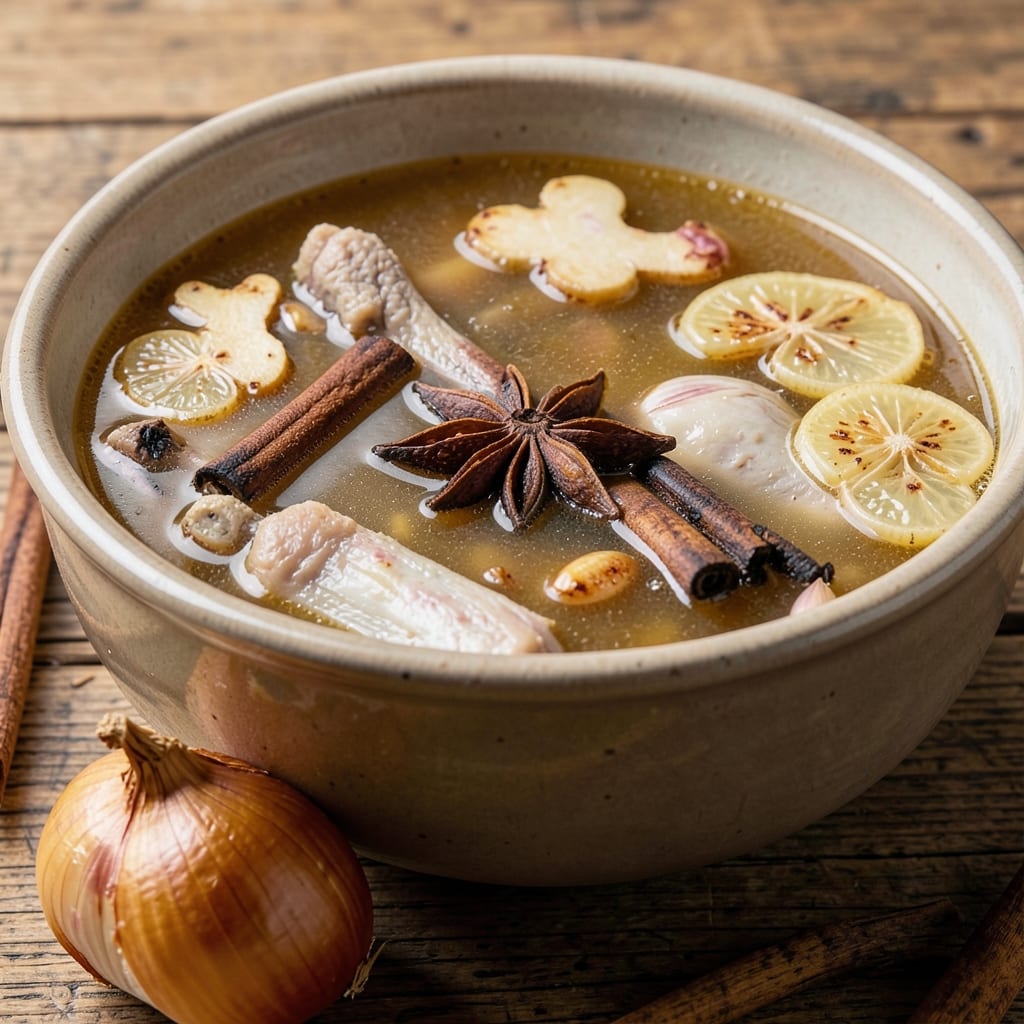
This Asian beef bone broth recipe transforms tough beef bones into a collagen-rich elixir packed with deep umami and aromatic complexity. The slow-simmering process—minimum 12 hours—extracts gelatinous richness while balancing bold spices like star anise and cinnamon with fresh ginger and garlic. What makes this broth exceptional is its versatility: use it as a pho base, ramen foundation, or braising liquid for meats.
The secret lies in layered flavors: toasted spices bloom in hot oil before bones and aromatics join, creating a fragrant foundation. No shortcuts here—this requires patience, but the reward is a velvety broth with natural body and depth that store-bought versions can't match. The collagen from bones thickens as it cools, turning it into a healing, nutrient-dense liquid gold.
Once strained, this broth stays fresh in the fridge for 5 days or freezes beautifully for up to 3 months, making it perfect for meal prep. Serve it hot over rice noodles, as a sipping broth, or reduce it into a rich sauce. The possibilities are endless, but the process is straightforward—just time and attention to detail.
For those short on time, a 24-hour simmer yields even more gelatin, but even 8 hours produces a flavorful base. The key is consistency: keep the heat low, skim impurities, and let the magic happen. This isn't just broth—it's the foundation for countless Asian-inspired dishes, all starting with this one essential step.
Ingredients for asian beef bone broth
Transform tough bones into collagen-rich elixir with these aromatic essentials—where depth meets simplicity.
| Ingredient | Amount | Notes |
|---|---|---|
| Beef Bones 🦴 | 4 lb | Knuckle or marrow bones preferred |
| Yellow Onions 🧅 | 2 whole | Peeled, halved lengthwise |
| Garlic Cloves 🧄 | 8 cloves | Smashed, skins left on |
| Fresh Ginger 🧅 | ½ cup | Julienned, peeled |
| Star Anise Pods 🌶️ | 4 whole | Lightly toasted in oil |
| Cinnamon Sticks 🌿 | 2 whole | 2-inch pieces |
| Cardamom Pods 🌿 | 4 whole | Lightly crushed |
| Black Peppercorns 🌶️ | 1 tbsp | Whole, lightly crushed |
| Bay Leaves 🍃 | 4 whole | Dried, standard size |
| Vegetable Oil 🫒 | ¼ cup | Neutral, high smoke point |
| Apple Cider Vinegar 🍎 | 2 tbsp | For acidity balance |
| Kosher Salt 🧂 | 1 ½ tsp | Diamond Crystal preferred |
| Water 💧 | 12 cups | Filtered preferred |
The bones are non-negotiable—knuckle or marrow bones from local butchers or Costco deliver maximum gelatin. Look for bones with visible marrow channels and minimal meat residue. Organic or grass-fed options elevate flavor, though conventional works fine. Star anise and cardamom are available at Asian markets or bulk spice shops like Penzeys—toasting them in oil for 30 seconds unlocks deeper aromatics. Fresh ginger should be firm with bright skin; Trader Joe's often carries pre-peeled, julienned ginger that saves prep time.
No star anise? 1 tsp ground fennel seeds mimics its licorice note. Short on cinnamon? 1 tsp cassia bark works identically. Cardamom pods can be omitted entirely if unavailable—just double the black peppercorns. Vegetable oil is critical here; avoid olive oil for its low smoke point during toasting. The apple cider vinegar might seem odd, but it lowers the pH, helping extract more collagen. For a quicker version, pasteurized bone broth powder (like Kettle & Fire) can be rehydrated and combined with fresh aromatics.
Bones can be prepped ahead—roast at 400°F for 30 minutes to remove impurities before simmering. Store dried spices in airtight containers away from light for up to 6 months. The finished broth thickens as it cools—skimming fat before refrigeration makes it easier to portion. For long-term storage, freeze in ice cube trays for easy single-use portions; thaw overnight in the fridge.
Why You'll Love This Recipe
- Set-and-Forget Magic: Honestly, I love a recipe that lets me multitask—simmer those beef bones with onions, garlic, and ginger for hours while I handle errands or binge-watch. The star anise adds this subtle depth without needing my attention.
- Umami Bomb: That first sip? Rich, savory, and packed with flavor from slow-cooked bones and aromatic spices. The ginger lingers with a warm kick, while the star anise gives it this just-right complexity—no heavy seasoning needed.
- Meal Prep MVP: I freeze batches of this broth to toss into stir-fries, ramen, or even soups later. It’s my secret weapon for quick weeknight meals—just thaw, heat, and boom, instant depth to whatever I’m cooking.
- Budget Booster: Beef bones are cheap, and this recipe stretches them into gallons of flavorful broth. I make it in bulk, portion it out, and use it for everything—saving money while keeping meals hearty and delicious.
Step-by-step instructions for Asian beef bone broth
Here's how to craft a deeply aromatic, collagen-rich broth that captures the essence of Asian flavors.
Toast the Spices and Aromatics
Heat a large Dutch oven over medium heat and add the 0.25 cup vegetable oil. Once the oil shimmers, add the 4 whole star anise pods, 2 whole cinnamon sticks, and 4 whole cardamom pods. Toast for 2 minutes until fragrant, stirring constantly to prevent burning.
Add the 8 cloves garlic cloves and 0.5 cup fresh ginger (julienned) to the pot. Stir for 30 seconds until the garlic turns golden and the ginger releases its essential oils. Remove the pot from heat and set aside—this step develops the aromatic foundation of your broth.
Sear the Beef Bones
Return the Dutch oven to medium-high heat and carefully add the 4 lb beef bones, arranging them in a single layer. Sear for 8-10 minutes, turning occasionally, until the bones develop a deep golden-brown crust. This Maillard reaction creates complex flavors and prevents the broth from becoming cloudy.
Real talk: Don't rush this step. You'll know the bones are properly seared when they release easily from the pot and have an even color. If you see steam building up too quickly, reduce the heat slightly to avoid burning the aromatics.
Combine All Ingredients and Simmer
Add the seared bones back to the pot along with the 2 whole yellow onions (halved), 1 tbsp black peppercorns, 4 whole bay leaves, 2 tbsp apple cider vinegar, and 12 cups water. Stir once to combine, then bring to a gentle boil over high heat.
Once boiling, immediately reduce heat to low and skim off any foam or impurities that rise to the surface using a fine-mesh skimmer. This ensures a clear, clean broth. Cover the pot and let it simmer gently for 6-8 hours, maintaining a temperature between 180-200°F.
Strain and Finish
After simmering, carefully strain the broth through a fine-mesh sieve or cheesecloth-lined colander into a clean pot. Discard the solids. Return the strained broth to the pot and stir in the 1.5 tsp kosher salt. Taste and adjust seasoning if needed—you want a balance of savory, aromatic, and slightly tangy flavors.
Bring the broth to a simmer again for 10 minutes to concentrate the flavors. Remove from heat and let it cool slightly before transferring to airtight containers. This broth will keep in the refrigerator for up to 5 days or can be frozen for 3 months for future use.
Pro Tips For Making Asian Beef Bone Broth
- Char Bones First: I learned this the hard way—skipping the sear means flavor gets lost in the broth. Get those beef bones screaming hot in a dry pot for 5-7 minutes until they’re dark brown, not just pink. The crust locks in collagen and caramelizes the natural sugars, giving your broth depth from the start.
- Slice Onions Thin: Yes, even if you’re impatient like me, resist the urge to chop onions roughly. Thinly sliced yellow onions (about 1/8-inch) release their sweetness faster and dissolve cleanly into the broth without leaving chunks. Save the big dice for stir-fries where you actually want texture.
- Crack Star Anise: Whole star anise pods float and under-extract. Give each one a sharp tap with a knife handle or rolling pin to break the surface—this lets the anise’s warm, licorice-like flavor infuse evenly. No cracking? Pierce them with a fork, but you’ll miss some of that aromatic punch.
- Simmer, Don’t Boil: After the initial sear and 30 minutes of hard boiling to extract collagen, drop the heat to a bare simmer—tiny bubbles, not rolling. Boiling scalds the broth and makes it cloudy, while a gentle simmer (around 180°F/82°C) keeps it clear and lets flavors meld. Cover loosely and let it do its thing for 8+ hours.
Perfect pairings for asian beef bone broth
Pho-Inspired Pairings
Transform your broth into a classic Vietnamese pho by adding 8 oz rice noodles (like Mi Phuong) and 1 lb thinly sliced beef sirloin. Simmer the beef in the hot broth for just 2 minutes before serving over noodles. Garnish with bean sprouts, Thai basil, lime wedges, and sriracha for that iconic tangy kick. 🌶️
Ramen Upgrade
Elevate store-bought ramen with this broth by replacing the seasoning packet with 2 tbsp fish sauce and 1 tsp soy sauce. Add soft-boiled eggs, chashu pork, and nori strips for a Japanese-inspired twist. The deep umami from your broth will make even instant noodles taste gourmet.
Braising Liquid
Use this broth as a braising liquid for beef short ribs or pork belly. Deglaze the pot with 1 cup of the broth, then add 2 cups water and simmer for 2-3 hours until tender. The spices and collagen will infuse the meat with incredible depth, turning it into a melt-in-your-mouth experience.
Soup Base Magic
Turn your broth into a quick soup by adding 1 cup shredded cabbage, ½ cup shiitake mushrooms, and 1 tsp sesame oil at the end. Serve with steamed jasmine rice or rice cakes for a comforting, flavor-packed meal. The broth’s richness pairs perfectly with the fresh, crunchy vegetables.
Marinade Boost
Use 1 cup of reduced broth as a marinade for grilled meats like chicken or pork. Mix with 2 tbsp soy sauce, 1 tbsp honey, and 1 minced garlic clove. Let it sit for 30 minutes before grilling—your proteins will absorb the aromatic, savory flavors and stay juicy. 💫
Cocktail Enhancer
Strain the broth and reduce it by half to create a rich, umami-packed glaze for cocktails. Mix 2 oz reduced broth with 1 oz ginger beer and ½ oz lime juice for a savory-sweet sipper. Garnish with a cucumber ribbon for a refreshing, unexpected twist on classic drinks.
Nutrition facts
Frequently asked questions
Can I use chicken bones instead of beef bones?
While chicken bones will work, they contain less collagen and gelatin, resulting in a thinner broth. For the rich, velvety texture this recipe promises, beef bones (especially knuckle or marrow) are ideal. If you must use chicken, extend the simmering time to 16-20 hours and add 1 extra cup of water to compensate for the lower gelatin content.
Why does my broth smell funny during cooking?
That's normal! As bones simmer, they release impurities that create foam and odors. Skim off the foam regularly with a fine-mesh skimmer to keep the broth clean. If the smell persists after 2 hours, add 1 extra bay leaf and 1 tsp apple cider vinegar to help neutralize any off-flavors.
How do I make this broth faster without losing flavor?
For a quicker version, use a pressure cooker! Sear the bones and aromatics as directed, then add everything to your pressure cooker with 10 cups water. Cook on high pressure for 2 hours, then strain. The broth will be slightly less gelatinous but still deeply flavorful. For best results, use 3 lb beef bones instead of 4 lb.
Can I add vegetables while simmering?
Yes, but add them only in the last 30 minutes to prevent bitterness. Try 1 cup chopped daikon radish or ½ cup shiitake mushrooms for added depth. Avoid leafy greens—they'll turn mushy. For pho-style broth, add 1 bunch scallions (white parts only) during the final 10 minutes of simmering.
What's the best way to store leftover broth?
For short-term storage, transfer cooled broth to airtight containers and refrigerate for up to 5 days. For long-term, freeze in ice cube trays (great for single servings) or ziplock bags (lay flat to save space). Thaw overnight in the fridge—never at room temperature—to preserve texture and flavor.