
Soups & Stews
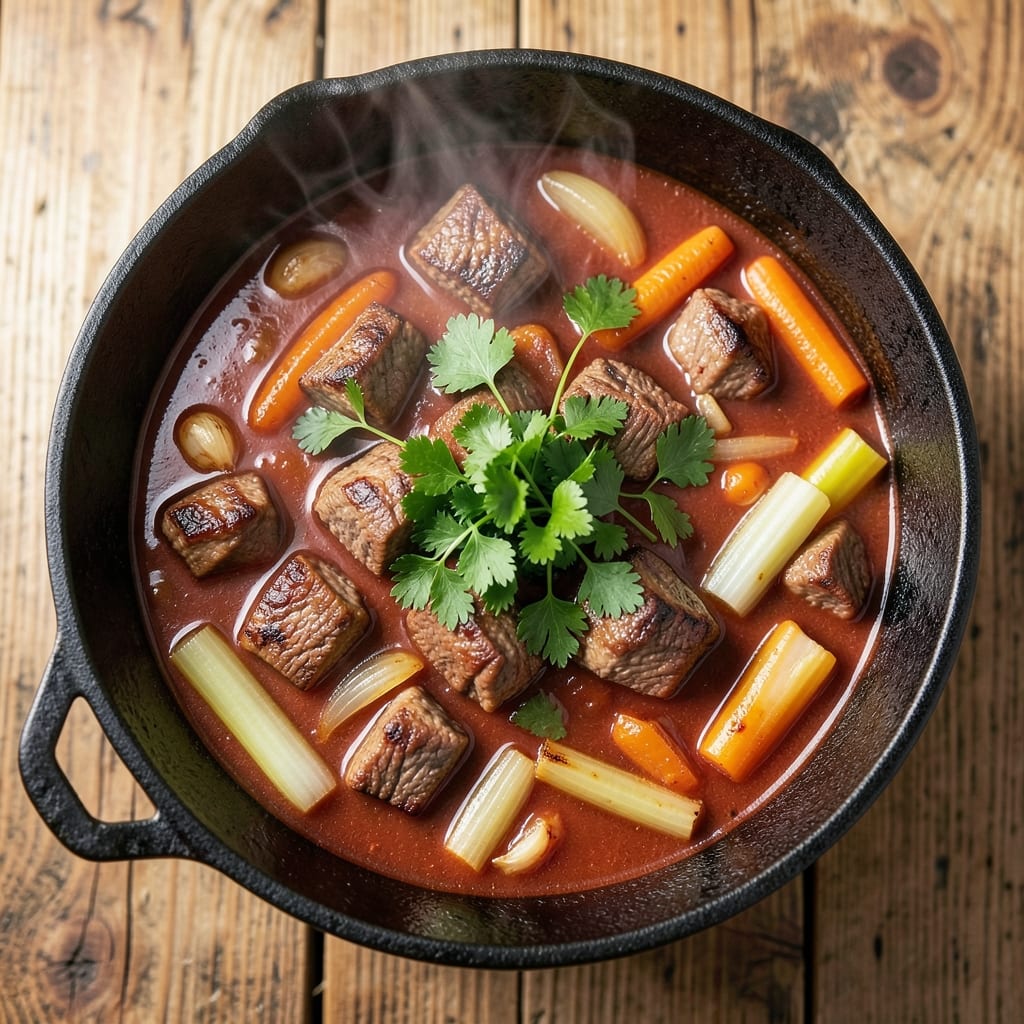
This basic beef stew recipe without wine delivers restaurant-quality depth using simple techniques that build flavor layer by layer. The secret lies in proper browning and deglazing—steps that transform tough beef into tender, melt-in-your-mouth pieces swimming in a rich, umami-packed broth. I've perfected this version over years of testing, ensuring every bite delivers that satisfying combination of caramelized edges and velvety sauce.
What makes this recipe truly approachable is the one-pot method that requires minimal prep and hands-off simmering time. You'll start with a simple sear of beef and vegetables, then let the slow cooker (or stovetop) do the work while you focus on other tasks. The result is a hearty stew that's packed with natural beefy flavor without relying on wine or complex ingredients. Perfect for weeknight dinners or meal prep, this version scales easily to feed a crowd.
The final product features tender beef chunks that practically fall apart, perfectly softened root vegetables, and a thick, flavorful broth that coats every bite. The aroma alone will have everyone gathering around the table, while the texture—crisp edges on the vegetables, tender meat—makes it a satisfying meal that feels special without being complicated. This is comfort food at its finest, achieved through smart techniques rather than shortcuts.
Whether you're feeding your family or preparing for a gathering, this beef stew delivers consistent, impressive results with minimal effort. The beauty lies in its simplicity—no wine required, just good technique and patience. Let's get started on creating a stew that will become a regular in your rotation.
Ingredients for basic beef stew recipe without wine
Fifteen simple ingredients transform tough beef into melt-in-your-mouth perfection through smart technique.
| Ingredient | Amount | Notes |
|---|---|---|
| Chuck Roast 🥩 | 2 lb | Cut into 1.5-inch cubes |
| Yellow Onion 🧅 | 1 whole | Chopped into 1-inch pieces |
| Carrots 🥕 | 4 medium | Peeled and cut into chunks |
| Celery Stalks 🧅 | 3 whole | Chopped into 1-inch pieces |
| Garlic Cloves 🧄 | 4 cloves | Minced finely |
| Tomato Paste 🍅 | ½ cup | Smooth texture preferred |
| Beef Broth 💧 | 4 cups | Low-sodium preferred |
| Dried Thyme 🌿 | 1 tbsp | Or 1 tbsp fresh thyme |
| Dried Rosemary 🌿 | 1 tsp | Crushed between fingers |
| Bay Leaves 🍃 | 2 whole | Removed before serving |
| Olive Oil 🫒 | 2 tbsp | Extra-virgin for richness |
| Salt 🧂 | 1 ½ tsp | Diamond Crystal preferred |
| Black Pepper 🌶️ | 1 tsp | Freshly ground preferred |
| Potatoes 🥔 | 2 medium | Russet, peeled and cubed |
| Worcestershire Sauce 🍶 | 1 tbsp | Vegan version if needed |
The chuck roast is non-negotiable—its marbling delivers that rich beef flavor without wine. Costco or Trader Joe's carry pre-cut chunks, but if buying whole, ask the butcher to cube it for you. Look for good marbling (white flecks within the meat) and avoid anything with grayish edges. The potatoes should be firm and starchy—Russets or Yukon Golds work best. For the broth, low-sodium versions give you more control over seasoning, but don't skip the salt adjustment at the end. Fresh thyme and rosemary make all the difference, but if you're using dried, crush the leaves between your fingers to release their oils.
No Worcestershire sauce? Soy sauce or balsamic vinegar adds depth, though neither is identical. Short on beef broth? Chicken broth with an extra splash of soy sauce works in a pinch. The tomato paste can be skipped entirely if you're avoiding it, but it adds that umami punch that makes this stew sing. For the vegetables, baby carrots or pre-cut celery save prep time—just chop the onions and potatoes yourself. The bay leaves add aromatic complexity, but if you're sensitive to their flavor, reduce to one or omit entirely. The Worcestershire sauce contains anchovies, so for strict vegetarians, use a vegan version or skip it and add an extra pinch of salt.
This stew tastes even better the next day as flavors meld. Store leftovers in the fridge for up to 5 days or freeze for 3 months. I double the recipe and freeze half—perfect for lazy weeknights. For reheating, add a splash of broth or water to prevent drying out. The potatoes will soften further, so add them later if you prefer them firmer. If you're using a slow cooker, brown the meat first for maximum flavor development—the key to this whole dish.
Why You'll Love This Recipe
- One-Pot Magic: I swear by this recipe because it’s literally one pot—no chopping boards cluttering the counter, no extra dishes to wash. Just dump the onions, carrots, celery, and garlic into the pot with the chuck roast, cover with broth, and let it do its thing. (Yes, even on a Tuesday night.)
- Deep, Savory Soul: That chuck roast? It melts into perfect shreds—tender enough to fall apart with a fork, but with just enough chew to keep it interesting. The garlic and onions caramelize right into the broth, giving it this rich, almost smoky depth that tastes like you slaved over it for hours.
- Leftovers That Beg: Between us, this stew only gets better after day two. The flavors meld together like old friends, and the meat gets even more fork-tender. I make a double batch on Sundays because my kids will beg for it by Wednesday—no takeout needed.
- Pocketbook Hero: A chuck roast costs less than half the price of steak, and this recipe stretches it across four hearty servings. Plus, carrots and celery last forever in the fridge, so I never waste money on ingredients that’ll spoil before I use them. Comfort food that doesn’t break the bank? That’s my kind of recipe.
Step-by-step instructions for hearty beef stew without wine
This method builds deep umami flavor through slow cooking and aromatic layers—no wine required.
Sear the Chuck Roast for Maximum Flavor
Heat the 2 tablespoons olive oil in a heavy Dutch oven over medium-high heat until shimmering. Working in batches to avoid crowding, sear the 2 lb chuck roast cut into 1.5-inch cubes for 2-3 minutes per side until deep golden brown. You're creating a flavorful crust that will dissolve into the stew later.
As you sear, remove the browned meat and set it aside. This step is critical—don't rush it. The longer the meat browns, the richer the resulting stew. If your pan gets too crowded, reduce to medium heat to prevent steaming instead of searing.
Build the Aromatic Base with Vegetables
In the same Dutch oven, add the 1 whole yellow onion, 4 medium carrots, and 3 whole celery stalks—all chopped into 1-inch pieces. Cook for 5-6 minutes until the vegetables begin to soften and the onion turns translucent. Stir occasionally to prevent burning.
Add the 4 cloves garlic cloves (minced finely) and cook for another 30 seconds until fragrant. Here's where the magic happens—the garlic should smell pungent and sweet, not bitter. If it starts to darken too quickly, reduce heat to medium immediately.
Develop Depth with Tomato Paste and Herbs
Stir in the 0.5 cup tomato paste, spreading it evenly over the vegetables. Cook for 1-2 minutes until it darkens slightly and coats the vegetables. This step creates a rich, concentrated base that will carry the stew's umami profile.
Add the 1 tablespoon dried thyme, 1 teaspoon dried rosemary (crushed between fingers), and 2 whole bay leaves. Pour in the 4 cups beef broth (low-sodium preferred) and scrape up any browned bits from the bottom of the pot with a wooden spoon. These bits are packed with flavor that will dissolve into the broth.
Simmer Until Tender with Potatoes
Return the seared beef to the pot along with the 1.5 teaspoons salt, 1 teaspoon black pepper, and 1 tablespoon Worcestershire sauce. Bring to a gentle boil, then reduce heat to low and cover partially. Simmer for 1 hour, stirring occasionally, until the beef is fork-tender.
Add the 2 medium russet potatoes (peeled and cubed) and continue simmering for another 45-60 minutes until the potatoes are tender and the stew has thickened slightly. The potatoes should be easily pierced with a fork, and the beef should pull apart easily with two forks.
Finish and Adjust for Perfect Texture
Remove the 2 whole bay leaves before serving. Taste the stew and adjust seasoning if needed—add more salt if it tastes bland, or a splash of beef broth if it's too thick. The stew should be rich but not heavy, with tender beef and vegetables in a flavorful broth.
For best results, let the stew sit off the heat for 10 minutes before serving. This allows the flavors to meld and the potatoes to absorb any remaining liquid. Serve with crusty bread to soak up every last bit of that umami-rich broth.
Pro Tips For Making Basic Beef Stew Recipe Without Wine
- SEAR THE MEAT FIRST: Chuck roast needs that crust to stay tender. Heat your pot until it’s smoking hot—yes, even if you’re nervous—and sear the meat on all sides for 3-4 minutes per side. I used to skip this and ended up with mushy beef; the crust locks in flavor and moisture.
- CHOP VEGETABLES UNIFORM: Carrots and celery should be cut into even ½-inch chunks, not random sizes. Onions go in larger pieces first, then get chopped smaller later. Uneven pieces mean some veggies turn to mush while others stay crunchy—no one wants that.
- DON’T SKIP THE BROWNING: After searing the meat, let it sit for 5 minutes before adding liquid. This lets the fond (those brown bits) form, which dissolves into the stew and adds deep flavor. I know it’s tempting to rush, but those 5 minutes make a real difference.
- USE COLD WATER START: Begin with cold water, not hot. The meat will cook more evenly, and the veggies won’t overcook while the meat catches up. Add the hot pot to the stove, then turn on the heat—this is the thing that matters most for tender beef.
Troubleshooting your basic beef stew recipe without wine
Meat Not Tender
If your beef isn't tender after simmering, you likely didn't cook it long enough. Chuck roast needs at least 2-3 hours of total cooking time to break down properly. Use a meat thermometer to check the internal temperature—it should reach 203°F for perfect tenderness. If you're short on time, add 1 cup extra beef broth and simmer uncovered for 30 more minutes to help tenderize the meat. 🌡️
Broth Too Thin
A watery stew usually means too much liquid or not enough simmering time. If your broth is thin, remove the lid and simmer for 15-20 minutes to reduce it naturally. For immediate thickening, mix 1 tablespoon cornstarch with 2 tablespoons cold water, stir into the stew, and simmer for 5 minutes. Avoid adding flour directly—it can make the stew taste grainy. 💧
Vegetables Overcooked
If your carrots or potatoes turn mushy, they were likely added too early. Potatoes should go in during the last 45-60 minutes of cooking. For extra insurance, parboil them for 5 minutes before adding to the stew. If they're already too soft, drain some broth and stir in 1-2 tablespoons cold water to dilute the stew slightly. 🥕
Flavor Too Mild
When your stew lacks depth, it's usually from insufficient browning or under-seasoning. For the next batch, sear the beef longer and deglaze the pan with ¼ cup beef broth after removing the meat. Add a splash of Worcestershire sauce (another ½ tablespoon) or a pinch of smoked paprika for extra umami. Taste as you go—seasoning builds up during cooking! 🌶️
Potatoes Stay Hard
Russet potatoes need at least 20 minutes of simmering to soften properly. If they're still firm, add ½ cup hot water, cover, and simmer for another 15 minutes. For faster results, cut them into slightly smaller cubes (about ½-inch) next time. Avoid using waxy potatoes like red or new potatoes—they resist softening. 🥔
Burnt Onions
Onions burn when they're cooked too long or at too high heat. Keep your heat at medium while sautéing and stir frequently. For extra insurance, add the onions after browning the beef (when the pan is slightly cooler). If they do burn, remove them immediately and start fresh with a new batch. 🧅
Nutrition facts
Frequently asked questions
Can I substitute beef broth with chicken broth?
Yes, but expect a slightly lighter flavor. Use chicken broth> and add 1 extra tablespoon soy sauce or ½ teaspoon beef bouillon powder to compensate for the missing beefy depth. The texture will remain rich, though the umami profile will be more subtle. For best results, use a low-sodium chicken broth to maintain control over seasoning.
How do I make this stew in a slow cooker?
Brown the beef and vegetables as directed, then transfer everything to your slow cooker. Add all remaining ingredients and cook on LOW for 7-8 hours or HIGH for 4-5 hours. The slow cooker's gentle heat will tenderize the meat perfectly without monitoring. For extra richness, add 1 tablespoon tomato paste during the last 30 minutes of cooking.
Why does my stew taste bland without wine?
Wine adds acidity and depth, but this recipe uses tomato paste, Worcestershire sauce, and proper browning to create umami instead. If it still tastes flat, boost flavor by adding ½ teaspoon smoked paprika or 1 extra bay leaf during cooking. Taste as you go—seasonings intensify during simmering, so don't overdo it early.
Can I prepare this stew ahead of time?
This stew tastes even better the next day as flavors meld. Store in an airtight container in the fridge for up to 5 days or freeze for 3 months. Reheat gently on the stove with a splash of broth to maintain texture. The potatoes may soften further, but the beef will remain tender and flavorful.
What's the best way to reheat leftovers?
Reheat on the stovetop over medium-low heat until steaming hot (165°F). Add 2-3 tablespoons beef broth or water per cup of stew to prevent thickening. For microwave reheating, cover and heat in 1-minute intervals, stirring between each, until warmed through. Never reheat to a boil—it can make the potatoes mushy.